

Sepideh Moafi on ‘The Pitt’ Twist She’s Been Hiding All Season
The actress explains her character’s emotional ending, and what comes next

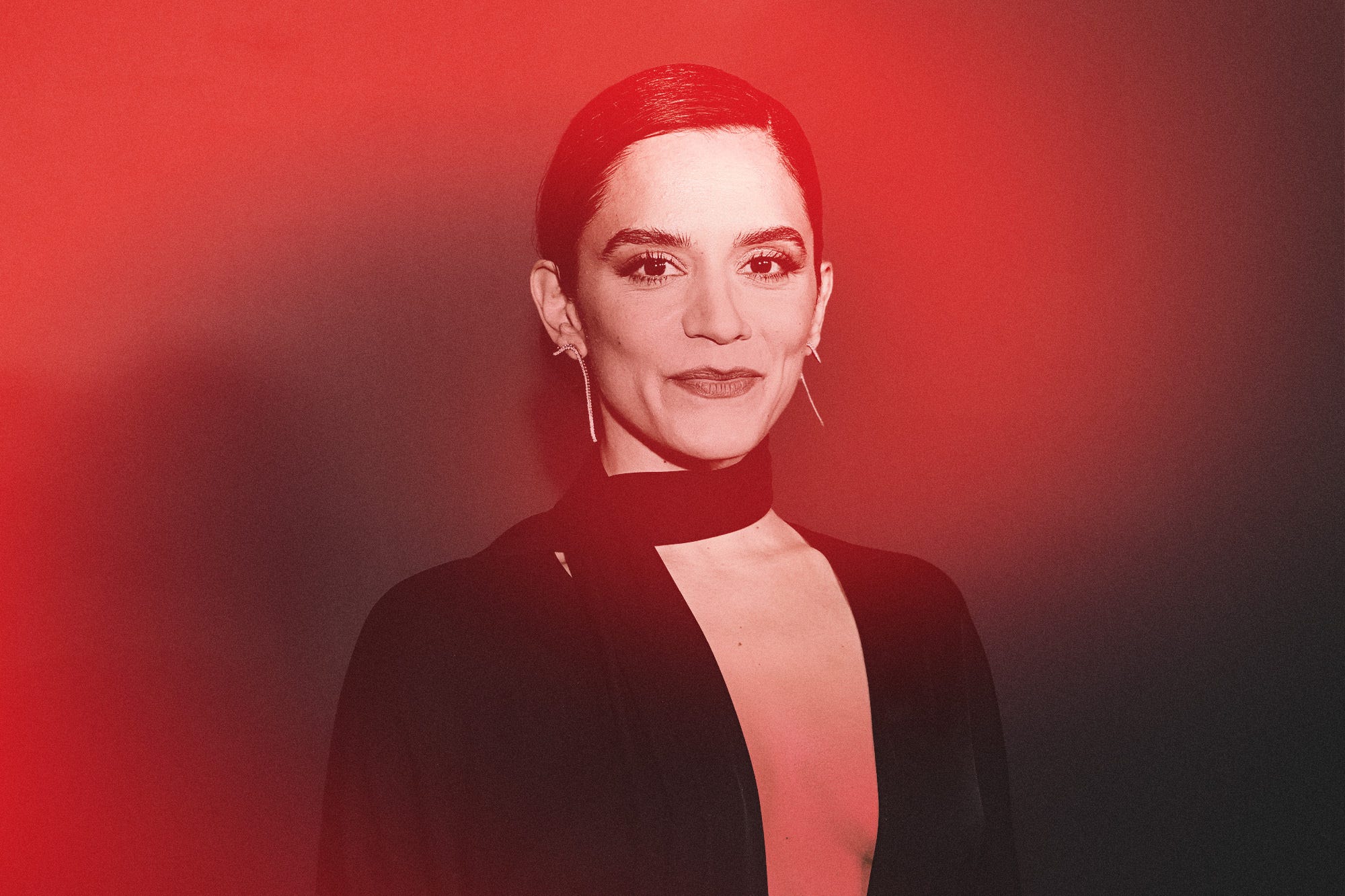
Warning: There are BIG SPOILERS in here from last night’s episode. DO NOT read on if you haven’t watched.
For Sepideh Moafi, the reveal at the end of The Pitt’s second season about what’s really happening with her character is a long-awaited relief.
“I’ve been holding this in all fucking season!” she told me on a Zoom call last week. “I’m like, finally!”
Moafi’s Dr. Al-Hashimi is the most significant new character on this season of the HBO Max Emmy winner — the attending physician in the emergency room who will take over once Noah Wyle’s Dr. Robby takes his long-promised sabbatical, which is supposed to start the next day.
But by the end of last night’s season finale, it’s unclear if either of those things will happen.
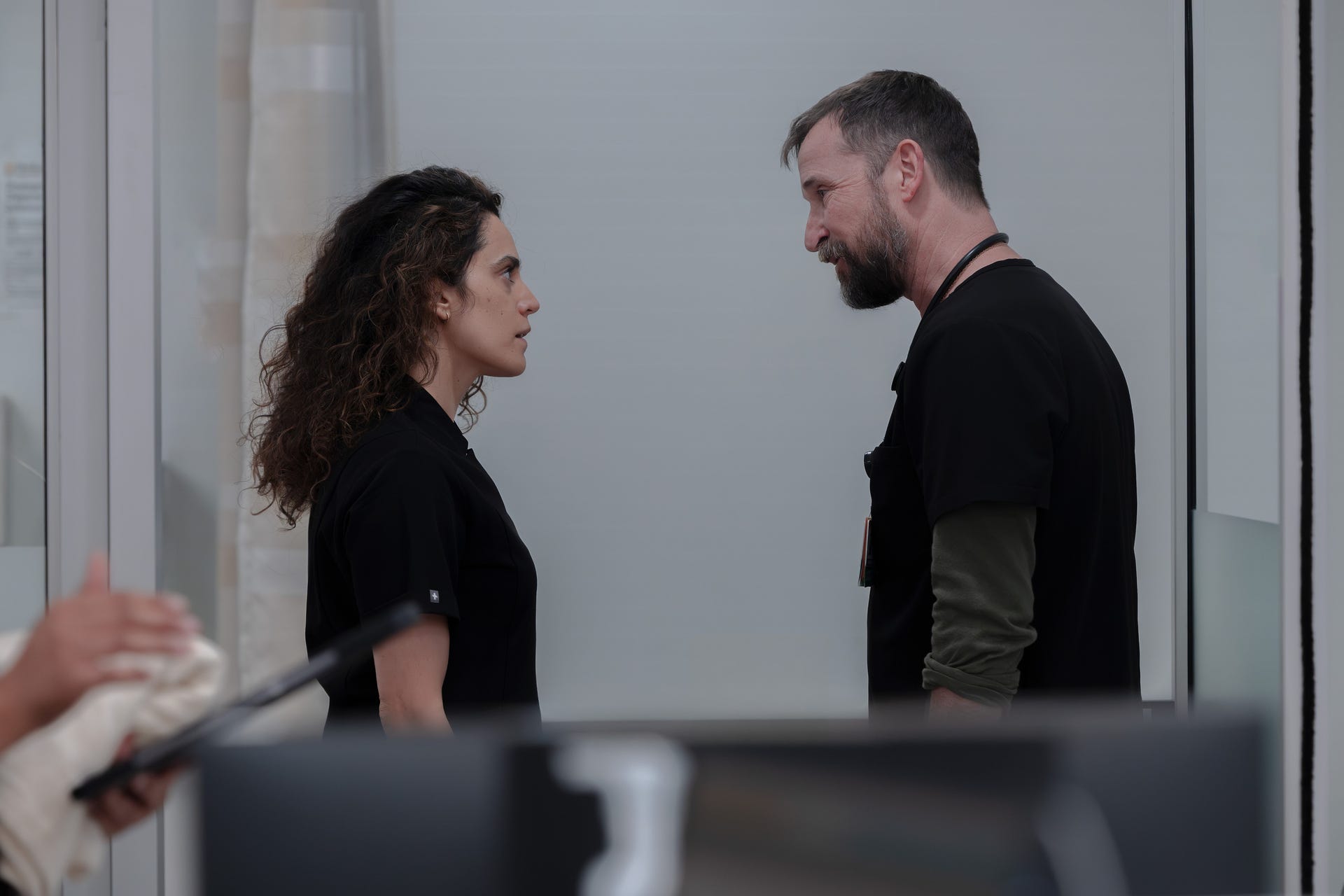
As teased in the penultimate episode and made fully clear in the finale, Al-Hashimi revealed to Robby what many Pitt viewers had long suspected — she has a medical condition. It turns out it is absence seizures, which explains two moments in the season when she seemed to space out mid-sentence. Al-Hashimi tells Robby she checked in with the hospital neurologist and confirmed that, despite the return of the seizures, she can still do her job; Robby disagrees, and they get into a heated argument, each character boiling over with the tensions they’ve held back all season.
Al-Hashimi is a restrained, seemingly unflappable character with a big secret — a dream assignment for any actor. In that argument scene, Moafi tells me, “I was glad that we got to explore this other side of her, this other side that she’s been hiding all day. It shatters our perceptions. We’re so quick to judge, we’re so quick to try to understand or think we understand each other and these characters that we watch.”
Moafi, 40, was born in a refugee camp in Germany after her parents fled Iran following the Iranian Revolution (they moved to the U.S. when she was a child). A graduate of the San Francisco Conservatory of Music and later of the MFA program at the University of California, Irvine, she has prioritized research throughout her two-decade career, and her approach to Al-Hashimi was no different.
“I didn’t talk to any doctors with this specific condition, but I did talk to doctors who work with other doctors with this specific condition,” Moafi tells me. “I spoke to epileptologists, I spoke to doctors who are pediatricians who work with children who have absence seizures. There’s a kaleidoscopic approach to this and how I try to understand her, and how she manages this throughout her life and her work.”
Airing week to week and with 15 episodes in a season, The Pitt remains a fascinating mix of visceral HBO prestige drama and classic network procedural — an irresistible formula that’s made it both the reigning best drama series Emmy winner and the focus for an intense (and sometimes a little out-there) fanbase. Moafi watched fans of The Pitt greet Al-Hashimi skeptically in the early episodes, especially as she encouraged her fellow doctors to use AI tools to streamline their workflows. But Moafi, of course, knew where the story was headed, and not just when it came to her character’s medical diagnosis.
“There were so many early judgments or ideas about who she was, that she was this corporate puppet and didn’t care, that she was mustache-twisting,” Moafi remembers. “Her perspective does make sense. I can’t tell you how many doctors I’ve talked to who are desperate for this technology to be implemented, because it reduces human error and burnout, and doctors are human beings. Al-Hashimi wants to find creative pathways and solutions to this impossible, cruel system that’s not built for people — whether it’s patients or healthcare workers.”
She says that, viewed with the hindsight of the full season, Pitt fans should have a better grasp of Al-Hashimi’s humanity and perspective. “We understand who she is and what drives her, including her own condition; we have a little bit more patience for her.”

An Unfinished Conversation
The biggest change Moafi sees Al-Hashimi bringing to the emergency room, however, has nothing to do with AI — and a lot more to do with Moafi’s own experience, both years of working in humanitarian aid with the International Rescue Committee and talking to other aspiring actors over the years.
“Al-Hashimi is a leader who encourages accountability, who encourages vulnerability and compassion,” Moafi says. “She’s tough, but she’s encouraging, and she’s nurturing. She wants to see this generation that holds the future of medicine thrive, and wants to empower them.”
Moafi says she often goes back to something Toni Morrison said during a 2003 interview: “When you get these jobs that you have been so brilliantly trained for, just remember that your real job is that if you are free, you need to free somebody else. If you have some power, then your job is to empower somebody else. This is not just a grab-bag candy game.”
That approach toward mentorship, Moafi says, is a big part of what puts Al-Hashimi at odds with Robby, whose high-intensity attitude toward medicine — and frequent disregard for his colleagues’ feelings — has now led him to the point of breakdown two Pitt seasons in a row. Al-Hashimi’s suggestion that the emergency room permanently have two attending physicians, for example, is standard procedure at many hospitals, Moafi says. For Robby to push back against it, she continues, “It seems a bit masochistic, right? A bit self-punishing.”
Al-Hashimi and Robby’s argument, like so many other things about this season of The Pitt, is left unresolved by the episode’s end. After finding out about her medical condition, he storms out of the room, threatening to report her to the hospital authorities; the last we see of Al-Hashimi, she’s sobbing behind the wheel of her car, having just forcefully argued to Robby that her condition doesn’t prevent her from driving.
I told Moafi it seemed to me that the moment in the car was when Al-Hashimi recognized that Robby had a point, and that she might not be able to charge ahead as if her condition didn’t exist. Moafi told me she saw it differently.
“For somebody to meet her for less than 24 hours and say, ‘You are not capable of this,’ it is something that fills her with rage,” Moafi tells me. The actress believes that on any other day, Al-Hashimi wouldn’t have gotten behind the wheel of the car when she’d already had two absence seizures. Robby’s pushback made her decide to drive, Moafi tells me, “in an act of defiance.”
“Because he has condescended to her and been so disrespectful and threatened her, it’s this almost childlike response,” she says. “Then for me, at least, the thing that stopped the car was imagining driving her son and going to pick him up.”
We likely will never know exactly how Al-Hashimi got home from work that night — Wyle and creator R. Scott Gemmill have said season three will likely pick up in November, four months after the end of the Fourth of July-set season two. For her part, Moafi is currently preparing to begin rehearsals for the off-Broadway production of the play New Born, opposite Hugh Jackman, and will then return to work on The Pitt in June. She, too, doesn’t know what’s ahead for Al-Hashimi, but she knows what she’ll keep trying to accomplish onscreen.
“All that matters to me is truth and helping people access their hearts,” Moafi tells me. “In this moment, we’re dissociating more and more from our hearts and living in our minds and living in our screens. So that’s my priority, to try to make people understand how dimensional and how complex and how human we all are.”