

SCOOP: Substack Is Launching a TV App Today
CEO Chris Best tells me about the new platform’s bid to grab some of YouTube’s living-room audience

I cover the creator economy at Like & Subscribe, a standalone newsletter that’s being sampled today for all subscribers to The Ankler. I interviewed Wheelhouse CEO Brent Montgomery about his investment in microdramas, wrote about TikTok’s and BuzzFeed’s moves in that space and explored how Snapchat is minting new stars. Email me at natalie@theankler.com

I’m back in your inboxes for the second time this week with a special edition of the newsletter to share a scoop you can only read about here: Substack is launching a television app.
You’ve probably noticed that Substack — which started as a platform for sending email newsletters — has gone all-in on video. It launched live video in January last year and has been wooing more video-first talent like Jim Acosta, Katie Couric and Aaron Parnas. Like & Subscribe, part of Ankler Media, publishes on Substack, and we’ve also leaned into video on the platform with my live conversations (most recently with ICYMI’s Lia Haberman) and Richard Rushfield’s weekly series The Rushfield Lunch.
With Substack TV, which has been in the works for some time, Substack is further cementing itself as a video platform. The company’s CEO, Chris Best answered a few of my questions via email, telling me, “Our goal is to help your media reality live up to your aspirations, by making it easy and delightful to watch. Having your live shows, podcasts, videos, and eventually every article available on your TV will help you spend more of your time with the media you deeply value.”
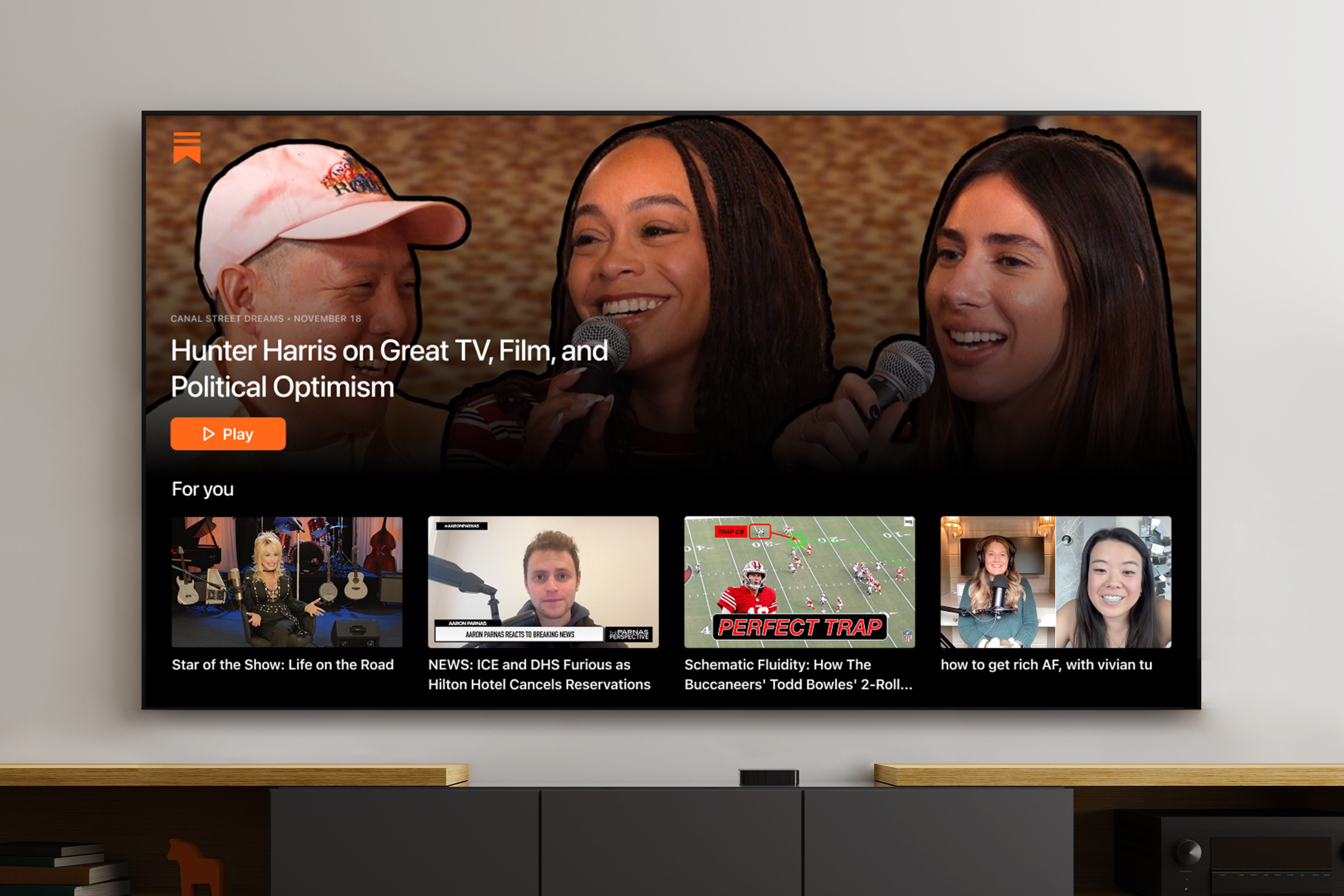
Available on Apple TV and Google TV platforms, the Substack TV app will give viewers access to any live and on-demand video content that they can already access via their Substack subscriptions. Free and paid subscribers can sign into the app, which will showcase content they already pay for, as well as a For You section of curated recommended videos. Users won’t be able to preview content they don’t pay for at launch, but Substack says that’s a feature it will add in the future. The company says it’s also planning to add search capabilities, audio-only content and in-app upgrades to paid subscriptions.
Chris Cillizza, the former CNN political reporter who now authors the Substack newsletter So What, said in a Substack blog post announcing the new app, “Video doesn’t have to live in any one place. It needs to be wherever someone chooses to consume it. The Substack TV app does just that for me and my work.”
YouTube’s growing dominance in the living room — last month it accounted for 12.7 percent of all U.S. television viewership, per Nielsen — has opened the door for a host of new, social-first players to challenge TV’s incumbents. Instagram debuted its own app for watching Reels on television sets late last year, and TikTok is also reportedly developing a TV app. For these social media behemoths, the TV screen is the final frontier, a portal through which to reach potential new audiences at much higher ad rates.
Though Substack does not currently operate an advertising business, the company — which raised $100 million in funding last year at a $1.1 billion valuation from investors including The Chernin Group, BOND, sports agent Rich Paul and Andreessen Horowitz — has become more open to advertising. Last year, it began piloting a program for native advertising that co-founder Hamish McKenzie told Feed Me’s Emily Sundberg would roll out more widely later this year. Though Substack is currently focusing on written content for its advertising moves, it could eventually look to introduce video advertising — and when it does it would be a head start if it already has a loyal audience on television sets.
Digital video’s living room incursion hasn’t gone unnoticed in Hollywood, where Netflix co-CEO Ted Sarandos has been warning of the power of YouTube for some time — and now is taking on the company directly by poaching top creators and podcast stars for the streamer.
“TV is not what we grew up on. TV is now just about everything,” Sarandos told investors during the company’s earnings call this week. “The Oscars and the NFL are on YouTube. Networks are simulcasting the Super Bowl on linear TV and streaming. Amazon owns MGM. Apple is competing for Emmys and Oscars. And Instagram is coming.”
Sarandos is trying to buy Warner Bros., and he has an incentive to count YouTube, Amazon, Apple and Instagram as part of Netflix’s competitive set so the deal won’t be seen as monopolistic and will pass regulatory approval. But he’s also not wrong.
Though Best says Substack will compete for attention on television sets the same way it does on your phone or in your web browser, he acknowledges the new app “does unlock a new kind of viewing that tends to the longform and immersive formats that Substack is known for.”
Best also hopes the TV app will unlock creativity. “Over time, we may see more creators experiment even more with series, longer interviews, and live programming that they may not have otherwise.”
substack is really speed-running the pivot to video debacle of 2015...