

Rob Reiner, Hollywood Mensch; Emily Blunt on the Emotional Toll of ‘The Smashing Machine’
The Oscar nominee also tells me about the great note she got from Christopher Nolan



So much terrible news emerged over the weekend that it’s hard to attempt to wish anyone a happy Monday, including anyone in Hollywood, where the shocking deaths of Rob Reiner and his wife, Michele, feel like a brutal capper to a year of high-profile industry losses.
Details of the case, which is being investigated as a homicide, are still emerging, none of them good — all of them outright tragic, as the Reiners’ son Nick is now being held in police custody on suspicion of murder.
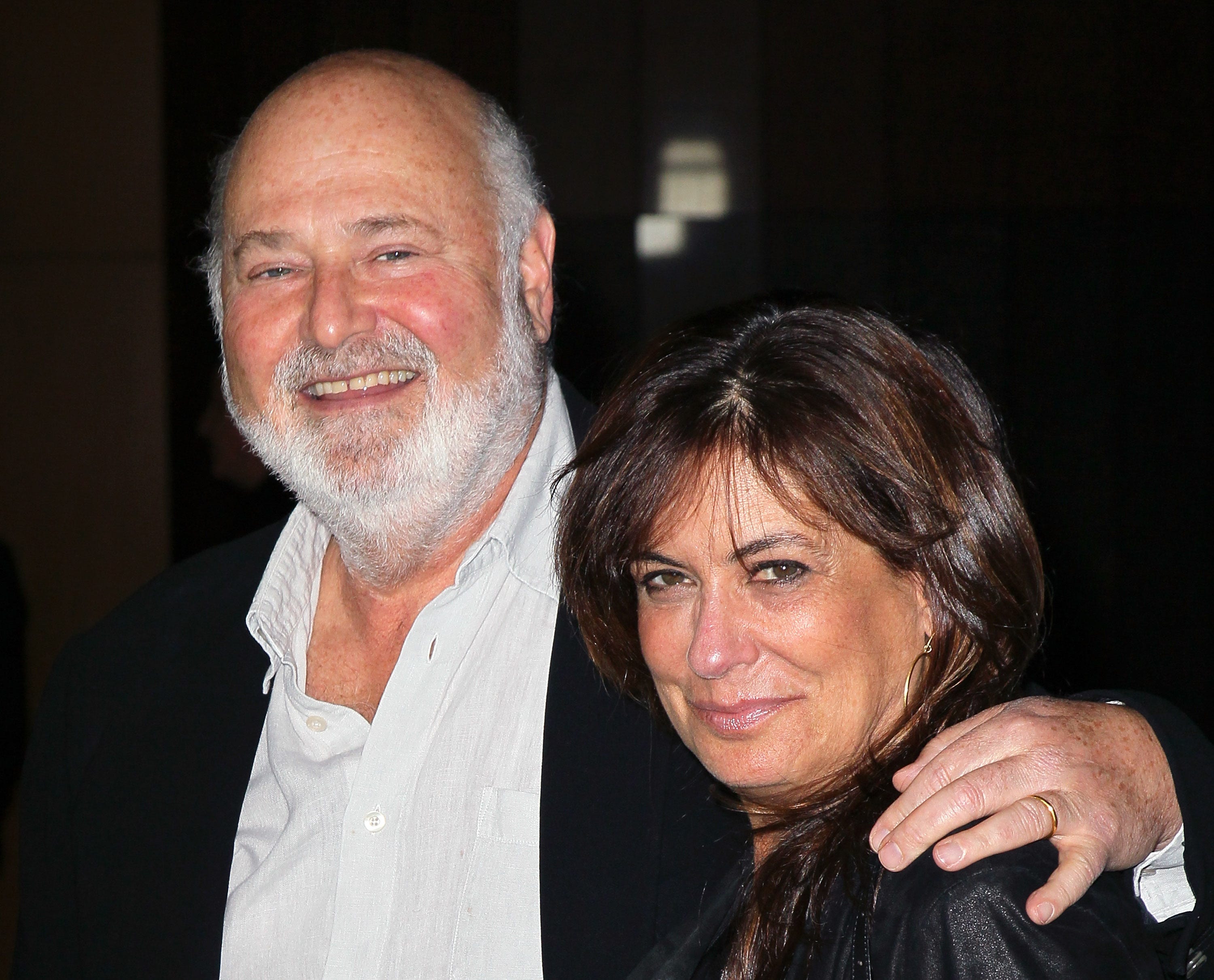
It’s particularly tough to wrap your head around this being the end for Reiner, possibly the most iconic mensch of the last 50 years of Hollywood, whose affable charms made him a TV star on All in the Family in the 1970s and then infused warmth into many of his best movies. It’s not just that This Is Spinal Tap — one of the most astonishing directorial debuts of all time, surely — and The Princess Bride, Stand By Me and When Harry Met Sally are funny; those are movies that feel as inviting and as deeply human as Reiner’s ever-present smile. He was the kind of guy who made viewers comfortable the moment he arrived onscreen, and so many of his most iconic movies had the same effect.

Social media is already filled with irresistible Reiner highlight reels, from his earliest walk-on TV roles (“Batman?!?”) to stories about the impact he had on countless films behind the scenes. Drew McWeeny, a friend of The Ankler and one of the Prestige Junkie pundits, posted a yarn about how Reiner’s Castle Rock Entertainment wound up backing one of the most beloved films of the ’90s — even after Reiner tried to direct it himself, and the film’s first-time director stood firm and demanded to make it himself. That director was Frank Darabont; the film was The Shawshank Redemption. Reiner’s reaction after seeing the movie for the first time says a lot about how you earn a rock-solid reputation in this industry.
There are infinite ways to remember a career as varied, influential and downright fun as Reiner’s; my colleague Richard Rushfield has written his own remembrance, and he, Christopher Rosen and I will be gathering later today on Substack Live to discuss Reiner’s legacy. Anyone who’s ever watched an Oscar In Memoriam clip reel knows that every year sees its share of titanic losses. Still, for the year that started with the shocking death of Gene Hackman to end with this sad story… anyone else ready to hibernate until 2026 and hope we can do it better next time?
This newsletter is getting ready to head into semi-hibernation mode for the holidays; next Monday’s dispatch will be the last one until the New Year, though the Prestige Junkie podcast and Prestige Junkie After Party will both be going strong through the holidays, so stay subscribed to catch them all! Chris and I will also be hosting a special live mailbag episode this Friday, exclusively for Prestige Junkie After Party subscribers; send me your burning questions (katey@theankler.com) and join us then!
And now I’m going to share my recent conversation with Emily Blunt, who earned a Golden Globe nomination last week — her eighth! — for her role in The Smashing Machine, which confounded audience expectations and dropped quickly at the box office earlier this year but continues to resonate in surprising ways.

A Smashing Performance
When I connected with Emily Blunt on Zoom a few weeks ago, she was speaking from her cozy home office, a space Blunt told me she commandeered from her husband, the actor and director John Krasinski, a few years ago. Behind her were ceiling-high shelves painted a rich dark green (I wish I’d asked for the exact paint color!), filled artfully with books and mementoes, several of them immediately recognizable even on a Zoom screen.
It was easy to spot a copy of American Prometheus, the biography that served as the basis for Oppenheimer, which earned Blunt her first Oscar nomination last year. When I pointed it out, she showed me the miniature bottle of alcohol that was a prop used by her character, Kitty Oppenheimer, and that Christopher Nolan had given her as a wrap gift. I also saw the alien hands she wears in a funny scene from last year’s The Fall Guy; a biography of Steven Spielberg, who cast Blunt in his top-secret UFO movie with Josh O’Connor and Colman Domingo coming out next summer; somewhere in there I definitely saw the two SAG Awards and Golden Globes she’s won since her breakout role in 2006’s The Devil Wears Prada.
At one point in our conversation, she stepped out of the Zoom frame to grab another memento, a framed photo of an image I’d already seen from the set of her emotional drama The Smashing Machine. The picture shows Blunt and Dwayne Johnson huddled together on the floor of a ’90s-style bathroom, with director Benny Safdie leaning on the counter just a few feet away. It was taken just after they’d filmed the extensive argument, scored by Bruce Springsteen’s “Jungleland,” that serves as the film’s emotional climax. Blunt’s character, Dawn Staples, both devoted to and exasperated by her MMA fighter partner, Mark Kerr (played by Johnson), picks a fight that explodes beyond control: A gun is pulled, and the cops are called and the characters reach an emotional breaking point. In a movie that everyone who made it describes as surprisingly powerful, it’s the scene where it all gets laid bare.
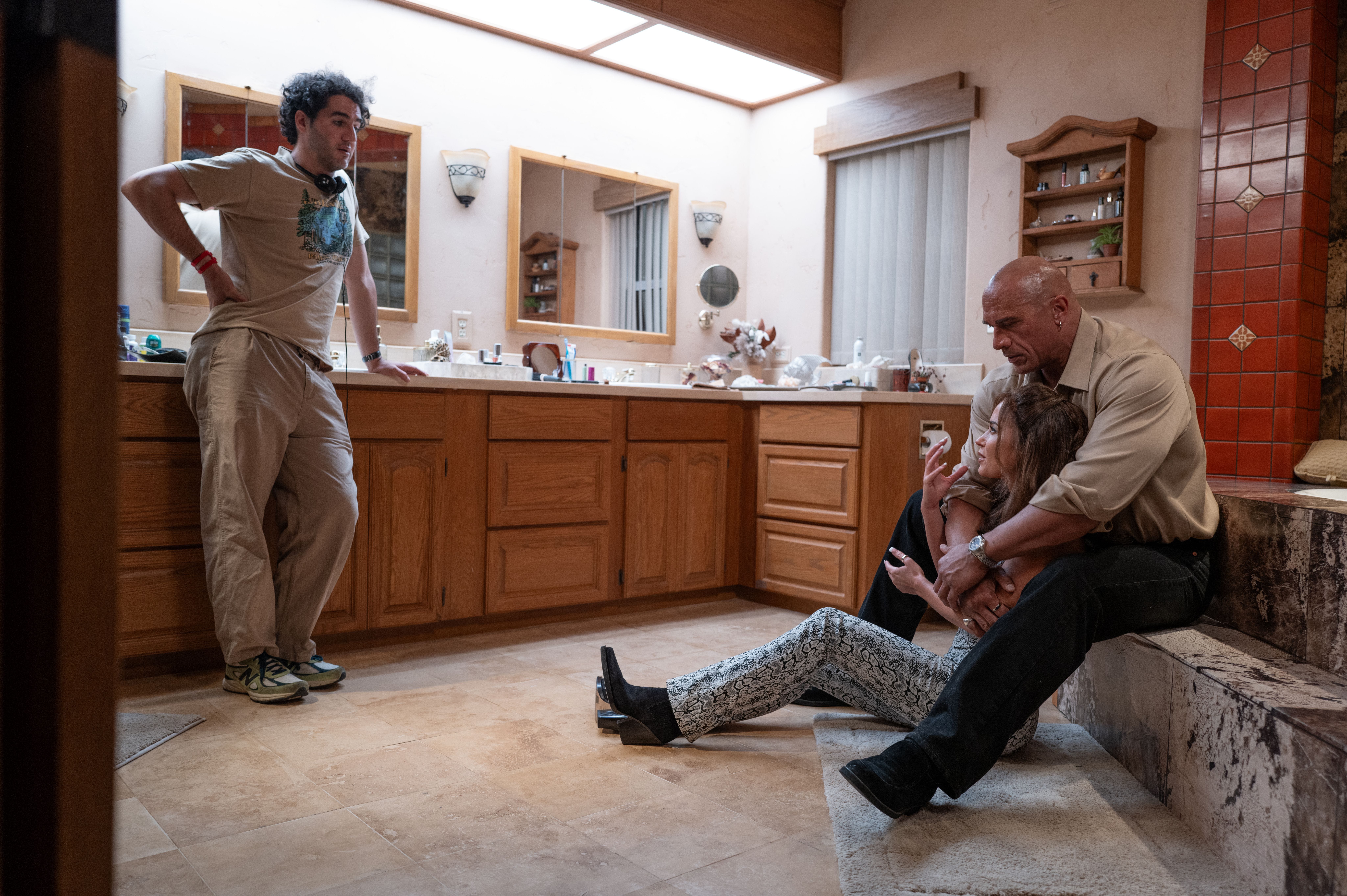
“This is a gift that my hubby gave me — he was so moved by this picture,” Blunt, 42, tells me, pointing out the wrung-out body language in all three of them: “We’re absolutely just wrecked.”
The Smashing Machine was born way back in 2019 when Johnson reached out to Safdie after the release of Uncut Gems, and struck up a conversation about the real Mark Kerr and Johnson’s long-held dream of making a biopic about him. But in many ways, it only exists because Blunt reconnected them. As Johnson told me in our podcast conversation a few weeks ago, he and Blunt developed a bond on the set of Jungle Cruise that led him to turn to her for advice, including how to shake up a career he felt no longer fully served him. And it was while Blunt was in the midst of filming her own career milestone with Oppenheimer that she met Safdie, sharing just a single scene — “a hideous interaction, where I refuse even to shake his hand,” as Blunt puts it.
In retrospect, Blunt tells me, that scene convinced her she could play Dawn in The Smashing Machine, whose hair-trigger temper can be directed both at Kerr and in his defense. In that scene in Oppenheimer, where Kitty confronts her husband’s old rival Edward Teller (Safdie), Blunt says that Nolan gave her a very particular piece of direction: “It’s my favorite note I’ve ever been given as an actor, ever,” she remembers. “He goes, ‘Now can you do one where you’re sort of cleaning something off your teeth a bit?’ And I was like, okay, that’s the one. That’s the key. The scathing tooth clean.”

Finding the Real Person
Blunt has played plenty of real people before, Kitty Oppenheimer included, but had a new level of challenge with The Smashing Machine, with access to the real Dawn Staples and a fierce, self-appointed duty to protect her. Based closely on the 2002 documentary of the same name, The Smashing Machine depicts a particularly chaotic time in the relationship between Staples and Kerr, who married shortly after the events described in the film but later divorced.
As Blunt puts it, “My God, I would feel terrified if someone was making a movie about some of the more tumultuous times in my life.” Only Blunt was in regular contact with Staples during the film’s production, and she and Safdie worked together, she said, to include more of Dawn’s side of the story than the documentary made room for. “I had a great deal of empathy for her, and yet she did kind of have to trust me,” Blunt continues. “I was very honest — I said, ‘This is not going to be a flowery portrayal of either of your lives, but it is going to be a love story. It is a love story of great chaos and hazard along the way, but it is a love story.’”

The Smashing Machine confounded some audiences when it opened in October, and for fair reasons; the reunion of Jungle Cruise stars Blunt and Johnson, guided by the co-director of Uncut Gems, was a much sadder, sweeter story than any of those movies. But Blunt and Johnson both earned Golden Globe nominations last week, evidence that their emotionally raw biopic continues to resonate. Blunt describes the process of making The Smashing Machine as “as spontaneous, alive, real-feeling experience.” That’s certainly how it feels to watch it as well.
Blunt also knew she’d need some breathing room afterwards to shake off Dawn and move on to someone else; lucky for her, even though Steven Spielberg first called her while she was on the set of The Smashing Machine, production on his still-untitled sci-fi movie didn’t start for seven more months. Blunt says it was “heaven” to have that time to pivot, and that production on Spielberg’s movie — set for release on June 12 — was “full-on.” Details beyond that, of course, are still under lock and key.
By the time we learn what Blunt is up to in Spielberg’s film, we’ll have already seen her back in some very familiar high heels. The Devil Wears Prada 2, in which Blunt, Anne Hathaway and Meryl Streep all reprise their roles from the 2006 original, comes out May 1. I ask Blunt about the time-traveling effect of stepping back into the heels of Emily Charlton, who stopped at nothing to get ahead in the ruthless publishing world where Streep played a thinly veiled avatar of Anna Wintour. In Blunt’s words, Emily “changed my life” 20 years ago. So, how did it feel to play her again?
“Rather worryingly, it felt like a glove that fit,” Blunt says with a laugh. “This lunatic! She’s never really left me.”
