

🎧 Realizing Guillermo del Toro’s Dream: Inside the Production Design of ‘Frankenstein’
Oscar-nominated production designer Tamara Deverell and set decorator Shane Vieau discuss the best picture nominee and their long collaboration with its helmer
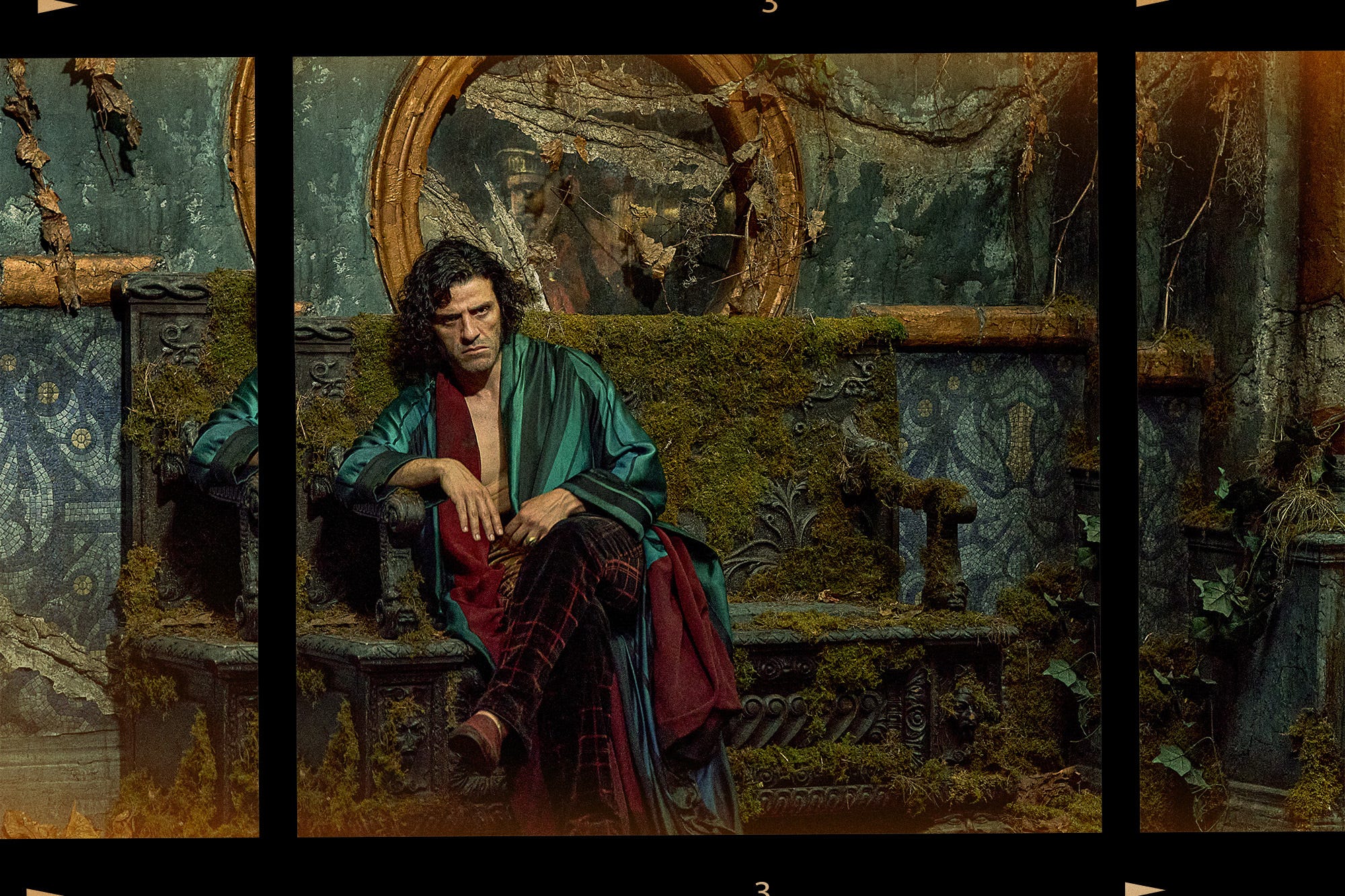
Art & Crafts is Ankler Media’s podcast series that goes behind the scenes with the artisans who create the film and TV we love. This conversation is sponsored by Netflix. Subscribe on Apple Podcasts.

Guillermo del Toro had been waiting almost all his life to make Frankenstein.
“He’s wanted to make this movie since he was a little boy,” production designer Tamara Deverell tells Ankler Media deputy editor Christopher Rosen on the latest episode of Art & Crafts.
For del Toro, the story of Frankenstein is foundational. “It’s in all my movies,” the Oscar-winning director behind The Shape of Water and Guillermo del Toro’s Pinocchio said in an interview last year. He’s talked openly about how the film’s de facto father-son relationship between Dr. Victor Frankenstein (Oscar Isaac) and the creature he creates (Oscar nominee Jacob Elordi) was influenced by the relationship del Toro had with his father.
“I’m finding out things about his process that I didn’t know, that I maybe I didn’t need to know,” Deverell says about her journey with the project, which debuted at the Venice Film Festival in August and is now an Oscar nominee for best picture, with Deverell and set decorator Shane Vieau also nominated for production design, among nine overall nominations. “This movie is such a personal thing for him, and I’m interested to see what he’s going to do next. Because Frankenstein is a tough act to follow.”
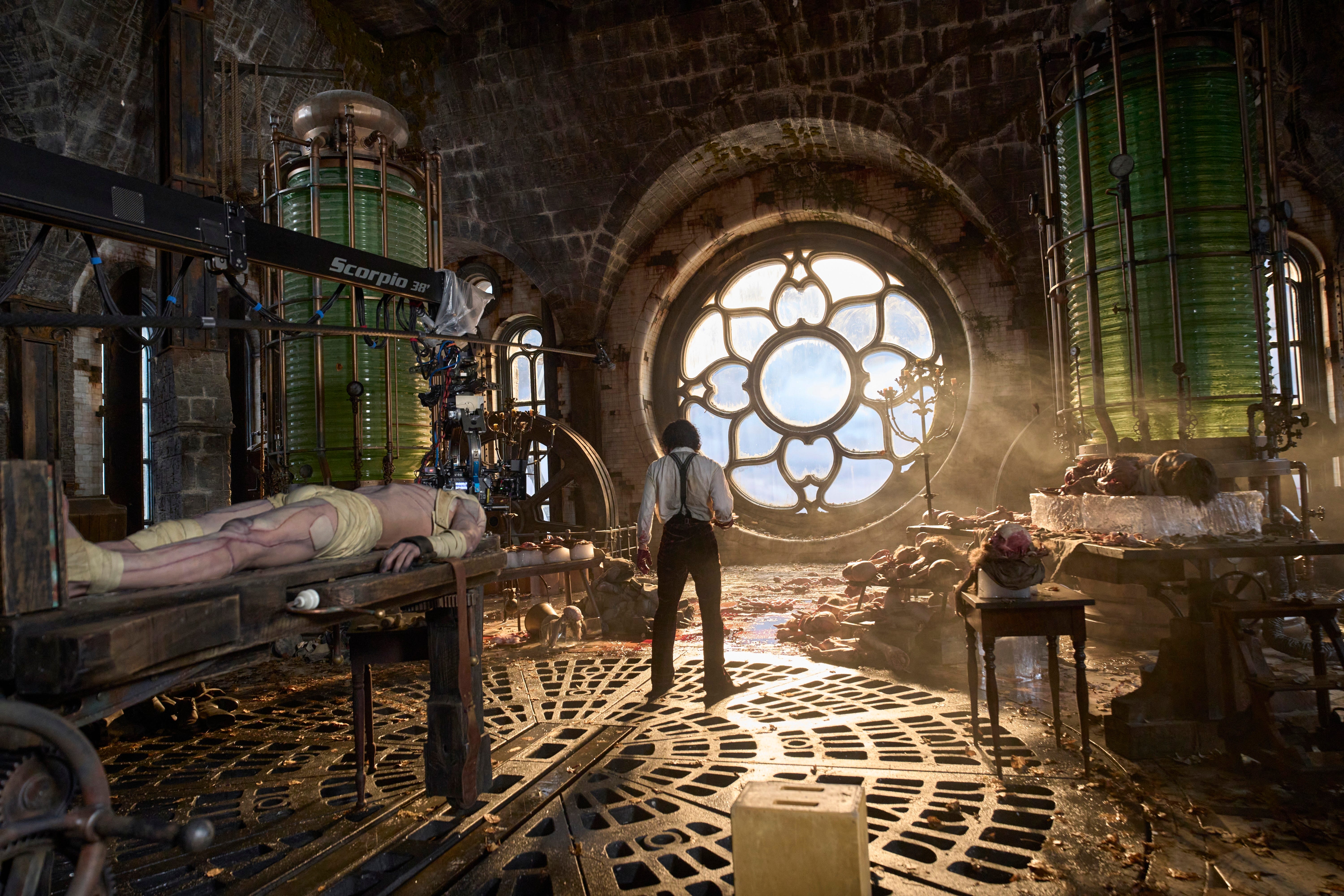
Based on the book by Mary Shelley, which has been adapted to the screen several times — including, most famously, in 1931 by James Whale, the version del Toro first embraced as a child — Frankenstein reunites many of del Toro’s longtime collaborators, including Oscar nominees like costume designer Kate Hawley (Crimson Peak), cinematographer Dan Laustsen (Nightmare Alley), composer Alexandre Desplat (The Shape of Water) and Deverell and Vieau.
“We’ve both worked with him for many, many years. And so that really tells you all you need to know,” says Deverell, whose first film with del Toro was 1997’s Mimic.
“He values you, and he sees you, and that’s extremely important to have when you’re working for a director,” Vieau adds. “A lot of times, that doesn’t happen. It just makes you work much harder for him. He’s such a great man.”
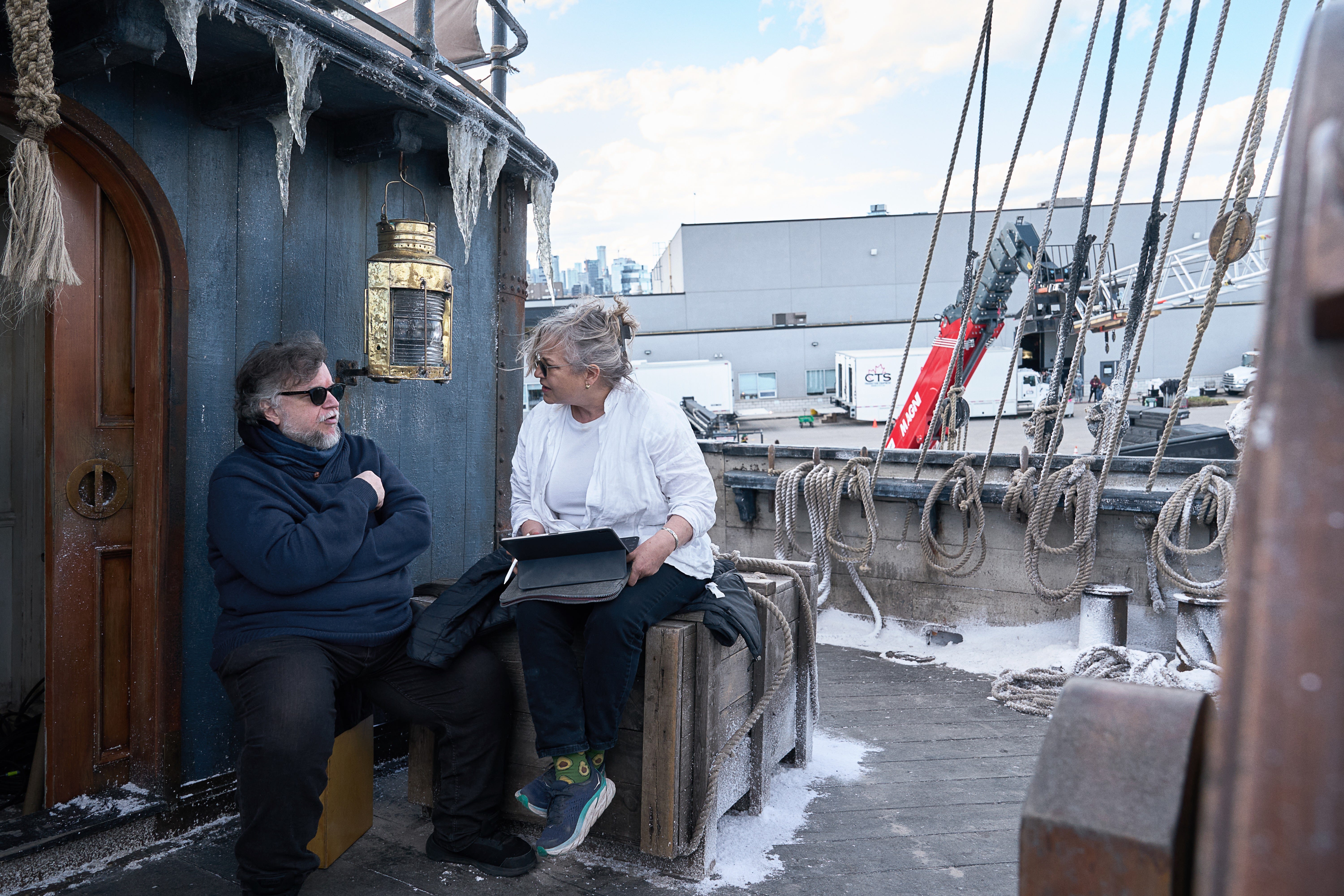
Del Toro has made big films before — including 2018 best picture winner The Shape of Water and 2022 nominee Nightmare Alley — but Frankenstein is arguably his most elaborate. Deverell built 119 sets for the project, including 24 studio sets. She created an arctic tundra in a parking lot alongside the Netflix production studio in Toronto. She even recreated a massive 1850s explorer ship, allowing her to showcase skills she acquired working a summer job as a shipbuilder during art school. (“It took four or five months to build from the get-go,” Deverell explains. “The ship was about 130 feet long, and it was just a massive, massive thing.”)
But no matter the setting, del Toro and Laustsen always made every small detail count. As Deverell says, “The rewarding part of it is that you know you’re going to have every piece of your work shown.”
“What’s interesting is that our film is called a fantasy film, but when Tamara and I, with Guillermo, approached the concept of everything that was in there, everything was of the period,” says Vieau, an Oscar winner for The Shape of Water and nominee for Dune and Dune: Part Two, of the film’s verisimilitude. “That’s what I love about Guillermo.”
Frankenstein is streaming on Netflix.