

How Paul Thomas Anderson Landed in Fortnite, as the Movies-as-Games Era Arrives
SCOOP: I get the story behind the director's ‘One Battle’ crossover as studios also flood Roblox — and Disney’s Epic Games investment starts to deliver


I write Crowd Pleaser, a newsletter from Ankler and Letterboxd that covers audience and moviegoing trends. I drove across 20 states to 58 U.S. theaters and wrote about the viral trends behind A Minecraft Movie’s success. Email me at matthew@theankler.com

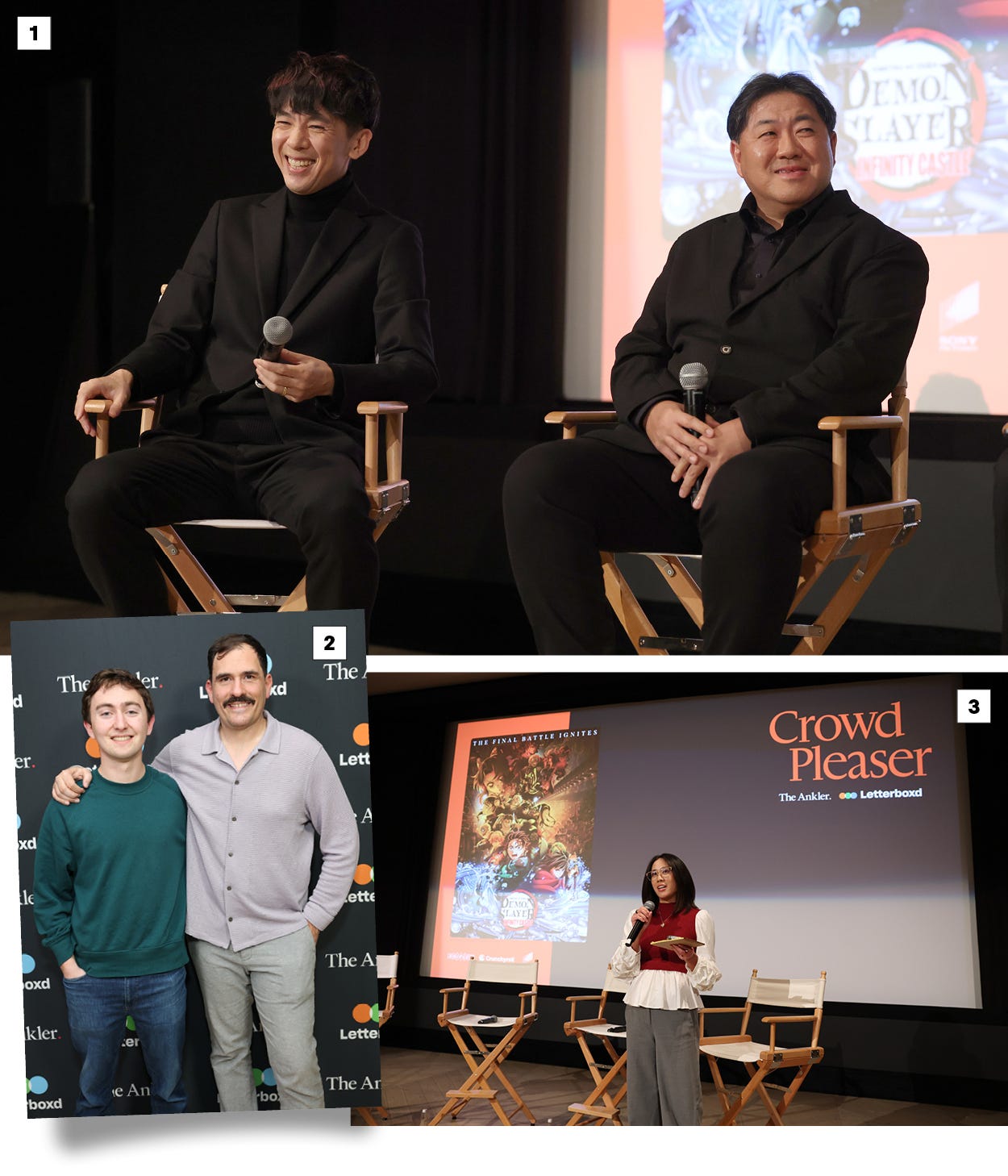
I’ve written before about Gen Z’s renewed hunger for IRL experiences. Last Thursday, I got a front-row reminder of how real that is. At our first-ever Crowd Pleaser Live event — a screening of Sony’s Crunchyroll juggernaut Demon Slayer: Kimetsu no Yaiba – Infinity Castle at The West Hollywood Edition — the mood was upbeat. The movie is already a phenom, with more than $733 million at the global box office and a 4.0 on Letterboxd; director Haruo Sotozaki told us theaters in Japan literally ran out of popcorn and juice during the film’s run.
After the screening, my colleague Elaine Low led a rapid-fire Q&A with Sotozaki and director of photography Yuichi Terao, who broke down everything from integrating 2D animation with 3D CG to how they’re hoping to pull in new viewers. And, of course, Elaine asked about the release date for the second installment of the trilogy. “We’re all wondering the answer to that question,” Sotozaki said. “Ourselves included.” (Catch the whole Q&A at AnklerEnjoy.)
It was a perfect example of how fandom lives now — communal, voracious. And it also revealed the much bigger shift happening across Hollywood and entertainment, where the walls between mediums are dissolving.
Anime flows into film and TV, and — in the case of today’s column — movies are flowing straight into games.
In July, Warner Bros. announced an unusual marketing move: Paul Thomas Anderson’s One Battle After Another was “coming to Fortnite.” A political, adult-skewing awards contender starring Leonardo DiCaprio would be debuting a crossover inside a platform best known for teenagers and Travis Scott concerts?
The internet’s reaction summed it up:
“PTA x Fortnite — we truly live in mysterious times.”
“WHAT!? WHY!?”
“Who asked for this?”
The answer, it turns out, involved Paul Thomas Anderson himself.
And that decision — plus how it got made — is the clearest sign yet of a new era: Films are no longer just watched. They’re also being played.
A study this year found 83 percent of Gen Alpha and 78 percent of Gen Z play video games at least an hour a week, making Fortnite and Roblox two of the largest storytelling hubs on the planet (whether studios like it or not).
Today, I’ve got the full story behind the One Battle x Fortnite crossover — straight from the guy who built it — and also have details about the studios’ mad rush to merge genres and how Disney’s Epic Games investment is starting to pay off.

PTA & Warner Bros. Wanted It. This Guy Made It Happen
The activation’s architect, Nic Hill, told me he might not have expected Warner Bros. to create a Fortnite mini-game around a political, adult-oriented epic about former left-wing revolutionaries fighting back against a white supremacist cabal. But Anderson had seen another Fortnite activation around Warner Bros.’ Sinners and approached the studio — which had also created a tie-in event for Weapons.
Instead of an integration, where the film would appear inside Fortnite as a skin, emote (a personalized player gesture) or limited event, Anderson specifically wanted to create an extension — meaning its own experience or world that operates as a sort of mini-game within the platform and doesn’t involve Epic Games (Fortnite’s parent company). The goal was to extend the story, build out the world and translate the sets from the screen into a gaming experience consistent with One Battle.
The action-packed, gunslinging escape survival game looks and feels almost exactly like the film: digitally rendered versions of DiCaprio’s character, Bob Ferguson, and other stars; the lore of the French 75, Bob’s revolutionary group; Jonny Greenwood’s off-kilter score; the river of hills in Borrego Springs, Calif., from the climax. There are even a handful of references to Anderson’s earlier films, for hardcore cinephiles. It was all contained in a 20-minute interactive quest that debuted 10 days before One Battle’s September release.
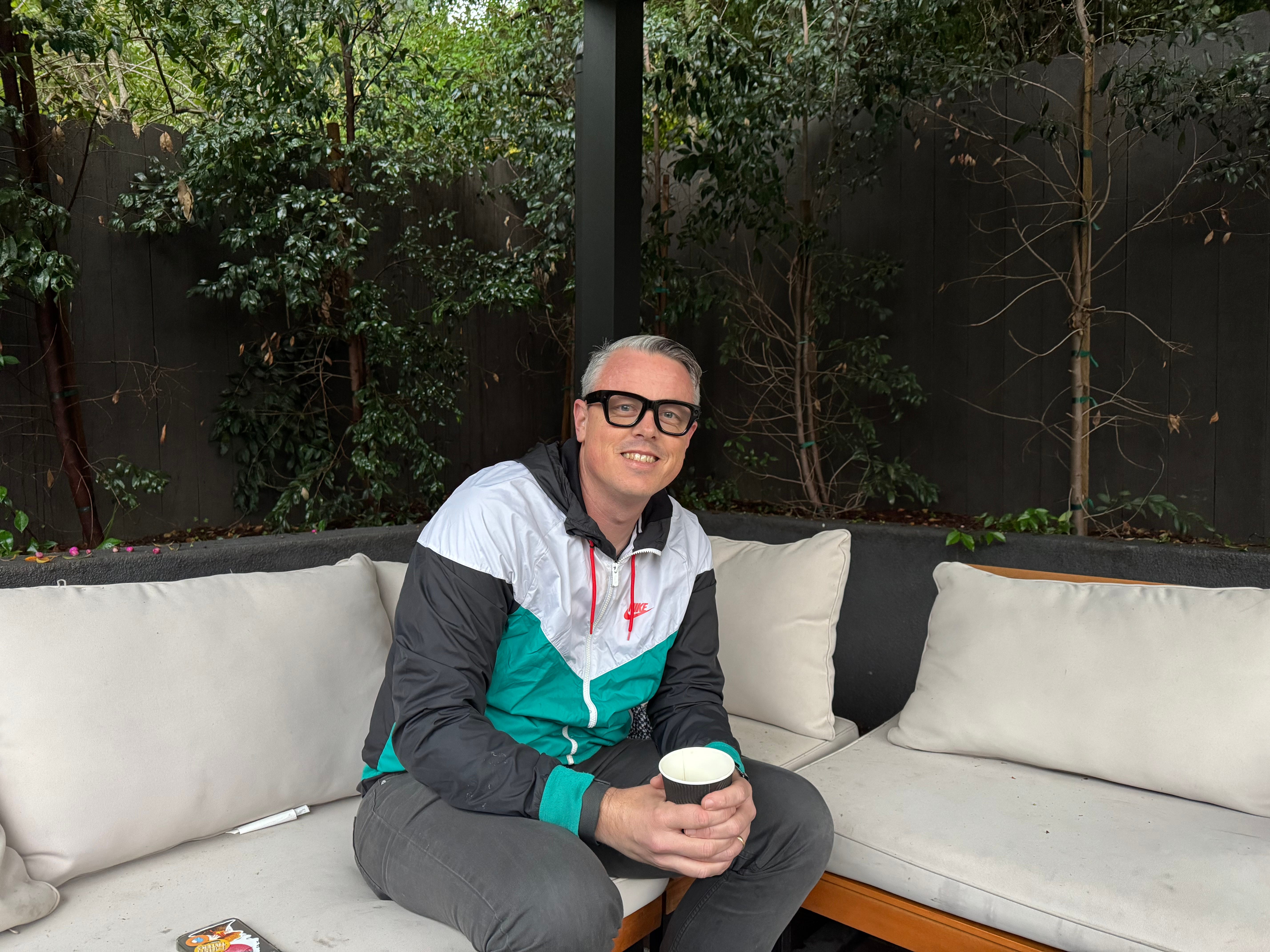
Telling me how this all came to be is Hill, the man behind both the One Battle and Sinners games, who runs Sawhorse Productions, a creative agency and production company. On a rainy Monday afternoon, Hill and I are sitting in the L.A. backyard of the house next to Sawhorse’s office — a company-owned post-production bay. Across the Hollywood Freeway, about a five-minute drive away, is Universal Studios.

Hill is the first person I’ve met who wears the Ray-Ban Meta AI Glasses for real in the wild, which fits for a guy whose business has been trying to stay ahead of the curve. After beginning his career as a documentary filmmaker, Hill transitioned into digital advertising, often for Silicon Valley startups, just as the tech bubble started to inflate in 2012 and 2013. He and Sawhorse worked with Condé Nast’s print publications, including Wired, GQ and Glamour, as those magazines transitioned more into digital content creation. Then, during Covid, Sawhorse began its gaming journey, which quickly became a successful avenue through Sawhorse’s entertainment vertical.
Hill has also helped bring Roblox campaigns to life for Universal’s Wicked and How to Train Your Dragon, as well as Beetlejuice Beetlejuice.
Hill isn’t the only one in the space. Gamefam, a metaverse-centric gaming company, brought Disney’s Moana 2 and A24’s 2023 horror hit Talk to Me to Fortnite, plus Teenage Mutant Ninja Turtles and Garfield to Roblox. The latter two each scored 37 million and 31 million total visits, respectively. Overwolf — a gaming company that counts Marc Andreessen’s a16z, among its investors — created a backend that played Paramount’s A Quiet Place: Day One ads specifically during scary in-game moments in thriller games.
Whereas games used to be a way of extending the value of a film after it was released, now it’s the other way around. As The Anker’s Nicole LaPorte has covered, the hierarchy of the Hollywood press tour has shifted from junkets and Entertainment Weekly covers to Theo Von interviews and Hot Ones stunts. Amid a fractured, confusing media ecosystem, studios are increasingly seeking novel ways to reach Gen Z and Gen Alpha audiences where they are — and gaming is a substantial part of that.
“Every brand needs to have a UGC (user-generated content), gaming, or a Roblox strategy, especially if they want to be relevant with Gen Z and Gen Alpha,” Ricardo Briceno, chief business officer at Gamefam, says.
No surprise, studios are starting to come to the table.
“Almost every high-budget Hollywood film has some sort of gaming activation today on some platform,” Hill says, “because it works.”

Eat My (Interactive) Shorts
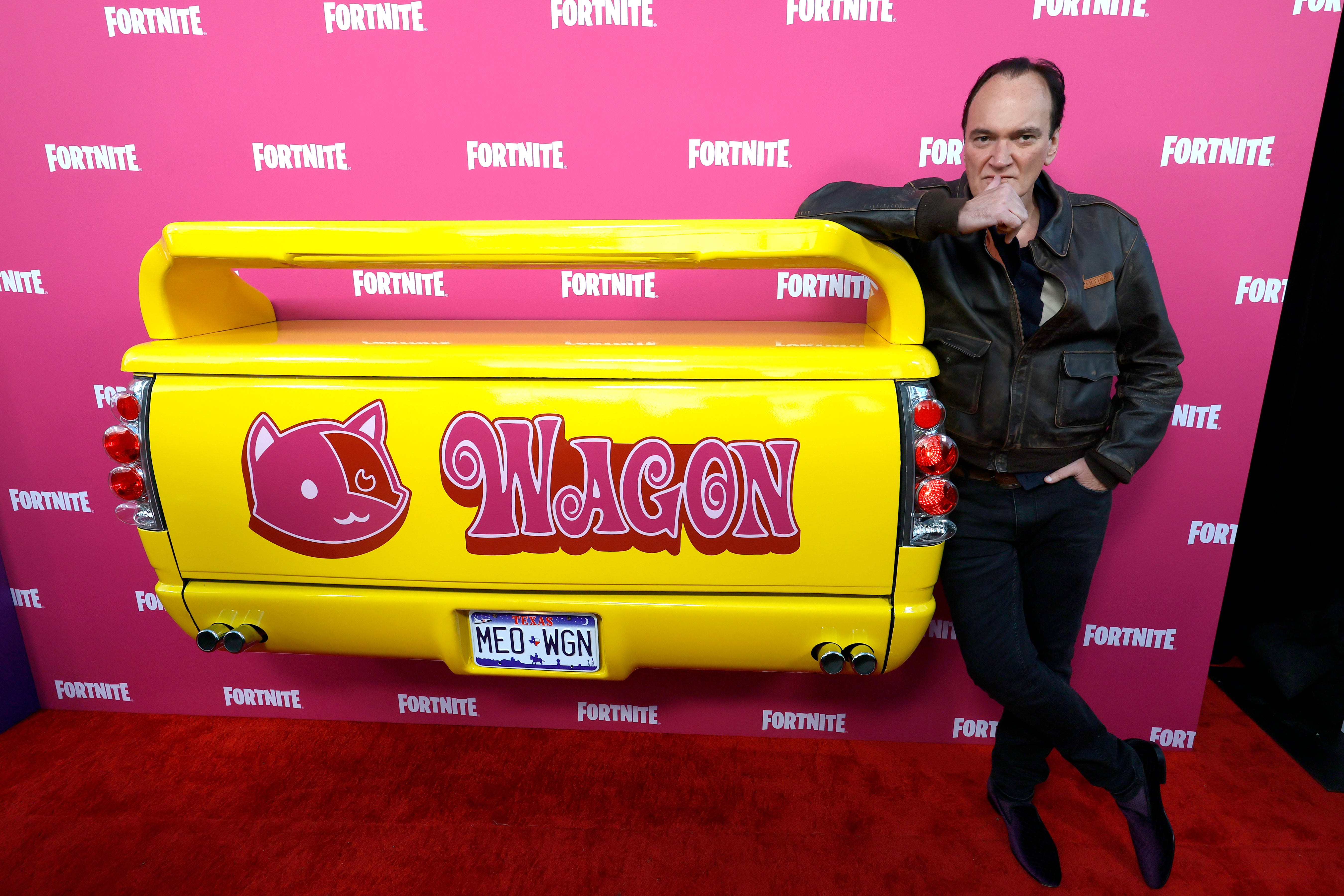
The two biggest gaming platforms are Roblox, a user-generated digital playground of sorts with over 150 million daily active users (40 percent of whom are 13 years and under), and Fortnite, a social hub centered on battle royales (with 30 million players daily, 60 percent of whom are in the 18-24 age demo). Those young audiences were likely the target demographic for a collaboration with Quentin Tarantino titled “The Lost Chapter: Yuki’s Revenge,” a cut sequence from Kill Bill: Vol. 1 starring Uma Thurman. (Tarantino’s martial arts epic, released in two parts in 2003 and 2004, returns to theaters as one single movie in December, the first time that cut has been released wide.)
Within these platforms, and across the entire gamer-sphere, there is less of an aversion to branded content than you’d think. According to a 2025 survey from Hub Entertainment Research, 44 percent of gamers have downloaded branded playable content, and 63 percent say playable content is more relevant than “regular” TV commercials or other advertising.
“It’s the holy grail of ads,” Hub principal Jon Giegengack says. “The way that people interact with games better leans into fandom and the way that people really like to connect with characters and story.”
Looking across the business, in 2023, Netflix co-CEO Greg Peters expressed his desire to “incrementally scale” the games sector to have a “material impact on the business.” Warner Bros. has four franchises that each have generated more than $1 billion in gaming revenue: Harry Potter, Game of Thrones, Mortal Kombat and the superheroes from DC Comics (Superman, Wonder Woman, etc.). In February 2024, Disney invested $1.5 billion in Epic Games, and the dividends from that investment are now being realized this month.
On Nov. 1, Fortnite and The Simpsons launched a month-long integration that turned the game’s traditional map into Springfield (the animated sitcom’s setting) and allowed players to play as characters from the show. To promote the collaboration, on Nov. 17, a swarm of Homer Simpsons (along with series creator Matt Groening, who danced in the middle of the Homers) descended on the Santa Monica Promenade and raided a donut shop.
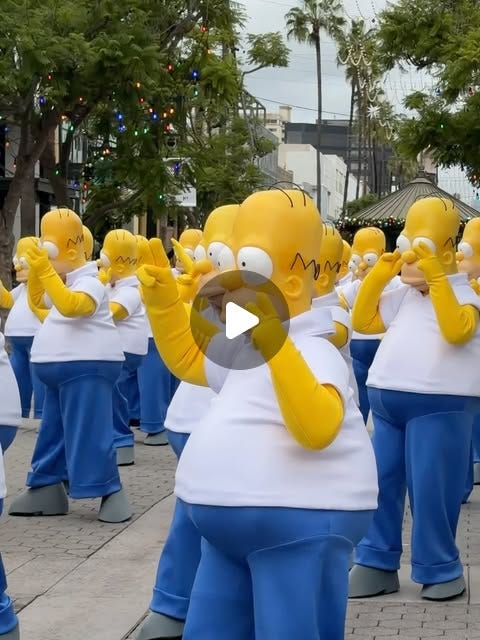
In the 48 hours since the Simpsons integration drop, Fortnite’s servers were populated by the most users since the 2024 holidays, reaching 2.7 million concurrent players. Plus, the first of four Fortnite-oriented Simpsons shorts, which previews narrative and map elements, hit No. 1 on Disney+. The project is “a redefining of how audiences experience stories across formats,” Sean Shoptaw, executive vice president of Disney Games and Digital Entertainment, told The Hollywood Reporter.
If that isn’t the original Walt Disney flywheel — turning stories into ecosystems — in action, I don’t know what is. “The Simpsons is just the first,” Hub senior advisor Jason Platt Zolov says. “They’re going to be doing it with their whole portfolio.”
Meanwhile, earlier this month, Roblox opened up its License Manager and Licenses catalog to all eligible IP holders, allowing creators to build games with the permission of the rights holders. Translation: Any studio can list its IP as available on Roblox, and any creator can then apply to adapt the film or TV show for their own game within Roblox — all without Roblox’s intervention.
This is no slight shift. In July, Netflix and Lionsgate became founding partners in the game’s new licensing system. When Roblox users were granted the ability to create games based on Netflix’s Squid Game, a user-generated game called “Ink Game” emerged, which has been played over 2.7 billion times.
When Lionsgate was preparing to release The Hunger Games spinoff The Ballad of Songbirds and Snakes in 2023, the studio released the world of Panem — the post-apocalyptic nation where the story is set — into the platform. Lionsgate didn’t sell or include Academy uniforms, the clothing worn by students in Panem’s central city, the Capitol, but, much to its surprise, fans still chose to create their own.
It’s all part of a new operating procedure for studios: Let fans interact with the IP in ways never before possible and hope they grow attached.
“As we think about where fans are, giving people the ability to make their own imprint in the content is something we’re really excited about,” Jenefer Brown, Lionsgate’s head of global live, interaction and location-based entertainment, says. “If you look at the way that Gen Z and Gen Alpha like to interact with content, it’s very clear that there is a desire to be able to create and play in these spaces. Roblox is a perfect example of that.”
How the Sausage Gets Made
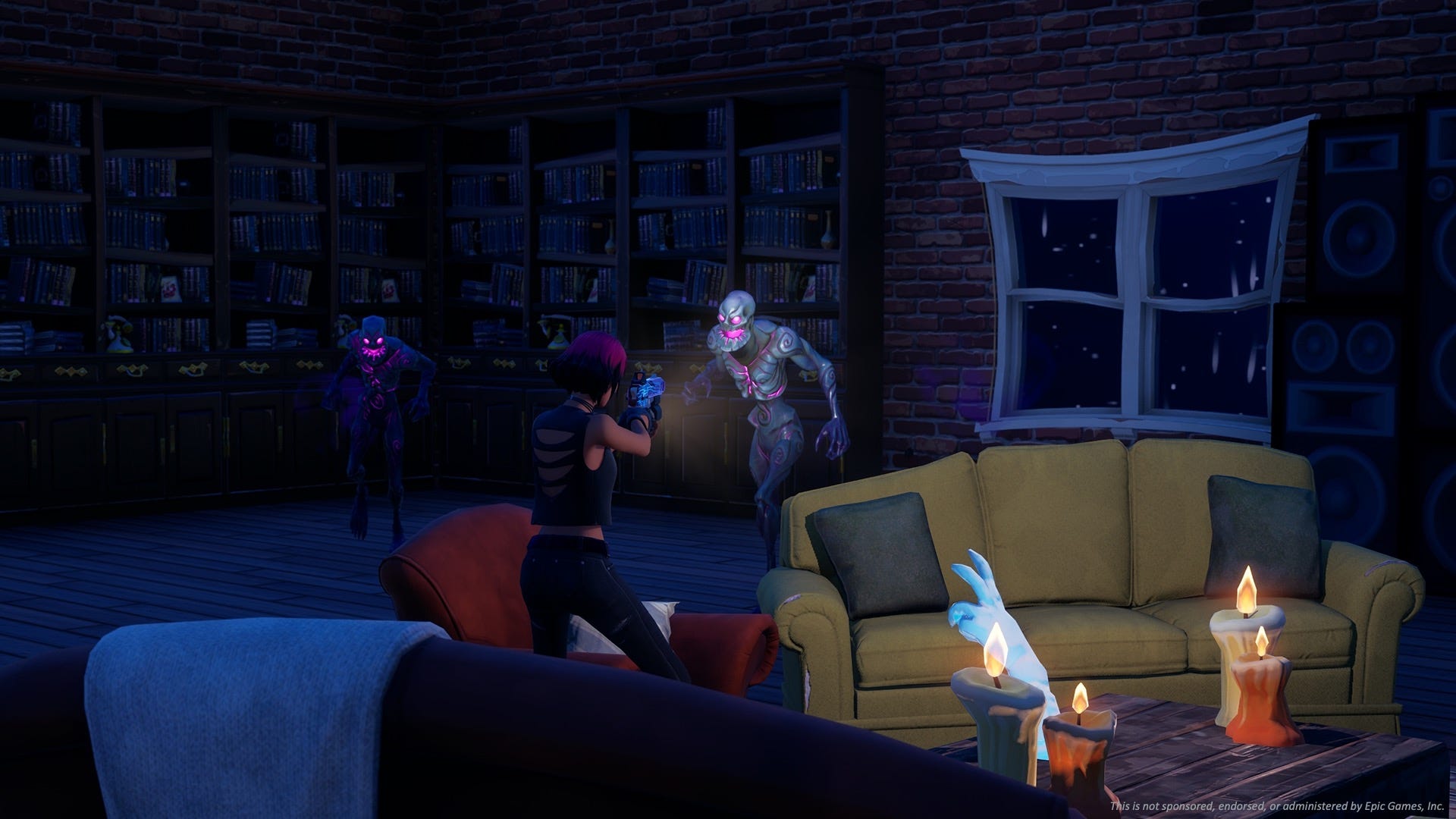
While a rudimentary user-generated game can be created in half an hour, for a gaming production company like Gamefam, that process extends much longer — though maybe not as long as you might think.
A typical turnaround time for a Fortnite or Roblox campaign (a standalone game is far more intensive) is eight to 12 weeks, with a budget of $50,000 to $1 million, according to Sawhorse’s Hill. The studios provide briefs, requirements and a sense of what the marketing message should be, at which point the production company will approach the studio with a concept for what it’ll look like in practice.
If it’s a VFX-heavy film, production companies can turn its 3D models into interactive experiences. If not, which is most of the time, they’re starting from scratch, with a team of art directors and 3D artists designing elements of the world. The catch: You can only make the visuals so detailed before the game runs slower, crashes consistently and breaks.
“With this immersive, interactive art,” Hill says, “it’s always about how do you make it for the lowest cost possible from a tech art standpoint, but it looks so good that you’re like, ‘That looks fucking awesome.’”
Once they’re up and running, success is determined by measuring the number of users who played and “deliberate actions,” as Gamefam’s Briceno puts it, like engaging with aspects of the IP, unlocking items, talking to characters or completing quests. Depending on the studio’s demands, success might mean partnering with enough live streamers who invite their followers to watch as they play through a Garfield Roblox extension. In the case of Sawhorse’s How to Train Your Dragon, the game did well enough to warrant its design evolving from a promotional game to a consistent, monetizing game with live service updates.
The assumption across the board at these production companies is, naturally, that this branded video game space will continue to grow. Both Hill and Briceno compared it to the dawn of YouTube. Look at other major new releases, and you’ll find a tailored gaming component somewhere. There’s an Avatar game, already released, created by Ubisoft. Wicked: For Good had a Roblox extension — crafted by Hill’s Sawhorse team. Even A24’s The Smashing Machine has a retro arcade component.
“Gaming lost its status as a ‘nerd thing’ and just became a part of the culture,” says Shahin Zarrabi, who heads a multinational gaming lifestyle festival called DreamHack.
As Briceno notes, though, these activations are “still a small fraction of overall movie marketing.” The real growth has been in more and more films employing the practice. Out of the top 20 highest-grossing movies this year, 12 of them (and four of the top 10) activated on Roblox or Fortnite in 2025.
In the end, though, if it’s good enough for Anderson, it’s probably good enough for everyone else.

Now From Letterboxd: Game On
Letterboxd members on the video games and properties Gen Z is nostalgic for
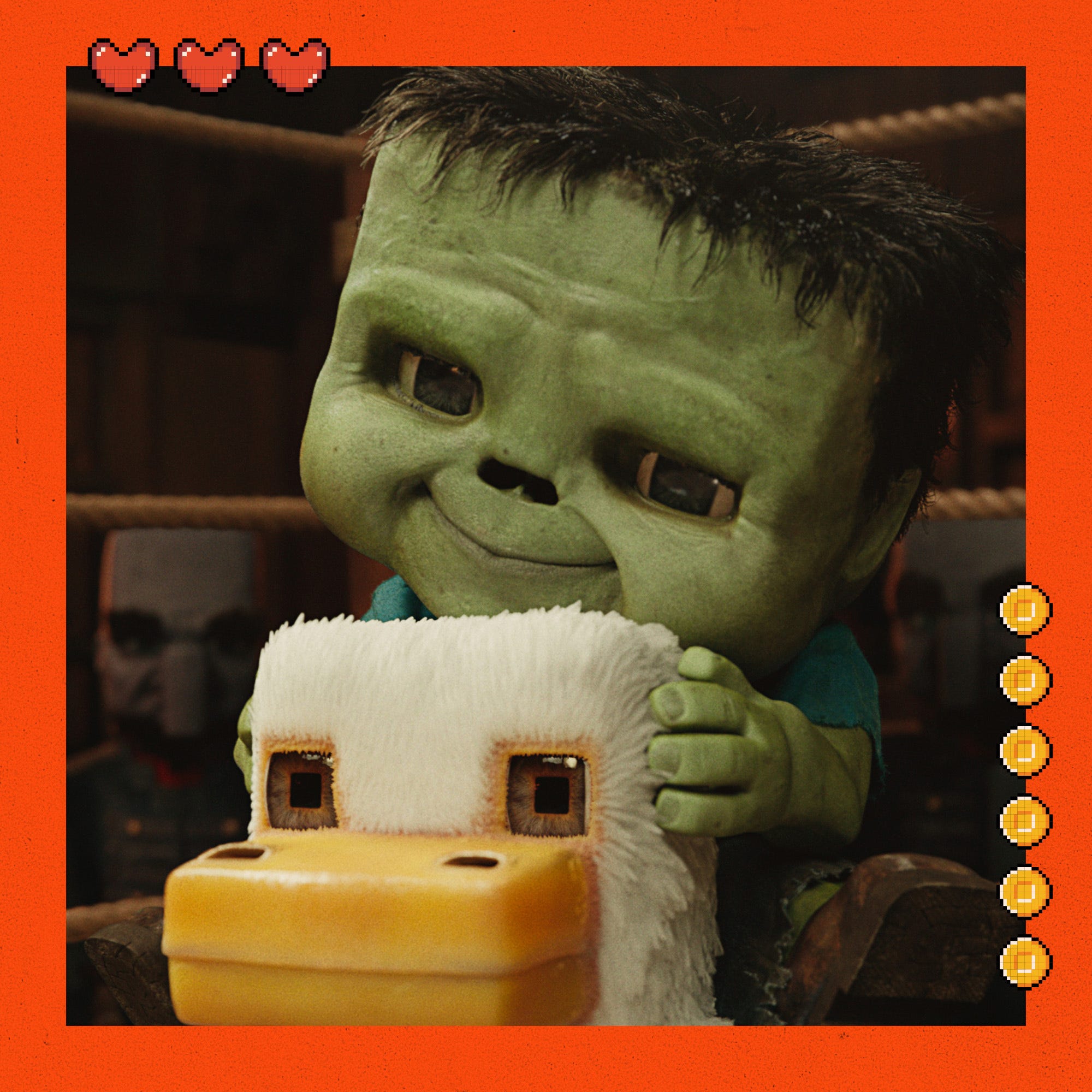
This year marked a turning point in Gen Z nostalgia, as movies based on their childhood faves are now box-office hits. Look no further than the success of Warner Bros. A Minecraft Movie, which took a game from 2011 and turned it into a feature that made almost $1 billion worldwide and easily cruised into Letterboxd’s One Million Watched Club. If comic book movies dominated millennials’ viewing habits, then games-based movies may be where Gen Z goes to see how old favorites are being adapted for the big screen.
For example, Universal’s 2023 movie Five Nights at Freddy’s was just as big a hit as its source video game was with streamers (gaining a large following on YouTube as audiences watched a hapless gamer navigate the horror of animatronic nightmare animals). Freddy’s joined Minecraft, with over one million Letterboxd members logging it on the platform. As member Danilo explains, “This movie is 100 percent pure, uncut fan service for the 2014 YouTube/Hot Topic generation, and honestly? It worked… It’s dumb, it’s fun, and the lore is thicc.” (Five Nights at Freddy’s 2 hits theaters Dec. 5.)
Part of this stems from how younger audiences better understand gaming imagery and language, and how they can appreciate how it’s woven into movies that “speak video games,” even if they’re not direct adaptations, like 2010’s Scott Pilgrim vs. The World and 2012’s Wreck-It Ralph. “Toronto is a PvP-enabled (player vs. player) zone,” observes Kai of Scott Pilgrim, which is set in the Canadian city. At the same time, Kutulhu spied a sly Easter egg in Wreck-It Ralph by noting, “Early in the film, we see (Street Fighter characters) Ryu and Ken say they are going to Tapper’s for a drink. Later, when Ralph is at Tapper’s, Ryu is by himself and looks despondent. What happened?”
The popularity of these movies is also evident in the Letterboxd Showdown, where members voted for their favorite game movies, and we can see how far these adaptations have come in roughly a decade. “Those absolute madmen, they actually did it,” Adam says of 2020’s Sonic the Hedgehog. When it comes to 2019’s Pokémon Detective Pikachu, “This is our generation’s Blade Runner. I will not elaborate,” proclaims Cinéfila. Video game reboots are also getting love, too. Despite initially hitting screens in the ’90s, a new adaptation of Super Mario won over audiences in 2023. “Jack Black was born to play Bowser,” notes Luk3w3bb. (This could not be said of Dennis Hopper.)
Beyond gaming, Gen Z has also propelled anime into some of the biggest hits of 2025. Demon Slayer: Kimetsu no Yaiba – The Movie: Infinity Castle is the highest-grossing international film in the U.S., and Chainsaw Man – The Movie: Reze Arc is one of the highest-grossing Japanese films of all time. Both pictures came from anime series, but those fans were more than happy to follow the titles into cinemas. “Watching this in a full theater packed with fans feels like being at a home team football game; people screaming and cheering when a Hashira does something sick and audible booing whenever one of the demons does the same lmao!” Adam writes about Demon Slayer.
Whether it’s in gaming adaptations or seeing anime series land on the big screen, people want to take the entertainment they see at home and celebrate sharing it with their community. — Matt Goldberg for Letterboxd
