

Patreon’s CEO on Poaching Substack Stars — and Why Meta Feeds Are Headed for Full AI
SCOOP: Jack Conte reveals the three ‘human-focused’ rules shaping his new algorithm, and the consumer shift as subscription fatigue sets in

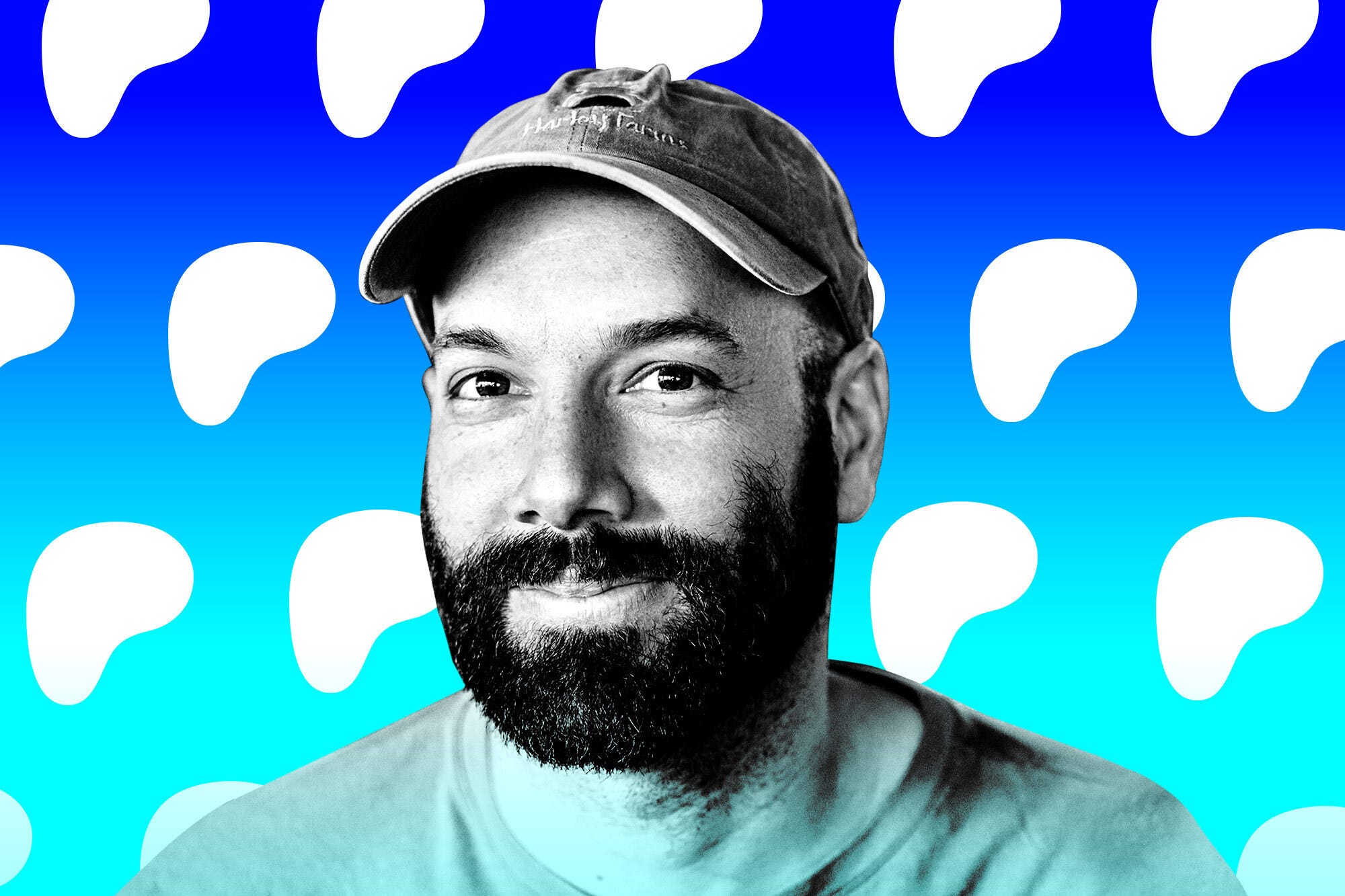
I cover the creator economy at Like & Subscribe, a standalone newsletter that’s being sampled today for all subscribers to The Ankler. I wrote about Netflix’s missteps as it recruits top podcasters, interviewed two media founders about how to win young audiences and explored how Dancing With the Stars seduced Gen Z. I’m natalie@theankler.com

This past weekend, as I was traveling home to L.A. after spending the holiday with family (did you catch Hot Ones’ Sean Evans during the Macy’s Thanksgiving Day Parade?), my iPhone buzzed with an alert that my screentime activity had averaged less than five hours per day over the previous week. Not too bad, I thought, and proceeded to open Instagram. Then I remembered the interview I’d just recorded with Patreon CEO Jack Conte, and I shoved my phone back in my pocket.
Conte is the rare tech executive who actually advocates for spending less time on your phone. And he practices what he preaches, limiting his own Instagram usage to just 10 minutes each day. “I’ve had to wean myself off these platforms,” he says. “I know what they’re trying to do to my brain, and I still have to set a timer for myself.”
I called him up last week after watching his recent New York Times Opinion video: Over seven highly choreographed minutes — featuring the work of a number of Patreon creators — he argues that our brains are being melted by the algorithm and breaks down his vision for a healthier internet “grounded in creativity and human connection, a more human algorithm.”
Conte, 41, co-founded Patreon in 2013 (alongside Sam Yam, now the company’s president and CTO) to give creators a place to monetize their work directly through fan payments like subscriptions. The company — which was valued at $4 billion when it last raised funding in 2021 — now works with more than 300,000 creatives from musicians to podcasters and says it has paid out more than $10 billion in total.
But the internet has evolved a lot in the 12 years since. Conte believes the TikTok-ification of social media has de-prioritized the value of following or subscribing, making it harder than ever for creators to actually reach their fans. Algorithms that prioritize driving immediate (yet fleeting) gratification are making us addicted to our phones, and yet it’s harder than ever for creators to build businesses from their work.
“You just are a cog in the attention machine,” he says. “Creators find it very difficult to control their discovery experiences, to have some agency in what’s recommended. And fans don’t have agency around what gets shown to them.”
He’s approaching these problems not just as an executive, but also as a creator himself. Together with his wife Nataly Dawn, he performs in the band Pomplamoose, which has 2 million YouTube subscribers and 1.2 million followers on Spotify. He also plays in punk band Scary Pockets (1 million YouTube subscribers) and hosts the show Digital Spaghetti (215,000 subscribers) about the creative process.
Conte’s motives aren’t purely altruistic. Patreon recently announced it is making some big changes to its platform, including redesigning its homepage to recommend more new content to users and allowing creators to publish short, Twitter-like posts called Quips. These products might look like the very thing he’s criticizing in the Times video, but he tells me they’re being built very differently.
They’re being introduced as Patreon faces serious competition from platforms like Substack and Beehiiv (and vice versa). Seven years ago, Patreon acquired subscription membership platform Memberful, which helps creators like Molly Baz and Rhett & Link build subscription-powered websites. Memberful has also been a draw for media brands like Punchbowl News and Vox, which has been using that platform for several years and separately announced last month that it’s now on Patreon.
Now, a number of writers are decamping from Substack for Patreon including cultural critic Anne Helen Petersen, an early Substack adopter whose newsletter Culture Study regularly topped that platform’s charts. “I didn’t want to be on a platform that had been steadily — and not so stealthily — enshittified,” she wrote to her subscribers, explaining that Patreon reached out to her about joining its platform and showed her “newsletter functionality to rival (if not improve upon) Substack’s.” Adweek has reported that Patreon has offered some Substack writers financial incentives, including a revenue guarantee.
The move clearly riled up Substack co-founder Hamish McKenzie.
In our conversation, lightly edited below, Conte reveals his pitch to writers looking to leave Substack. He also shares his recipe for making algorithms better for our brains, an explanation for why Patreon is introducing more algorithmic features and his prediction about what will happen when AI takes over Meta’s feeds (hint: It’s not looking good for creators).
Read on for my interview with Patreon co-founder and CEO Jack Conte, which gets into:
The three “human-focused” rules behind Patreon’s new algorithm — revealed here for the first time
Why big Substack writers are defecting and the pitch Conte is making behind the scenes
How Quips is designed to help creators “get the fuck off Instagram”
The payment feature growing 3x faster than subscriptions — and what that shift signals
How Patreon plans to handle ads and brand money without corrupting its core
What creators say isn’t working on Patreon — and what Conte is doing about it

Be ‘More Human-Focused’
Natalie Jarvey: That New York Times video looked like a ton of work. How long did it take to film?
Jack Conte: The team crushed it. We worked with a lot of creators to make that video, a lot of Patreon creators and creators in general, so coordinating with all of them, we’ve been working on pre-production and production for a good chunk of this year. I think filming was two days. I’ve been filming vlogs since 2007, and sometimes I do 50-plus takes. On this one, honestly this is the shit I’ve been saying for four years. So we did three or four takes per section and picked the best one.
This has been your message for a while. And the solution you outline for the problem with social media today is “optimizing for human connection.” How do you actually do that?
It can’t just be words on a page, marketing, comms points for a CEO to say externally as we build a bunch of fake shit internally. This work started last year, me meeting with our product managers, machine learning teams, engineering organization — and before building a thing, getting crisp on what we’re doing and why and how it’s going to actually work. Tactically, it started with an all hands that was a bit of a call to arms, where as a company we reckoned with a lot of these problems and the fact that if we’re going to build discovery for creators, we can’t fall down the same hole that these other companies have fallen down.
Then it was week after week meeting with those teams and developing a set of three principles that were going to guide not only the product and the UX and the experience, but literally our machine learning algorithms.
The idea of long-term relationships over fixation, that’s the first principle. What does that mean? Our algorithm is going to surface, for example, the back catalog of creators that you’ve said you like, and we’re going to help you fall in love with that creator and the arc of their career versus just showing you a bunch of other stuff that you may or may not like. My viewpoint is that the subscribe button is a critical piece of internet architecture that must be respected, and so our machine learnings use that input much more than TikTok or YouTube.
The second principle is that at the end of the day, the world doesn’t need another free place on the internet to share your work. Patreon would lose that battle if we tried to compete against TikTok, and our creators wouldn’t want that product because they already have plenty of places to do free labor and not get compensated for it. We must pay creative people so that they can build businesses around their work.
The third thing we aligned around over a year ago as a company is this more human-focused approach to systems. What does that mean? A very specific example that is also very culturally relevant right now is I don’t think Facebook’s first principle is that we need to help creative people. I think they think of creators the way Uber thinks of Uber drivers, which is: If we can automate this, then we will, which is why Facebook is investing in generative AI tools and filling feeds with AI stuff. And they would rather not have to deal with creators, honestly. They would rather fill feeds with AI-generated creativity that gets people even more addicted to their phones.
I doubt this is going to happen, but zoom forward five years and suppose Sora kills TikTok, and AI-generated content is better at addicting people to their phones. I think Facebook will pivot to fully AI-generated content. Patreon will not.
Our approach is different. It starts with being more human-focused with discovery, with our systems, with everything that we’re doing. We lean into things like creator-to-creator recommendations. We’ve hired super fans and curated discovery lists. We believe in taste. People have good taste. People know what’s interesting and cool right now, and so we are leaning into that.
Patreon recently announced Quips and also a new homepage with more content discovery features. On the surface, this looks a lot like the things you’re saying you don’t really like about other social media platforms. And it’s not necessarily what people come to Patreon for, so why are you introducing a product like this?
A very large portion of creators — in our State of Create survey, the stat was 78 percent of creators say that algorithms impact what they create. That’s a really bad state to be in as a creative person because you end up making stuff that you think an algorithm wants instead of stuff from your heart. If you want to grow your audience and business but not be subject to all these negative downsides of the current attention economy, you should have an alternative. As a creator myself, I want there to be somewhere where I don’t have to play the game, where I can build a community and build a business and get the fuck off Instagram.

Currently the people who come to Patreon are people who became famous elsewhere and are bringing their audience with them. Is your goal to create an ecosystem where someone can build a following on Patreon without having to become famous somewhere else first?
I think that will happen as a result of us making these changes [Quips, content discovery on the homepage, creator-to-creator recommendations]. When we survey our creators, the thing that they don’t like about Patreon is that it feels siloed compared to other platforms. Patreon doesn’t help me get discovered compared to other platforms. Patreon expects me to do all the work of driving my own memberships. I have to go promote on YouTube in order to get a bunch of fans on Patreon. This is a chief complaint from creators as a problem with our product that we want to solve.
Something else you’ve talked about is creating a dynamic where people are paying for content as opposed to paying for ads. Some creators like to have relationships with brands that support them. As you build new features — allowing people to subscribe to Patreon creators for free, for example — how are you thinking about subscriptions versus advertising?
For 12 years, Patreon has been focused on money from fans. Very few other companies have been doing that, and it is a very high-quality effective engine for getting creators paid. My belief is there’s a lot of work to do on what we call the direct-to-fan payments space. There’s courses, there’s newsletters, there’s subscriptions, there’s one-time payments, there’s gifting. There are so many ways creators are getting paid now, and that is the priority for us.
It’s not true that Patreon would never work with brands because that is half of the creator economy. And to your point, a lot of creators want to work with brands. But I don’t like the way that creators have to work with brands right now. Display advertising and pre-roll ads and all that stuff has created a lot of weird incentives and has gotten creators to think about how to addict people to their phones. If we were to help creators make money from brands, I’d want to do it in a completely different way. We haven’t done that work yet, so I can’t share what that is.
Patreon has recruited a number of high-profile newsletter writers, particularly from Substack, recently. Why is that a category of creator that you’re investing in?
So over the course of 2020 to 2023 we saw an explosion of podcast creators using Patreon because we’ve built this really flexible paywalling software, which is the main business model for podcasting. But the thing is, creators have become multihyphenates. You’re not a podcast creator, you’re a creator and you have a podcast and a YouTube show and a newsletter and you post on Instagram. A lot of our podcasters were spinning up newsletters and asking us for better email tools. So we ended up building it.
What’s been the pitch to newsletter writers?
There are a couple of things that are more resonant for creators about Patreon than some other platforms, including Substack. With Substack in particular, there are a lot of creators who are really upset with Substack’s content policy and hosting Nazi content. Patreon doesn’t allow that kind of stuff, which I’m very proud of. That’s been one selling point. Another in the actual features we’ve built. We’re not just a newsletter product. I know Substack is trying to expand in these other categories, but a lot of the writers on Substack also have podcasts, and Patreon has a bunch of podcast tools that are just better. We have a more robust set of professional network features for multihyphenate creators, and that’s really resonated with a lot of creators.
When Patreon launched, it was novel to be able to subscribe to support a creator. Now everything’s a subscription. How does the Patreon business evolve if we hit the point where people tire of subscriptions?
Subscriptions are still very effective for creators. But because of all the trends that you’re talking about, it’s very important that creators have other ways of making money too. There’s a bunch of fans that don’t want to pay a subscription, so how do we help creators bring those fans in for free — hence free membership — and how do we help creators build businesses with those fans in a way that doesn’t use the subscription? We built this new product called One-Time Payments, which allows creators to sell individual posts or a back catalog of a thousand videos for 50 bucks. That’s growing 3X year over year. It’s growing way faster than subscriptions.
You talk a lot about how the internet can be icky and bad. What’s something good you’ve consumed on the internet recently?
There’s endless goodness on the internet despite the systems. Hank Green comes out with two or three videos a week, and I haven’t been a religious person in maybe 25 or 30 years, but that’s the closest thing to a sermon I can imagine in my life. It’s such a wonderful zoom-out, perspective-shifting review of the world.


Mark Rober’s CrunchLabs YouTube videos have been repackaged and posted on Netflix (a la Ms. Rachel) in the lead-up to the premiere of his new show on the streamer next year, and as my Ankler colleague Elaine Low details, the episodes have been performing very well! More evidence that there’s value (and dollars) to extract from a YouTube channel’s back catalog.
TikTok Shop is basically QVC on steroids, so it makes sense that QVC is the highest-earning store on the app.
Squid Game, KPop Demon Hunters, Charlie Kirk and Labubus were among the top trending topics of 2025 on YouTube.
NBCUniversal has tapped Kylie Kelce, Jordan Howlett, Cleo Abram and Las Culturistas hosts Matt Rogers and Bowen Yang, among others, to capture YouTube content of the Winter Olympics in Milano Cortina.
Club Chalamet has 39 paid Substack subscribers and a mission to help Timothée Chalamet win an Oscar.
The Secret Lives of Mormon Wives and Dancing with the Stars’ Whitney Leavitt is Broadway’s next Roxie Hart.

 Tiktok failed to load.
Enable 3rd party cookies or use another browser
Hmm...maybe the answer isn't to replace one algorithm that's controlling your brain with a different, supposedly better algorithm. Maybe instead you could stop letting algorithms control your choices altogether. Believe it or not, it's still possible.