

My TIFF Finale: Seyfried, Moura & the Stories That Stuck With Me
The last of my 50 (!) interviews close out the fest — as do my hopes for ‘Train Dreams’

With all love to the beautiful city of Toronto and the enthusiastic, devoted moviegoers my colleague Richard Rushfield has already paid tribute to, it is time to go home. It has been nearly a week of TIFF for me this year, and between interviewing almost 50 people and seeing 11 movies, even this pilgrim to the temple of cinema is ready for a break.
I’m heading home today as you read this, but before I left town, I made time for two last movies — Park Chan-wook’s hilarious dark comedy No Other Choice and the Sydney Sweeney star vehicle Christy. I was also able to grin and bear it through one final party, a reception following the Toronto premiere of Train Dreams. I first saw that film back at Sundance and fell in love with it, and so I was thrilled to see so many people streaming from the premiere to the party, still so clearly emotional about what they’d seen. After chatting with the film’s star Joel Edgerton earlier in the fest, I caught up briefly with Train Dreams producer Ashley Schlaifer on Tuesday. She praised Netflix’s careful attention to the little underdog movie, which Ashley suggested will include many more stops at smaller regional festivals in the coming months.
That’s exactly what I was hoping to hear, much as everyone in Toronto is now eager for a break. The New York Film Festival is the next major stop on the fall festival circuit. However, it’s the smaller events in places like the Hamptons, Savannah, Montclair and Middleburg where movies like Train Dreams can really get audiences to fall in love. I’ll be hitting the road right alongside the Train Dreams team and dozens of other films, hoping to get just that little bit of extra awards season attention.
But first — can you believe there’s a whole other awards show to get through this weekend?
A few scheduling notes for you: I’ll have a return to regular Prestige Junkie programming tomorrow with an interview with Oliver Hermanus, a director who wasn’t at TIFF, if you can believe it, but has made the festival run this year at Cannes and Telluride with The History of Sound. On Friday, Christopher Rosen and I will hop on Substack Live to recap everything we saw at TIFF and share some details from behind the scenes of our studio — but the stream is only available for Prestige Junkie After Party paid subscribers, so make sure you’re signed up to watch along. And you’ll want to stick around for Sunday night, when Chris and I will be back on Substack Live for a three-hour Emmys watchalong extravaganza. Will we get tired and punchy and stop making sense? You’ll have to tune in to find out.

Inside the Prestige Junkie Studio
With TIFF still very much ongoing, here’s one last roundup of our conversations from our Prestige Junkie interview studio, plus incredible portraits from photographer Chris Chapman. Thanks again to all of you for following along with us, and of course, to the staff at Soluna Toronto and the literally dozens of people who made these seemingly effortless chats possible. I’m biased, but I think it was worth it.

THE TESTAMENT OF ANN LEE: ‘WE’VE ALL BEEN CHANGED’
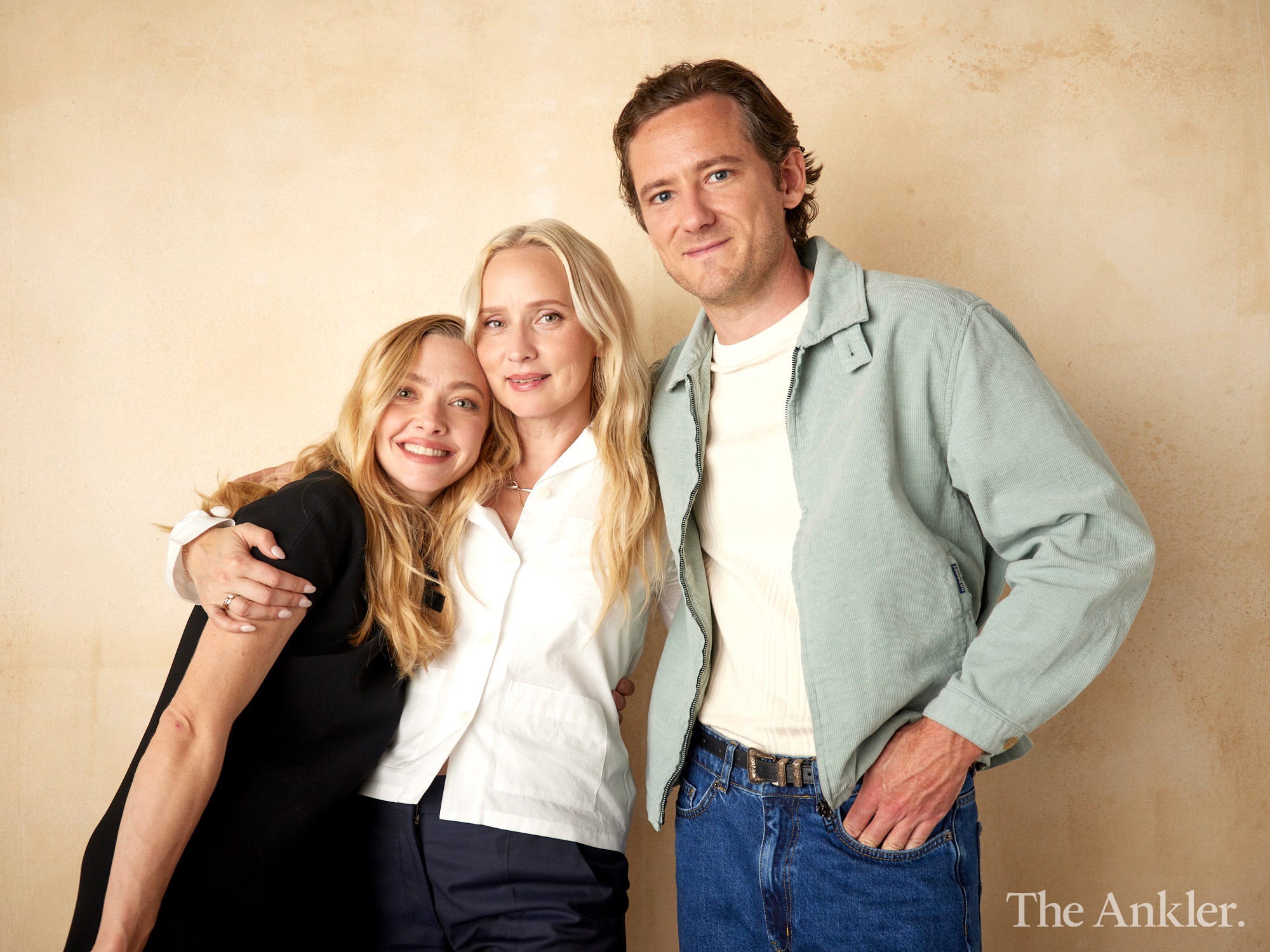
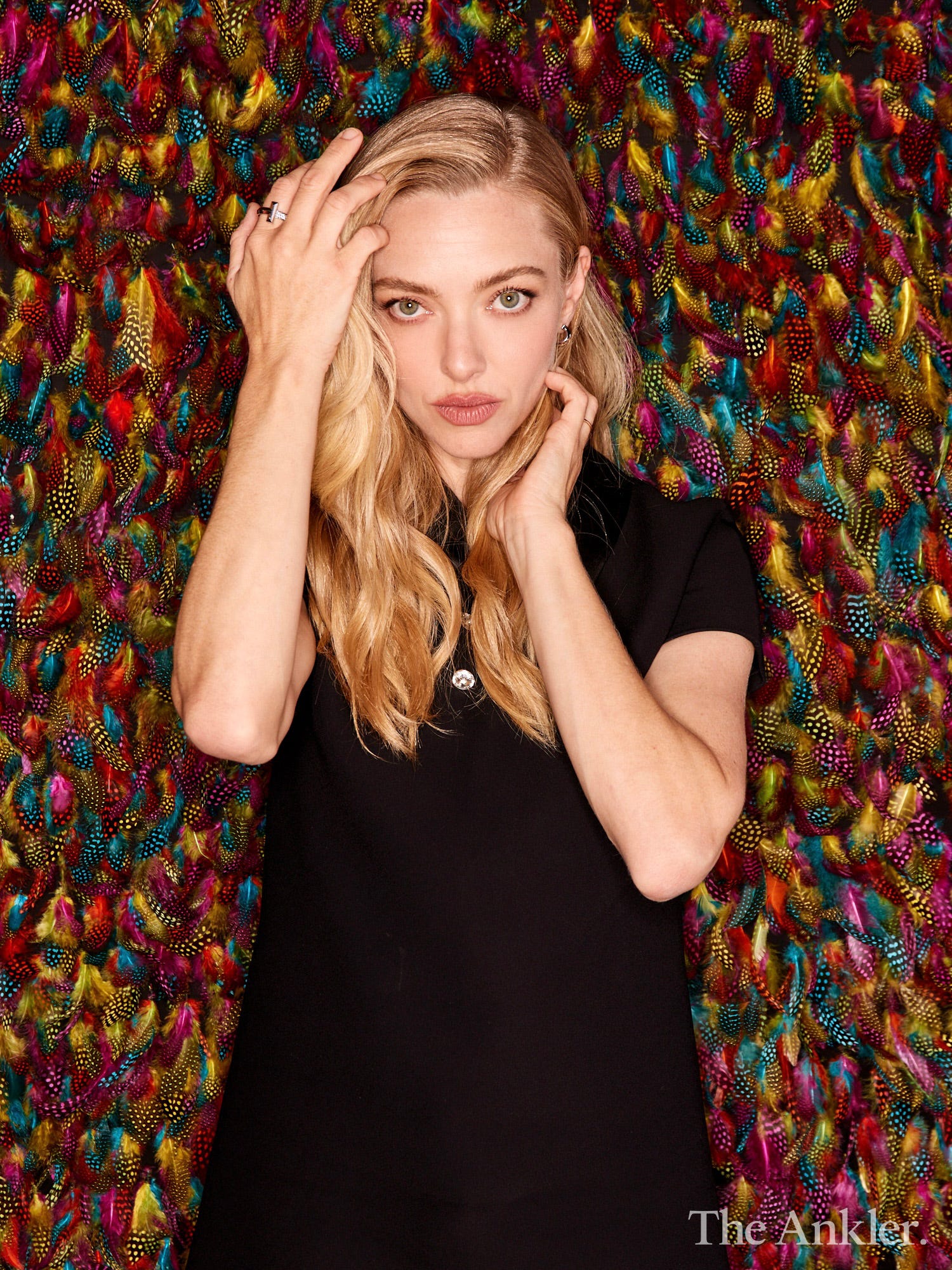
For the Shakers, the utopian religious group founded in the 18th century by Ann Lee, dance and movement — and literal shaking — were a way to connect to God. For Amanda Seyfried, who plays Ann Lee in Mona Fastvold’s rapturous musical biopic, she saw some more earthly connections happening in this film. “I think a mojo has been found on this movie for a lot of people,” she tells me. “We’ve all been changed by it in a way.”
Making any film is an act of faith in the director and in each other. Still, the Testament of Ann Lee team — performing songs written by Oscar-winning The Brutalist composer Daniel Blumberg and based on Shaker hymns — knew they had to keep the faith that they were building something truly extraordinary. And for Fastvold — an Oscar nominee who co-wrote The Brutalist with her partner, Brady Corbet, with Corbet now co-writing Ann Lee with her — the egalitarian community built by Ann Lee feels particularly inspiring to watch today.
“We’re surrounded all over the world by a lot of male leaders who are leading through fear and intimidation,” Fastvold says. “Right now, remembering American history, that this woman was part of that. We stand on her shoulders.”
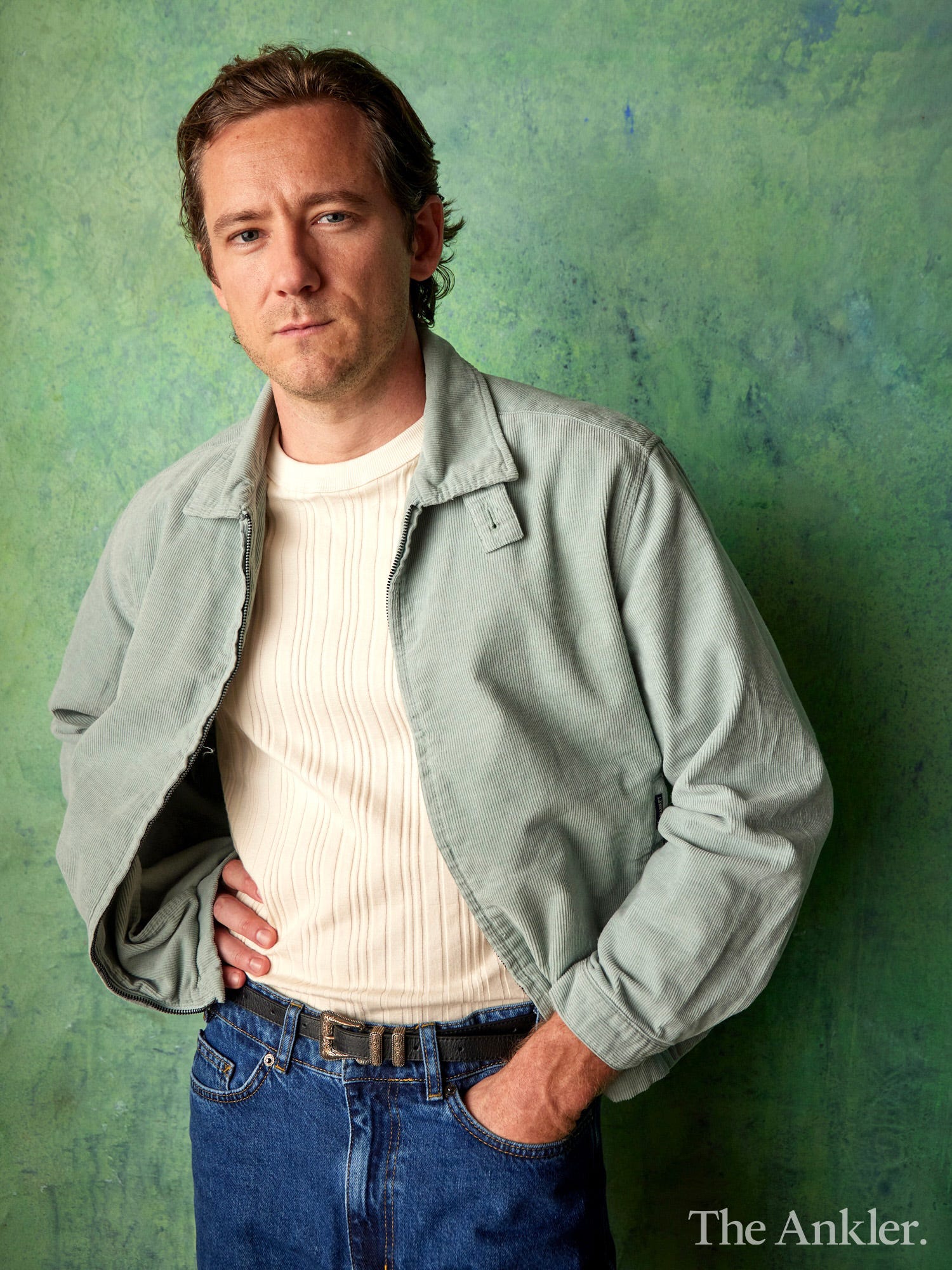
This has been a whirlwind 12 months for Fastvold, who, along with Corbet, brought The Brutalist to last year’s Venice Film Festival without distribution — eventually landing a deal with A24 and 10 Oscar nominations, including three wins, for Blumberg, cinematographer Lol Crawley and lead actor Adrien Brody. The Testament of Ann Lee, likewise, debuted at Venice, and is now seeking distribution, with early buzz putting Seyfried, a nominee for Mank in 2021, on the list of possible best actress contenders.
“I felt the kinship in how she wanted a set to be run and how I wanted a set to be run,” Fastvold says of her star. “But then also, no one listens like Amanda as an actor. It’s an extraordinary thing. Sometimes she forgets her lines because she’s so excited by what the other actor is saying. And I leave a lot of those moments in the movie because she’s so present. It is an incredible thing to just give yourself over to a scene and to a moment that you forget where you are.”

THE SECRET AGENT: A COLLAB YEARS IN THE MAKING
Kleber Mendonça Filho and Wagner Moura first met on opposite sides of an interview in the early 2000s, when Filho was still working as a film critic and Moura was beginning to break out as an international star. They connected over their shared roots in the same part of Brazil, but it took nearly two decades for the bond to really cement itself, thanks to what they describe as a particularly dire time for their country while Jair Bolsonaro was president.
“What really put us together was politics,” says Moura, who has made a name for himself with Hollywood projects like Narcos and Dope Thief but returned to his homeland to star in Filho’s latest film, The Secret Agent.
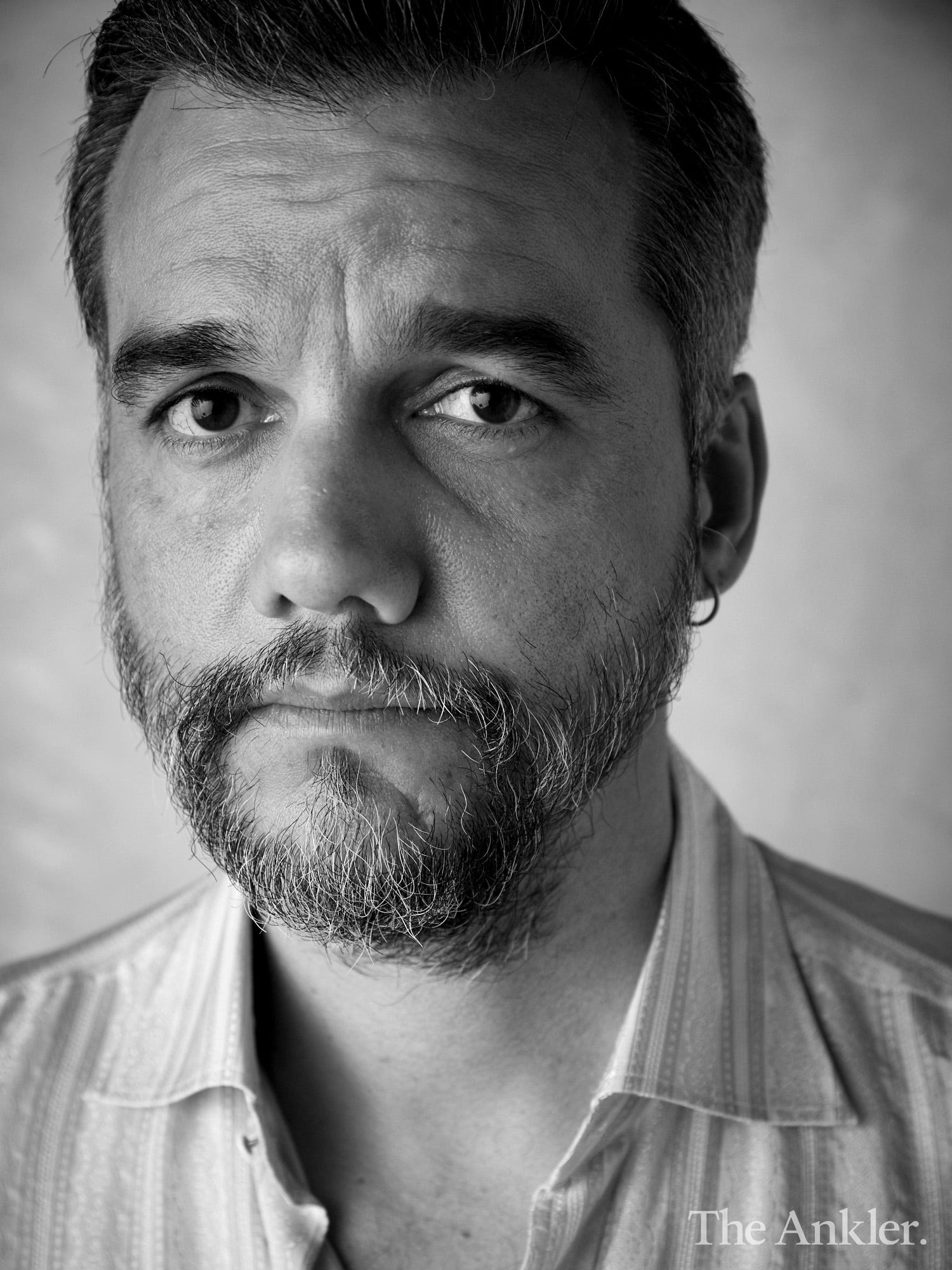
Bolsonaro’s exit from the presidency in 2022 made it possible again for Filho to get the support he needed to make a movie as ambitious as The Secret Agent, which won Filho and Moura individual awards at this year’s Cannes Film Festival (for directing and acting, respectively), and will debut this fall courtesy of Neon. But the scars of the era still lingered. Instead of focusing on the recent past, though, Filho turned his attention to the 1970s, crafting a period thriller in which Moura doesn’t play a secret agent, actually, but an academic trying to stay true to his values despite political pressure (and yes, if that doesn’t sound a little timely, then you’re not reading the news). It’s also very funny and surreal, but a little hard to explain unless you’ve seen it.
As Filho puts it, “I really loved the idea of doing a thriller, which is suspenseful, and at some points it gets quite violent. But I really had to come in and bring the other side, which is basically love in very difficult situations in society. Often, people get together and they protect each other.”

RETREAT: A DEAF BARRIER-BREAKING THRILLER
The British production Retreat is being billed here in Toronto as “the world’s first Deaf thriller,” which is undoubtedly getting the attention of prospective buyers. But director Ted Evans, who, like the entirety of his cast, is Deaf, says not to get too caught up in that description.
“I don’t really think in terms of conventions when I’m writing — it’s up to everyone else to call it a thriller,” he says. “Whether it’s the first Deaf thriller, that’s not for me to say. But I think not many people like us get to make films, and this is why people are seeing it’s unique and special.”
Retreat stars British actress Sophie Stone, who worked with Evans on his first short film and whom he calls his muse, as well as German actress Anne Zander, who learned British Sign Language for her role. The movie focuses on a young woman named Eve (Zander), who moves to a utopian Deaf community in the British countryside called Chilmark, led by Mia (Stone). (Incidentally, the Chilmark depicted in Retreat shares its name with a real town on Martha’s Vineyard that was once known for its high percentage of Deaf residents.) As with so many isolated communities founded by a charismatic leader, though, not all is as it seems. The group at the center of Retreat could definitely be called a cult, but as Stone puts it, that’s very much rooted in the real world.
“We are ultimately a part of the bigger cult, the Deaf community,” she says. “You can travel the world and stay at other people's homes just because you’re Deaf. So there's an element of trust.”

I SWEAR: A TOURETTE’S SYNDROME STORY
Director Kirk Jones knows his way around a heartwarming story. His debut feature, 1998’s Waking Ned Devine, became an international sensation and set a template for cute, quirky British comedy that’s still with us today. There’s some DNA of that as well in his new film, I Swear, set in the small town of Galashiels, Scotland, and introducing the audience to a wide range of colorful characters. But I Swear is also a true story, made in close collaboration with its central subject, John Davidson, who has been honored by the Queen but is also prone to swearing under the most inappropriate circumstances imaginable.
That’s because Davidson has Tourette’s Syndrome, and has campaigned tirelessly to bring more awareness and understanding to the condition; I Swear, in which 32-year-old Robert Aramayo plays Davidson, is continuing that work.
“I was in constant dialogue with John,” says Aramayo, whom you may recognize from Game of Thrones or House of the Dragon. “I just felt really passionate about those two things—getting as much information as I could from John, and also taking ownership over it myself to tell it in the most authentic way that I could.”

LOVE + WAR: A WAR PHOTOGRAPHER AT WORK & HOME
All’s fair in LOVE + WAR, the new documentary about Pulitzer Prize-winning photojournalist Lynsey Addario from Oscar winners Jimmy Chin and Chai Vasarhelyi (Free Solo), including hard truths about the cost of Addario’s profession.
“The hardest thing for me is seeing the emotional impact that my work has on my family and the people I love,” Addario tells Chris. “I always go off into the field and I document all this trauma and death and suffering, but I internalize that and I put it out into the world. I don’t think about the impact it has on my immediate family because if I did dwell on that, I probably would never go on assignment. So seeing this documentary… it’s very difficult for me to watch.”
Addario is one of the world’s most prominent photojournalists — and her shots of war-torn countries like Ukraine, Afghanistan and Iraq have helped document decades of global strife. For the new film, which NatGeo will release this year, Vasarhelyi took the approach of following Addario on two fronts: her experiences in the field and the sacrifices she and her family make at home to allow for Addario’s work to happen.
“Lynsey’s career spans at least 25 years of conflict and humanitarian crises, and really her work has shaped how we look at war, but she's singular in her ability to take these amazing photographs,” Vasarhelyi says. “She’s also juggling a family at home, and she comes from a big family, and it’s kind of the part and parcel of the same thing. It’s all one organism. So I just thought there was an interesting feminist story here.”
Addario says she’s been asked several times about having her life and career documented on screen, but she never felt like it was the right time. When she was approached for LOVE + WAR, however, the track record of Chin and Vasarhelyi pushed her to say yes.
She adds, “I thought, ‘Okay, if it’s not me getting a movie, it’ll probably be a guy.’ So I’d rather, for the first time, we have a documentary on a war photographer who’s a woman, and I felt like that was really important.”