

More Oz? ‘Wicked: For Good’ Team Explore New Project — ‘Not a Sequel, an Adjunct’
SCOOP: Stephen Schwartz reveals he and Winnie Holzman are developing ‘another idea’ — and takes me inside the making of the film’s new soundtrack

I cover where music & Hollywood meet. I wrote about Japanese Breakfast’s throwback song for Materialists, the return of the sexy TV soundtrack and interviewed the brains behind the KPop Demon Hunters soundtrack. Reach me at rob@theankler.com

There are no sequels in the land of Oz, but that doesn’t mean the yellow brick road has reached its end for Wicked music and lyrics writer and music producer, the indomitable Stephen Schwartz.
“If there were a right idea, but I’m just not sure that that right idea exists,” Schwartz, 77, told me this week following the New York premiere of Wicked: For Good, when I tried to get behind the curtain on musical’s big-screen future. “What I will tell you without giving away too much is that Winnie Holzman (the original Wicked book writer and film’s co-screenwriter) and I are doing some work right now on ideas that aren’t a sequel to Wicked, because I think the Glinda and Elphaba story feels complete — but there are other aspects that could be explored. Gregory Maguire, the original Wicked novelist, has several books, for example. But there’s another idea that Winnie and I are discussing: not a sequel, but an adjunct. Let me put it that way.”
If someone could think of a continuation of the story that seemed to have a justification beyond simply making money, of course,” Schwartz added. “As far as right now, no one has yet presented an idea that I’ve heard that would justify such a thing.”
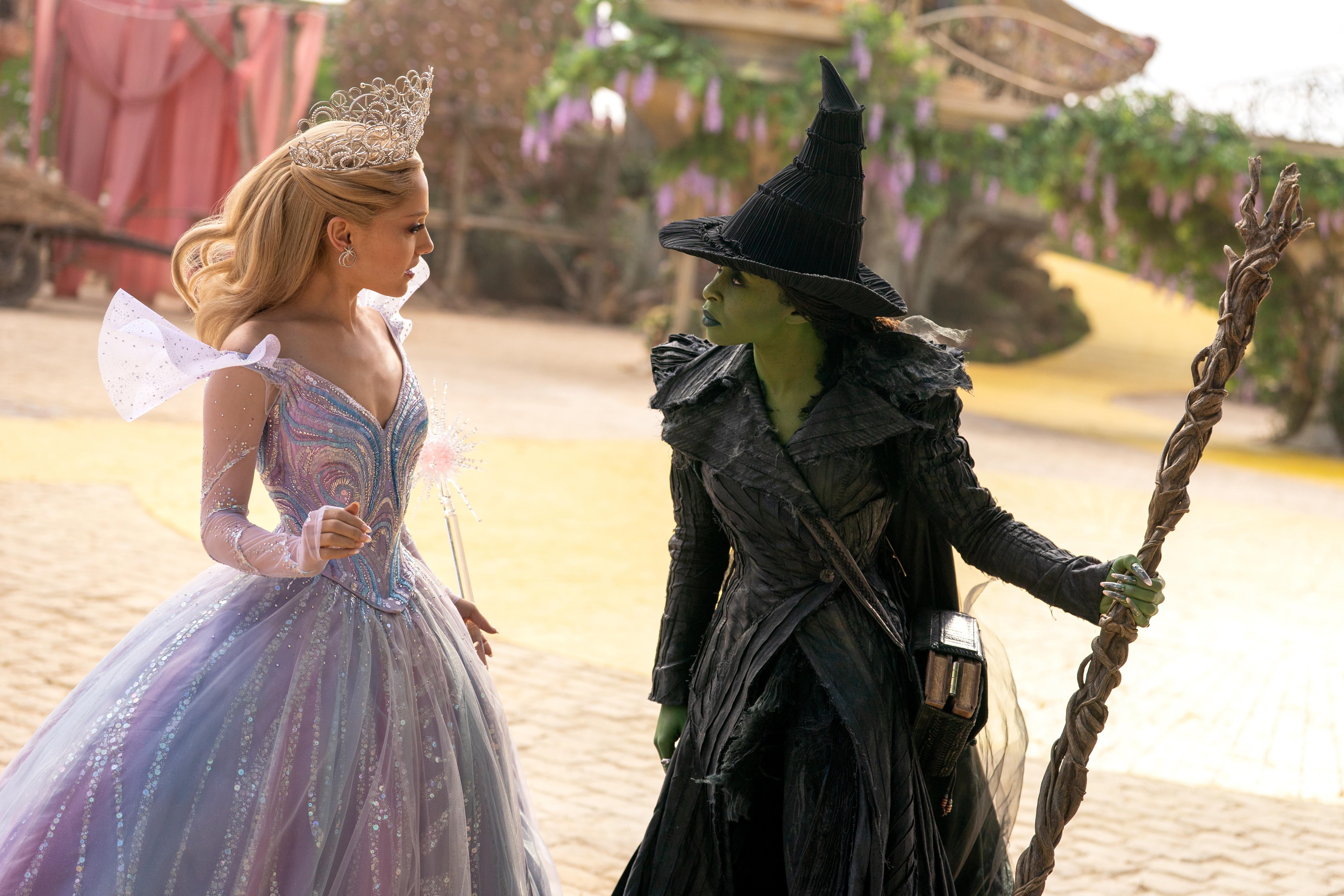
I wasn’t too surprised by Schwartz’s comments (and read more from him on this topic below), since Wicked: For Good decidedly isn’t Wicked 2. “This is not a sequel,” Wicked: For Good executive music producer Stephen Oremus told me. “It’s just the second part of the story.”
Following the blockbuster success of Wicked last year — more than $758 million worldwide, 10 Oscar nominations and two wins — audiences have waited patiently to witness the completion of the musical saga about witches Glinda (Ariana Grande) and Elphaba (Cynthia Erivo) in the land of Oz (before Dorothy arrived and then also after she left for Kansas). But when I saw a screening of Wicked: For Good earlier this week here in New York, I realized the wait had been worth it: The musical spectacle, directed by Jon M. Chu, has everything that made the first movie a new American classic — including powerful performances, soaring emotion and quite a few incredible musical numbers — but with enough extra treats and fresh material to make even the most ferocious flying monkey happy.
While the first part exclusively drew songs from the original stage musical, including musical theater classics like “Popular” and “Defying Gravity,” Wicked: For Good boasts two much-hyped original tracks: “The Girl in the Bubble,” sung by the ethereal Grande, and “No Place Like Home” courtesy of the powerhouse Erivo.
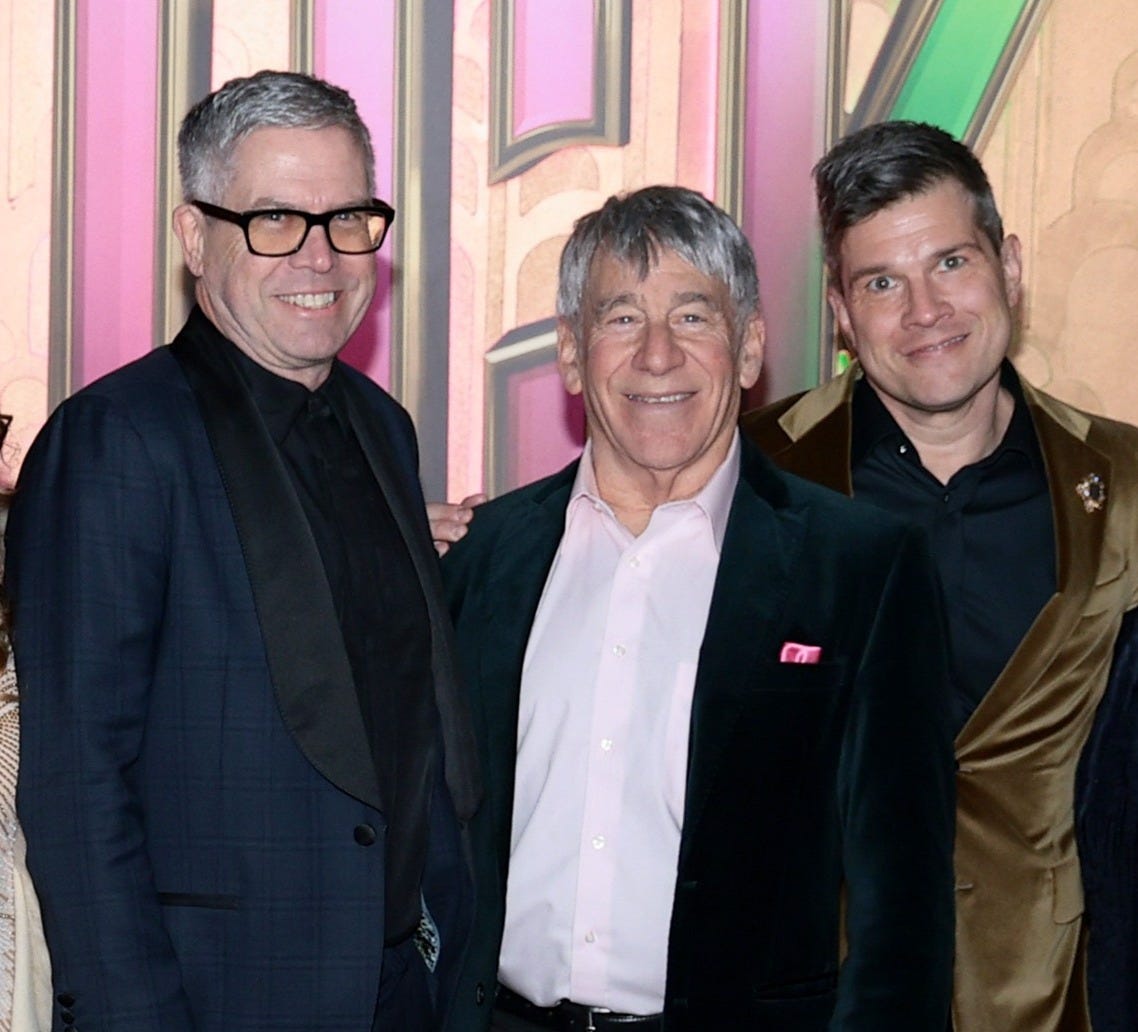
In the wake of the movie’s glitzy all-out New York premiere at Lincoln Center (where the iconic New York location was transformed into a Wicked paradise), Oremus, 54, co-composer John Powell, 62, and Schwartz, the wonderful Wizard of Wicked himself, chatted with me about constructing the movie’s immense and impressive sonic landscape — from scoop about the two new songs to the state of the movie-musical in general, and yes, if there will be more Wicked coming. Also, how the story sadly mimics today’s headlines, where authoritarianism is a looming threat to democracy.

Rob LeDonne: Stephen, we spoke just before the Oscars earlier this year, when Grande and Erivo memorably opened the show. How has your past year been leading up to the big premiere?
Stephen Schwartz: Well, since we last spoke in March until a couple of weeks ago, it was all movie two all the time, basically. There was the scoring, then the recording, then the mixing and the soundtrack album, and the music of the Peacock special, Wicked: One Wonderful Night. So the premiere earlier this week at Lincoln Center was quite a culmination for us.
There had been a lot of chatter about the new songs: Are they going to stand out? Will they fit in with the rest of the music? What are they about? For years, these questions have been swirling. How far along in the process were you when you decided on these two new songs for For Good?
Schwartz: Once we knew that we were going to do two movies, and we laid out the story structure for movie two — just like doing a musical from scratch, we identified what areas of the story would be best told through song, and there were two spots that we felt needed musicalization. That was years before we started shooting, so the songs were written well in advance. And then once we got into shooting, we refined them a little bit with the ladies to make sure they fit them well. When it came to the Cynthia song “No Place Like Home,” the structure was adjusted as the script was refined.
Stephen Oremus: In her scene, it was all CGI characters, so she was all by herself in a room giving this incredible performance.
So, in other words, these were bespoke for the film, and weren’t songs written for the musical and then scrapped?
Schwartz: We started from scratch because they were in new situations for the movie. When Elphaba sings “No Place Like Home,” that happens within a sequence that does not exist in the show — there were sort of references made to it all about it happening off-stage. For Glinda’s “The Girl in the Bubble,” that’s an event that does happen in the show, but occurs off-stage. It’s a moment that could have been in the show, but we never thought of it until we were really looking at the movie, where the arc for the character of Glinda is much more clearly defined than it is in the show.
“No Place Like Home” obviously comes from the famous line in The Wizard of Oz. As a writer, do you know that’s going to be your title right off the bat?
Schwartz: My first thought is, what is the storytelling job of the song? Where is the character starting, and where does the character finish at the end of the song? The ending needs to be somewhere different. All of those questions come first, and as they become clearer, I try to find a title. For the completion of Elphaba’s emotional journey, it was essential for the audience to understand and feel how deeply she loved the land of Oz, even though it hadn’t shown her much love in return. Nevertheless, she wants it to be better than it is. Of course, I write for the character but also through the character to talk about the situation we now face in many countries of the world, where we see our own country changing and becoming very different from the one that we knew, and what is our responsibility for that? Do you walk away, or do we try to be part of a solution?
I was going to ask you about calling Wicked and the Oz story in general “a classic American myth.” When I saw For Good, I thought it seemed remarkably prescient, looking at the current headlines — particularly the cult of personality around the Wizard (Jeff Goldblum). Does it resonate differently with you now, too?
Schwartz: I know. It feels like we wrote the songs yesterday, and I hasten to say that sadly, we didn’t. Frankly, to be really honest, I wish the movie were less relevant. I wished we were living in a world where these sorts of issues — like the use of propaganda and the invention of fake enemies to help the power structure stay in power — were all seen as fiction or as things that happened in the past.
In “The Girl in the Bubble,” Ariana conveys a wealth of layered emotion, both musically and in her acting performance. What’s it like for you as a songwriter to see a voice and acting talent like that bring your vision to life?
Schwartz: Well, obviously, it’s what you hope for. I’m essentially a dramatist, or a dramatic storyteller, or whatever sort of pretentious phrase you want to use. The intention is always that an actor will bring what you’ve written to life, will inhabit it, and make it all feel like a complicated human being experiencing that and expressing that. We are very fortunate to have not only two world-class singers, but two world-class actresses playing our leads. I think Ariana’s performance of that song, and frankly her performance of pretty much everything in the movie, is extraordinary.
Also, good luck trying to sing “The Girl in the Bubble” in karaoke.
Schwartz: You’d have to be very brave with a huge vocal range, number one. When we meet Glinda, she uses two distinct vocal ranges. This is getting a little inside baseball here, I know.
This is what we’re here for!
Schwartz: Okay. Well, this was the choice made when the character was being built with and around Kristin Chenoweth for the Broadway version in 2003. She also has an extraordinary range; she has a great pop voice, but a legit soprano voice, like Billie Burke’s Glinda in the 1939 movie. But in “The Girl in the Bubble,” the character is making a real turn with a choice to be a different person than she has been in her life up until that point. Because she’s changing completely, that’s why it employs all within one song, the soprano and the pop voice together.
John, while the musical existed, I know you had to create a lot of original score for the movie. What was your process like?
John Powell: Obviously, the songs were there, but there was a whole bunch of interstitial music that the team had written for the stage show that mostly didn’t work. Elements and themes of it are still there, but we needed strands to hold the rest of the music together between the songs, and it had to feel like Wicked to everybody. We didn’t want to sort of give everybody whiplash. My gig was to absorb as much of that material as possible, but then make it work for Jon and for the camera, which works very differently from the stage. So I brought anything I could to the table, knowing we already had this great source of riches.
John, you’ve worked on dozens and dozens of projects over the years, from animated films to musicals; the list goes on. Where does Wicked rank when it comes to difficulty?
Powell: It was definitely more complicated than your average film, and not because there are two of them. In a way, it’s the most collaborative I’ve been on a movie because it’s part of a musical history, and I have to absorb enough to be competent at that history. But just getting to work with Stephen Schwartz and letting him try things and seeing if I could make his ideas as cinematic as possible was a dream. Before each film, we had a lot of time together, really working out how to approach everything. But Stephen is obviously fundamentally a dramaturg at heart as well. His sense of the story was vital in how he created the original. But yeah, it’s complicated. I think the last one that was perhaps this complicated was the animated movie Rio. I was dealing with lots of songs and Brazilian music as a Brit, so I was an outsider then as well.
Considering it’s Stephen’s baby, he was incredibly generous, letting me try things, making variants and transforming the music. Sometimes he would be very, very clear, saying, “Let’s not do that, because it doesn’t feel like the language.” I would sit and play with it, and I’d suddenly realize, yeah, he’s absolutely right.
You told me you’re working on something with Winnie that extends the Oz story. What more can you say about that? It seems like there are a lot of possibilities; any one of these characters could have their own movie.
Schwartz: Well, that’s the point. It is a vibrant world — like the Star Wars universe has yielded so many adjacent projects, some of which are truly excellent in their own right. And don’t forget that L. Frank Baum didn’t just write The Wonderful Wizard of Oz. There were many subsequent books.
From your unique perches, what’s the state of the American movie musical? Considering the success of the first one, are you sensing more interest? I’m thinking specifically of the idea of marketing another musical like a Marvel film, which, it could be said, Universal has done with Wicked.
Schwartz: First of all, we have to see how the movie does. We feel pretty confident that fans of movie number one won't be disappointed. If that proves to be the case, there’s a good chance that it will do well. Let’s say it does very well; we know that’s something studios follow. If a couple of movie musicals failed, then they conclude that no movie musical can ever succeed, and vice versa.
But the fact is, I don’t think it has anything to do with genre. In the case of the two Wickeds, I think they are good movies and have broad appeal to audiences, and that’s why they do well — not because they’re musicals. But we could have a whole other conversation about my theories about what makes movie musicals so challenging to pull off.
Oremus: It’s really exciting because in success, everybody wins. If the Wicked movies get people excited about telling musical stories and more movies get made, or at least get begun in development, that’s incredible. It just goes to show you that it’s achievable.
 | A guest post by
|