

Leonardo DiCaprio: The Last Great Movie Star
How the ‘One Battle After Another’ lead stayed big as the pictures got small

Greetings from NYC, where I’m dipping into the New York Film Festival for a few short days to catch some big premieres and take the temperature of a cinephile world that has a lot to be excited about right now. This year’s crop of Oscar contenders isn’t even fully revealed yet — yes, I did see that new trailer last week for Avatar: Fire and Ash, thank you very much — and yet I think we’ve already got a much stronger group than what we had last year, or maybe any year since the pandemic.
That may sound a little irrationally exuberant, but that really has been the mood since Paul Thomas Anderson’s One Battle After Another started screening earlier this month. With an opening of $22.4 million in North America, it isn’t the biggest hit of Warner Bros.’ remarkable year, but it may very well be our new Oscar frontrunner (more than half of the Prestige Junkie pundits think so; keep reading for more on that below), and with many weeks ahead to build more box office to bolster its claim. I’m still very excited about films I saw in Toronto, like Hamnet, Sentimental Value and It Was Just an Accident, and I’ll be catching up on Noah Baumbach’s Jay Kelly tonight in New York. But after 11 nominations and zero wins, Anderson is certainly looking like his Oscar moment is about to arrive.
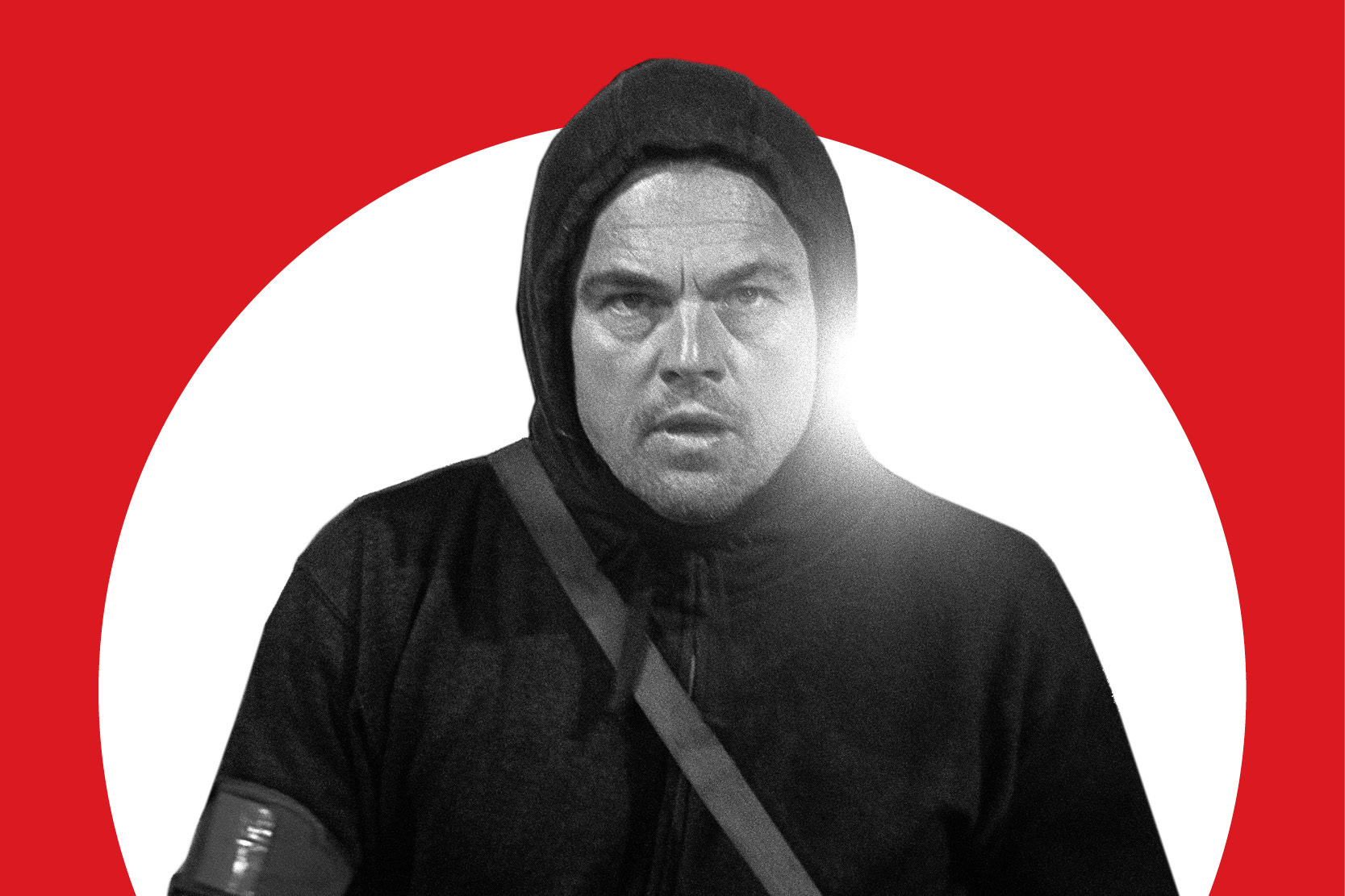
And then there’s his star, Leonardo DiCaprio, who’s been pulling out all the stops to promote the film while also maintaining his very careful bubble of privacy. One Battle After Another bolsters his movie star legacy while also complicating it, much like most of his roles in the last decade have done. Today, I’m going long on Leo, and why seeing him on the big screen still matters after all these years.

The Last Movie Star
Early in Leonardo DiCaprio’s career, his manager, Rick Yorn, received some impromptu advice from Lew Wasserman, the legendary agent and Hollywood dealmaker: “Only let them see him in a dark room.”
What Wasserman meant was to present this new star exclusively on the big screen and limit his exposure anywhere else, keeping him larger-than-life as much as possible. Wasserman meant keeping him out of the tabloids, and might have even been thinking of TV roles, which few true movie stars would ever have considered back in the early ’90s. But he never could have imagined the way the industry would change in the 2020s, how difficult it would become to maintain DiCaprio’s exclusively big-screen career — and how seriously the star would take that advice anyway.
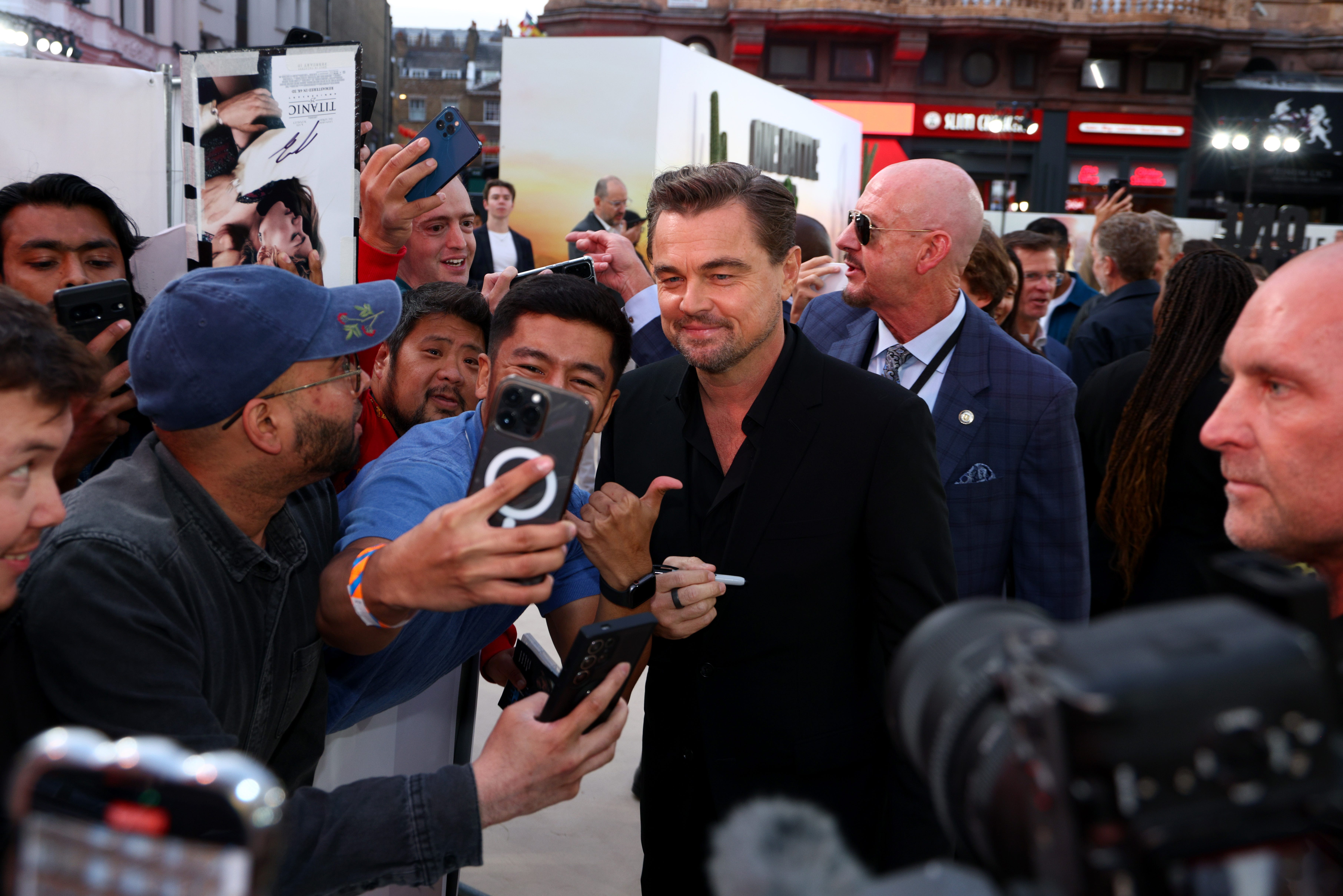
DiCaprio has still not made a TV show since he was a teenager on Growing Pains. He pulls his baseball cap low and makes sure the paparazzi have to rely on their long lenses whenever possible — whether attending heavily publicized weddings or biking around New York City. He has a carefully managed Instagram account with nearly 60 million followers, but when he’s captured by an actual smartphone, he seems to have wandered into the scene by accident. (At least he’s better than Paul Thomas Anderson, who literally runs away from co-star Chase Infiniti’s camera.)
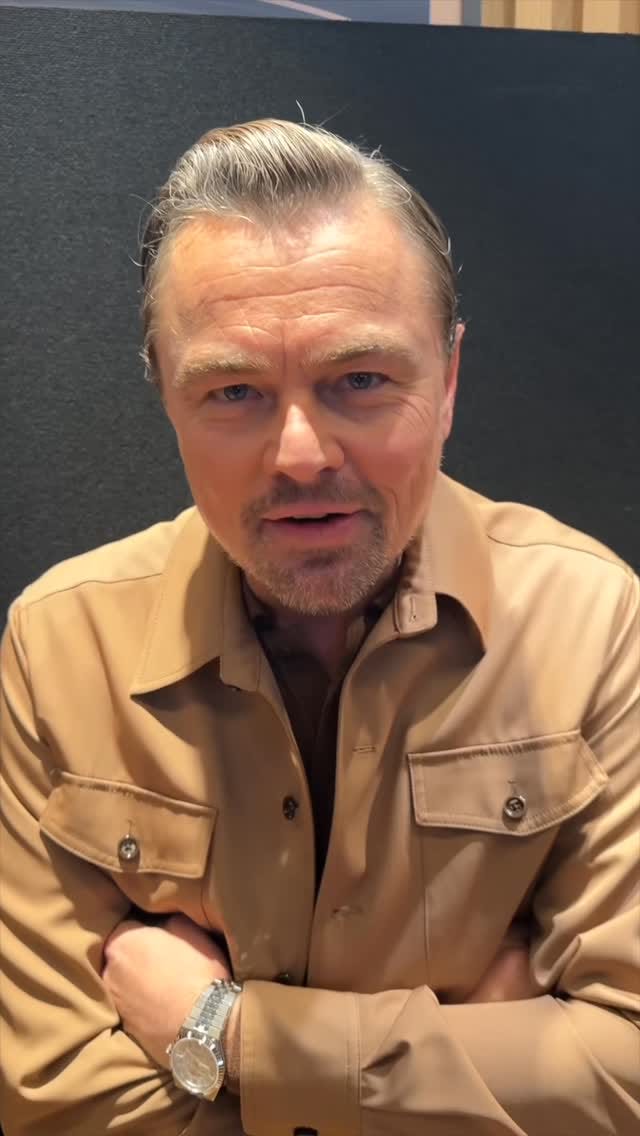
When you sit down to watch One Battle After Another, preferably on the biggest screen possible, you see why it was all worth it. DiCaprio’s face — weathered and wrinkled, and under a rat’s nest of a wig to play Bob Ferguson, a former left-wing radical who searches for his daughter (Infiniti) while being chased by a racist military official (Sean Penn) — looms as large as it ever has, his bright blue eyes still captivating and full of potential mischief. That face, which turns 51 in November, is the reason One Battle After Another could be made for a budget reportedly as high as $130 million or more. That face is one of the most valuable natural resources Hollywood has left.
And, as he has been for the past decade, since winning that long-awaited Oscar for The Revenant, DiCaprio seems determined to transform that face’s meaning. Offscreen, he’s still operating more or less like Jay Gatsby, hosting lavish birthday parties and spending the summer on yachts. Onscreen, he’s spent his 40s and now 50s playing a series of weasels, losers and has-beens, all of them middle-aged white guys baffled by the way the world is changing around them. Sometimes those guys are ultimately heroic, like Rick Dalton in Once Upon a Time in Hollywood or the former revolutionary of One Battle After Another. But all of them boldly dismantle the golden boy image that DiCaprio was assigned at the explosive beginning of his career.
He’s been running away from that image the whole time, though, if you knew where to look. This is the guy who followed up the era-defining success of Titanic by taking a bunch of time off and then making Danny Boyle’s The Beach, still one of the closest things he’s ever made to a flop (although even with its poor reputation, the movie ultimately grossed more than $144 million worldwide). When he started working with Martin Scorsese, DiCaprio first allowed himself to be overshadowed onscreen by Daniel Day-Lewis in Gangs of New York, then went all in on Howard Hughes’ mental illness downfall in The Aviator, then got himself unceremoniously shot in the head in The Departed. He was frequently snubbed by the Oscars during this period, perhaps because he was working hard to avoid being the center of attention.
The gravity-defying magic of it all was that no matter how grimy the role or dark the subject matter, DiCaprio’s movies always worked. He’s probably the only star who could have gotten Blood Diamond to a $171 global gross in 2007, or helped Christopher Nolan get the budget to turn Inception into a nearly billion-dollar blockbuster. With One Battle After Another, he’s opened a movie at No. 1 in four different decades. The dramatic shifts in the industry over the course of his career have meant that the model behind the movies has changed — DiCaprio’s previous two films, Apple’s Killers of the Flower Moon and Netflix’s Don’t Look Up, both had tech money behind them. But more than literally any other star working today, DiCaprio and his name don’t just mean big screen (Don’t Look Up is his only pure-streamer play so far). It means really good stuff that’s actually worth paying to see as big as possible. He’s already responsible for the biggest hits of Quentin Tarantino and Martin Scorsese’s careers. He will all but certainly hold that honor for Anderson, too, once One Battle finishes its theatrical run.
I doubt One Battle After Another is going to be heralded as a cinema-saving hit the way Sinners was earlier this year (although with an opening of $48.5 million worldwide and an A grade on CinemaScore, it should have strong word-of-mouth). The movie is excellent in many ways that have nothing to do with DiCaprio, from Jonny Greenwood’s propulsive score to Anderson’s unbelievably skillful direction of car chases to the phenomenal performances from Infiniti, Penn, Teyana Taylor and many more. But unlike Killers of the Flower Moon, when DiCaprio spent the Oscar campaign hiding his light under a bushel so that his co-star Lily Gladstone could shine (with the voters ultimately snubbing him), I don’t think he’s going to be able to elude the focus as much this time. This is a major movie star performance from a major movie star, and everyone involved seems prepared to treat it as such as the promotional campaign shifts into awards season mode.
DiCaprio is playing the game as well, albeit in his own, carefully controlled way. He appeared on The Tonight Show last week with his castmates — apparently DiCaprio’s first late-night talk show appearance in 20 years — and forced Jimmy Fallon to come downtown and talk to them inside a movie theater. He went on New Heights to talk to Travis and Jason Kelce, but only with Benicio del Toro by his side. The small screen and YouTube thumbnails have a pull that even Leo can’t avoid. But as One Battle After Another proves so definitively, seeing him in that dark room, on that big screen, is really the only place to see what he does best.

Best Director Race Heats Up

Before I go, I wanted to turn to my colleague Christopher Rosen, fresh from seeing After the Hunt and A House of Dynamite at the New York Film Festival this weekend, to provide an update on the best director race as currently forecasted by our Prestige Junkie pundits. Take it away, Chris!

DiCaprio isn’t just a reliable box office stalwart; he’s been an Academy favorite for years. Since 2012, six of his last seven features have received best picture nominations, including Django Unchained, The Wolf of Wall Street, The Revenant, Once Upon a Time in Hollywood, Don’t Look Up and Killers of the Flower Moon. Martin Scorsese directed two of those, and the director’s six collaborations with DiCaprio so far have yielded five best picture nods and Scorsese’s only win with The Departed. The Academy rather famously snubbed Marty for years before he broke through with that crime drama about crooked cops and gangsters that’s as funny as any actual comedy and so unserious it ends with an image of a rat.
I thought of The Departed and Scorsese a lot while watching One Battle After Another. Anderson’s history with the Academy is actually worse to this point than what Scorsese went through, as Katey flagged above. But, according to our pundits, Anderson should start prepping his eventual Oscar speech. While Anderson is tied with Sinners director Ryan Coogler and Hamnet filmmaker Chloé Zhao in terms of likelihood of being nominated, currently, 10 of our 16 experts predict Anderson will win. Since Anderson was able to snag three nods for a low-key masterpiece like Licorice Pizza, it seems possible a noisy, entertaining mainstream feature with DiCaprio can finally get him over the top. After all, it worked for Scorsese. — Christopher Rosen
Subscribe to Prestige Junkie to get Pundit updates straight to your inbox and Prestige Junkie After Party for even more of the ins and outs of awards season.