

He Acts! He Embroiders! Josh O’Connor Says ‘I Keep Telling Myself I’ll Take a Break’
Four movies, four star turns: The in-demand talent tells me about wanting to slow down. But then Spielberg calls

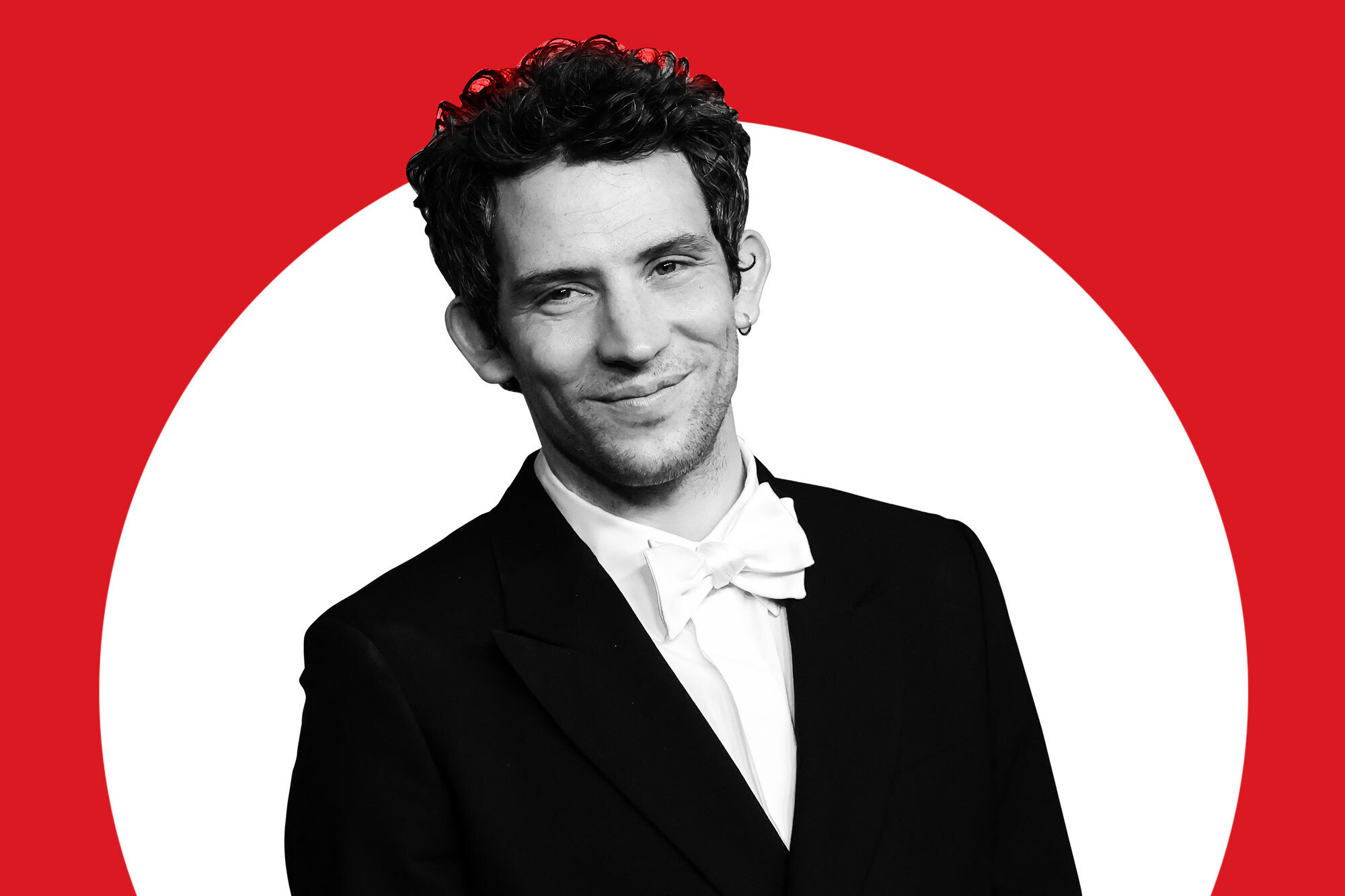
Before I get to today’s conversation with Josh O’Connor — the most exciting, versatile and sincerely charming actor I’ve spoken to all year — we have some awards to discuss! The AARP Movies for Grownups Awards, which, as I wrote about a few weeks ago, consistently makes excellent choices, announced its nominees this week, with a perfect balance of expected contenders and total wild cards. It’s hard to argue with a best picture lineup that consists of Hamnet, A House of Dynamite, One Battle After Another, Sinners and Train Dreams, or a best actress list that makes room for both Laura Dern (for Is This Thing On?) and the indomitable June Squibb (Eleanor the Great).
I was a bit surprised, as were some Prestige Junkie listeners, to see Sigourney Weaver make the cut for best supporting actress for Avatar: Fire and Ash, a movie that has otherwise been under total lock and key. To my knowledge, the Movies for Grownups didn’t see the film yet either, but given that Weaver is reprising her character from The Way of Water — the teenage Na’vi daughter born from her human character from the first Avatar, try to keep up — and was terrific in that movie, they may just be holding her a space. It’s not the most, um, traditional way to go about selecting a list of nominees, but hey — all awards are made up, and Sigourney Weaver is an icon.
Now on to Josh O’Connor, star of 2025 movies — deep breath — Rebuilding, Wake Up Dead Man, The Mastermind and The History of Sound. Read on for his guide to staying sane on movie sets — you gotta get a hobby! — and what happens when you think you’re going to take a vacation, but then Steven Spielberg calls instead.

Man Alive
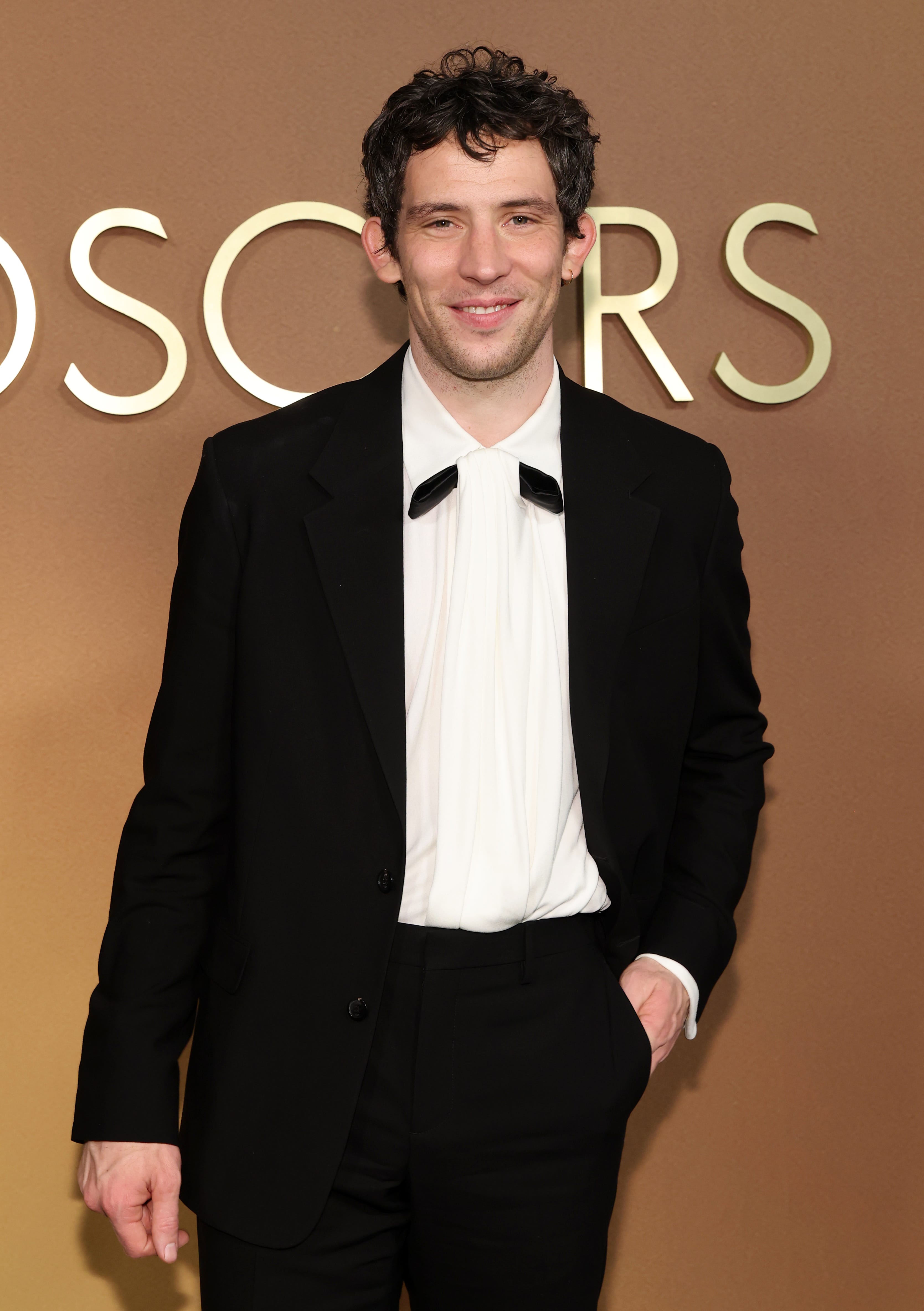
“I was at a time in my life where community seemed like something quite far off for me,” Josh O’Connor told me a few days ago via Zoom, explaining how the script for Rebuilding came his way. “I’ve been away from home for a long chunk, and the importance of community and community coming together to overcome grief, this sense of home and place and landscape — all of those things really played to me very clearly.”
A native of Cheltenham in southwest England, O’Connor, 35, still lives in a small town in England when he’s not on movie sets — a rarity of late thanks to countless projects: the four movies this year, two next year (including one with Spielberg), and Challengers and La Chimera in 2024. But Rebuilding felt like a reach for the actor on paper, especially for someone whose American breakthrough came as Prince Charles on The Crown. In the new film, out now from Bleecker Street, he stars as a Colorado rancher who loses everything in a wildfire, struggles to connect with his ex-wife (Meghann Fahy) and young daughter (Lily LaTorre) and seems entirely at home at a cattle auction. His character, named Dusty, shares some DNA with the scalawags he played last year in Challengers and La Chimera, who also had personal relationships that fell apart for a reason. But Max Winkler-Silverman’s quiet, empathetic film invests us in Dusty’s desire to grow and connect with others, insisting that a better life is possible even if Dusty can’t believe it himself.
Production of any film creates its own kind of community, and O’Connor became tight with the small crew behind Rebuilding, inviting everyone over to his rental condo for dinner (“It was not very big, but we had a nice garden”). He was also committed to learning about the San Luis Valley of Colorado, much as he had with the Italian “gang of thieves” at the center of the film he’d made just before, Alice Rohrwacher’s La Chimera. O’Connor saw the stumbling block for his character, Dusty, as not recognizing the world around him; it was the actor’s job to remember it for him. As O’Connor puts it, “Being able to do that in a gentle way was a pleasure.”
Depending on how deep your knowledge of British television goes, it’s most likely that you first noticed O’Connor in seasons 3 and 4 of Netflix’s blockbuster series The Crown, playing a young Prince Charles. There, thanks to creator Peter Morgan, he was placed in some of the least relatable circumstances possible: about to be officially named Prince of Wales but first forced — the horror! — to learn Welsh, the language of the country he’d be ruling, to promote unity between England and Wales. The fact that so many of us felt sympathy for O’Connor’s version of Prince Charles anyway, including when he started his doomed relationship with Princess Diana (played by Emma Corrin), was a remarkable feat for a then-29-year-old actor who’d been basically unknown to Americans before he stepped into those royal shoes.
O’Connor was so good at playing Prince Charles — all gawky smiles and jug ears — that he even won an Emmy for best actor in 2021 over past Emmy winners Sterling K. Brown, Matthew Rhys and Billy Porter. Based on that kind of success, it was fair to assume the young star had a bright future ahead playing gangly anti-heroes. Instead, in the six years since his breakthrough in The Crown, O’Connor has emerged as the most versatile actor of his generation. There’s really never been a better time to buy stock in his career.
I’ve spent all year being amazed over and over again by O’Connor, who started earning raves when Rebuilding debuted at Sundance in January, had both Kelly Reichardt’s The Mastermind and Oliver Hermanus’ The History of Sound at Cannes, and led the massive cast of Wake Up Dead Man through its Toronto International Film Festival premiere in September. I keep coming back to something Hermanus told me when I interviewed him for the release of The History of Sound, in which O’Connor and Paul Mescal play a pair of music students in the 1920s who fall in love.
“Josh has this quality where he can be incredibly enigmatic and present, and you can easily fall in love with him, but you can never really know him,” Hermanus said. O’Connor’s character is absent from the film for long stretches, missed by the audience as much as by Mescal’s character. The effect happened in real life, too. “We shot with Josh for a couple of weeks, and then Josh left, and Paul was devastated.”
There are a lot of ways to define a movie star, but that might be the purest: the person who can captivate the screen when he’s on it as well as when he’s not. All four of O’Connor’s roles exhibit that kind of magnetism, and it’s fascinating to watch how he filters it through each. In The Mastermind, the characteristically low-key period film from Reichardt (which Mubi will start streaming on Dec. 12, perhaps hoping to ride the Wake Up Dead Man release), O’Connor plays an amateur art thief who seems to believe he can balance his quiet suburban life with his criminal side hustle. When he tries to escape midway through the film and hide out with two old college friends, you silently beg the characters (played by John Magaro and Gaby Hoffmann) not to let him crash on their couch while knowing they won’t be able to resist.
In both The History of Sound and Wake Up Dead Man, his intentions are purer, even if both seemingly straightforward characters — respectively, a musical prodigy and a fresh-faced pastor — hint at the many layers underneath. Though he’s being entered into awards consideration in the supporting categories for Wake Up Dead Man, he’s the true lead, teaming up with Daniel Craig’s Benoit Blanc both to solve a mystery and have in-depth conversations about faith and wonder. When the Wake Up Dead Man finale lands with a surprising emotional heft, it’s in large part because of the work O’Connor has done to get us there.
At the Governors Awards, the day after my interview with O’Connor, Wake Up Dead Man director Rian Johnson told me about his star’s efforts to convince his small-town council to let him cut down a tree. O’Connor claims he keeps telling himself he’ll take a break; even on the set of Rebuilding, as the film’s costume team reminded him during a recent reunion, “I was like, ‘From now on, I do one movie a year.’ Because I was kind of complaining that the year before I’d done two.”
Instead, people keep calling him with offers he can’t turn down, including Spielberg, who cast O’Connor in his untitled sci-fi epic coming out next summer, and Joel Coen, who has tapped the actor for his first film in four years. O’Connor is aware these are actual champagne problems. But he also makes a pretty convincing case for why a break wouldn’t just be nice, but necessary.
“This year, I planned to do what I’m doing next year, which was to take a chunk of time off,” he tells me. “I sort of hate when I say it, because I love working. But I think it’s more about giving myself the time and the space to be creatively challenged. Right from the beginning of my career, I wanted to be an actor who traveled, put on plays and had their own theater company — and I still have those ambitions — but I was also someone who makes pots, embroiders, and tries to live my life through other creative outlets. I think denying those elements of your creative output can make it stale. And that’s my biggest fear.”
He actually does manage to embroider while he’s making movies, as a hobby that travels fairly easily, but sculpting pots has had to take a backseat. Next year, he’s not likely to be quite as invisible as he makes it sound; any Spielberg movie comes with a significant promotional push, and between that and the Coen film, he may very well be on the awards campaign circuit and back at next year’s Governors Awards. For now, though, Josh O’Connor has just got one concrete plan: “At the top of next year, I’m going to dedicate some time to some clay.”