

He’s the Reason ‘Hamnet’ Makes You Cry Your Eyes Out
Composer Max Richter tells me about scoring the year’s most heartbreaking scene and how his Iraq War protest song became an indelible emotional anthem



Happy Monday, and welcome to what ought to be a week of rest for me and the people who have been relentlessly on the awards campaign trail for the past few months, if only that were possible. (I’ve got two interviews scheduled today with major Oscar contenders — subscribe to the Prestige Junkie podcast now to hear them in the coming weeks.) While Thanksgiving is a holiday for families, awards teams know it’s also a prime time for voters to watch their growing list of screeners (and maybe sneak in Zootopia 2 with the kids).
This newsletter will go dark on Thursday in honor of the holiday. Still, there will be two new episodes of the Prestige Junkie podcast this week — our regular Tuesday release, and then a special bonus Saturday interview episode. On top of all that, over at Prestige Junkie After Party — fresh from the special reunion episode for paid subscribers with my former Vanity Fair colleagues Mike Hogan, Richard Lawson and Joanna Robinson — I’ll have another bonus episode coming out Friday, with a surprise guest joining to help me prepare for the release of Avatar: Fire and Ash. (No, it’s not James Cameron, but it is a guy who knows his way around a blank check — hint, hint.) Subscribe for just $5 a month so you don’t miss out!
Today, I’m bringing you a conversation I got to have in person last month with Hamnet’s Max Richter, the composer behind the year’s most emotional moment at the movies — who’s probably made you cry before, whether you realized it was him or not.

The Maestro
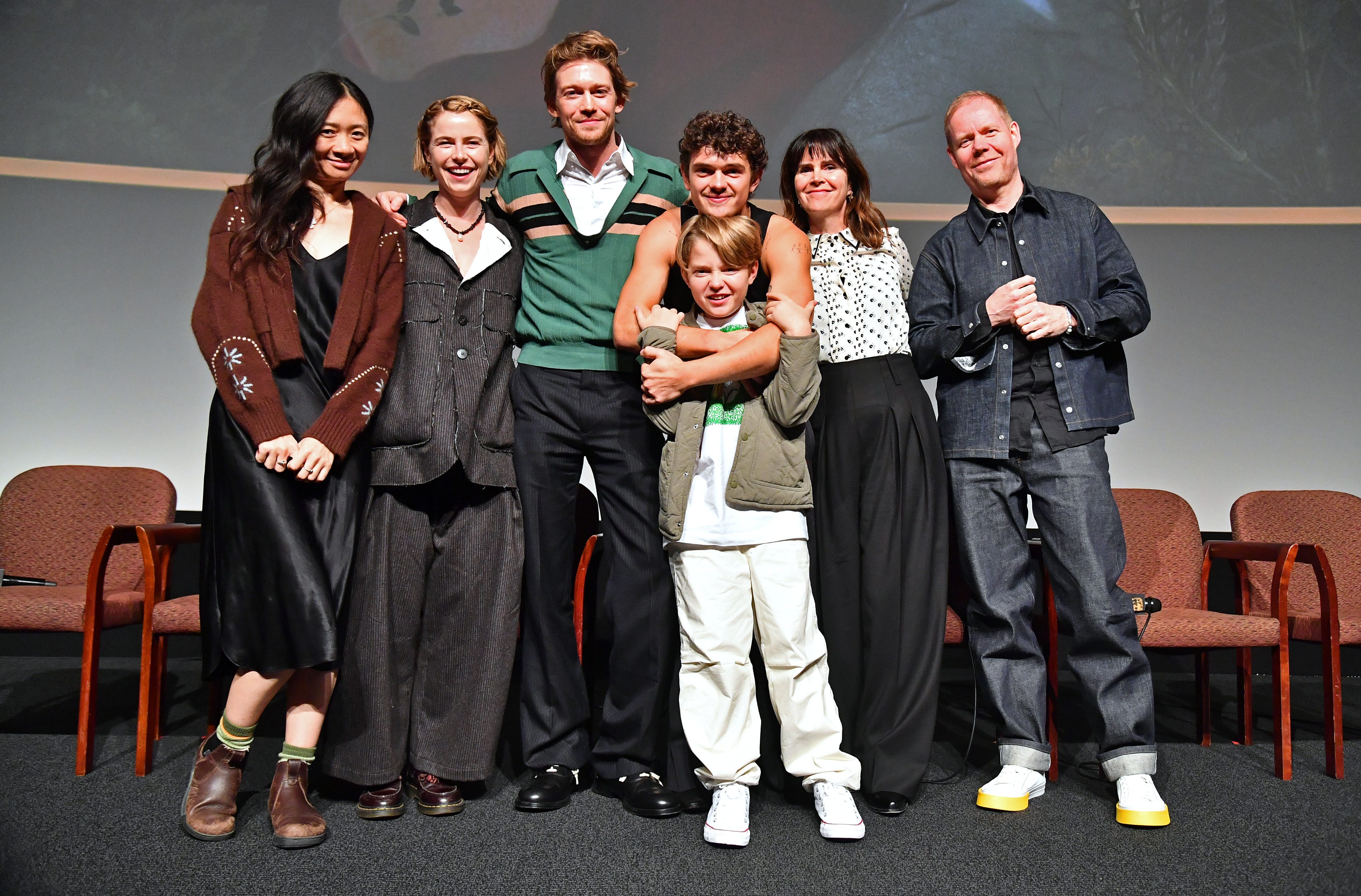
As Max Richter tells it, he began his career as a film composer because he had “nothing better to do.” He got his break in theatrical films back in 2008’s Waltz With Bashir, when filmmaker Ari Folman called the composer and asked him to score his movie. “I was like, ‘This sounds fun,’” Richter recalls.
That feels like a deceptively casual way to describe the beginning of what’s become a significant film composing career for the Germany-born, U.K.-raised Ritcher. Since Waltz With Bashir, he’s written the indelible scores for James Gray’s Ad Astra, the HBO series The Leftovers and now Hamnet. But “casual” is also what it feels like to talk to Richter, 59, who makes the composition of ethereal, sometimes unbearably emotional music sound as simple as any other job.

What he most enjoys about creating music for movies, he says, is “the fact that it wasn’t just me sitting in a room on my own for months on end, which is what the rest of my life is like. I love the collaborative aspect of it. It’s a collective puzzle-solving process.”
Even before the script for Hamnet came his way, Richter already suspected that he and director Chloé Zhao thought about film and music the same way. “I loved Nomadland (Zhao’s 2020 best picture winner) — and the way she used music in that film, I could see there was a sympathy with my way of doing things,” he told me during our conversation at the Middleburg Film Festival in October. “I love the economy of the way she used music. There’s a lot of silence and desert, and then just once in a while, the music will land, but it will be there really for a reason.”
After talking to Zhao and reading the script for Hamnet, Richter composed about 30 minutes of music that Zhao played on set, helping bring the actors in tune with the vibe of the score even before it was formally composed during the edit process. The goal, Richter says, was to create music that “felt kind of transparent to the material. It’s hard to explain, really, but I wanted to be able to see the actors at all times, to feel and see the story. The whole project, I think, is about getting us as close as possible to the emotions.”
If you’ve heard anything about Hamnet, which Focus Features debuts this week in limited release, it’s probably about the emotional response the movie generates. Zhao’s film has left audiences in tears since its premiere at the Telluride Film Festival in August, and that’s helped it become one of the year’s top Oscar contenders. Hamnet has also won several key festival audience awards — including the coveted Toronto International Film Festival People’s Choice Award.
Adapted from Maggie O’Farrell’s novel by Zhao and the author together, Hamnet follows the domestic life of William Shakespeare (Paul Mescal) and his wife, Agnes (Jessie Buckley), in the years before he wrote Hamlet around 1600. The historical record shows that the two had a son named Hamnet who died a few years before the play was published; the rest of the story told on screen is an act of imagination, with Agnes as a woman deeply connected to nature and to the pagan traditions of her ancestors, and Will as the Latin tutor-turned-playwright who loves his family but is constantly pulled away by his artistic ambitions.
There’s a tragedy at the heart of Hamnet, but so much else, too; as Richter put it to me, “It’s a very emotional story about a family, love and loss and death and all of those things. But it’s also this story about our relationship with the bigger world, with nature and beyond and all those cosmic questions.” He acknowledges it was an absurdly big challenge. Still, he wanted to create music that “could contain all of those things — just the whole universe.”
Fortunately, that was a quest for which Richter was uniquely qualified, based on his past work. His composition “On the Nature of Daylight,” from his 2004 album The Blue Notebooks, has found its way into pivotal moments in everything from Arrival to The Handmaid’s Tale.
What a miracle, then, to hear “On the Nature of Daylight” gain completely new meaning in Hamnet, playing behind the searingly emotional finale as Agnes arrives at the Globe Theater to watch her husband’s play that — mystifyingly, for her — bears their dead son’s name. Zhao played the track on set as they filmed this sequence, fell in love with how it sounded, and couldn’t let it go. She even reconfigured the film’s conclusion to fit with the piece, jettisoning the other music Richter wrote for the sequence, which you can hear during the end credits. (Find out more about how the ending of Hamnet came together during my interview with Zhao on tomorrow’s episode of the Prestige Junkie podcast.)
For Richter, “On the Nature of Daylight” was written with a very specific purpose — it is a protest song included on The Blue Notebooks in response to the Iraq War. But the composer has long since made his peace with filmmakers having their own relationship with his work, particularly “On the Nature of Daylight.” And when it comes to Zhao, it’s clear he has ultimate trust.
“I understand why Chloé felt that it should be that way, because literally the end of the film didn’t exist before she heard the piece, and it’s her film,” Richter tells me. “She has gone on this journey with this material. She’s made all these amazing decisions and got to this point, so really this is just another decision for her ultimately.”
With the music he created for Hamnet, as with everything else, Richter says he has a pretty simple rubric for himself. “I’ve always felt that in a way there’s already enough music in the world,” he says. “So if I’m going to add to it, then I do want to be very thoughtful and intentional about what I’m adding to that sum total. I do want that material to have at least the potential to elevate things as much as I can.”
I ask him if he’s trying to elevate the listener or the world as a whole. “Just to make the days a bit better,” he replies matter-of-factly. “Just in the way that if I get out of bed in the morning, I make my coffee, I stick the radio on, and there’s some bit of Beethoven I love that comes on — my day is 1 percent better.”

I don’t think Max Richter’s ‘cry your eyes out’ ability is contained to Hamnet—though certainly his latest. His ‘On the Nature of Daylight’ is surely one of the most used songs for instantly bringing forth tears in film. He’s been helping me sob for decades.