

Governors Awards: My Night Inside Hollywood’s Starry Power Room
Tom Cruise got an Oscar, the ‘One Battle’ cast rolled deep and Timothée Chalamet was MIA (again!). Plus: My chat with Park Chan-wook


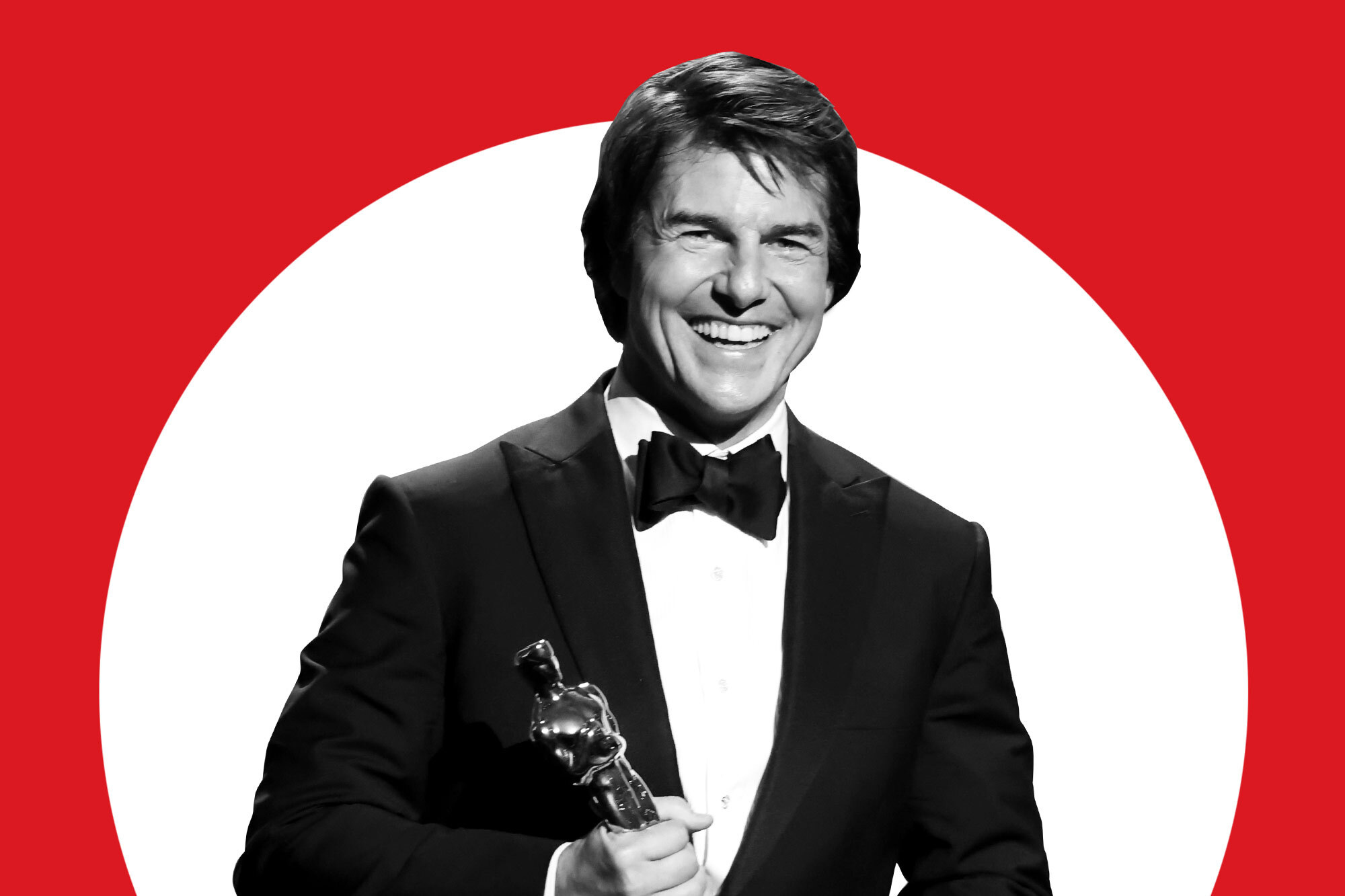
The house lights were on, it was way past last call and Jonathan Bailey, a.k.a. the sexiest man alive, was on his way out the door — but Tom Cruise was still holding court.
That’s one way, at least, to sum up the scene that unfolded at the Academy’s Governors Awards in Hollywood on Sunday night, where the awarding of four honorary Oscars — to Cruise, production designer Wynn Thomas, choreographer Debbie Allen and the incomparable Dolly Parton — also became a prime campaign stop for virtually everyone vying for an Oscar this year. It’s easily the most star-studded room of the year (at least, of any they’ll let the press into), and I promise I did my best to soak it all in.
I spotted Wicked star Bailey twice during the night, both times looking as sexy as promised. First, he was huddled with Ariana Grande on their way into the Dolby Theatre Ballroom at the beginning of the evening, and then there he was as the crowd filed out at the end, looking no worse for wear. The early part of the evening was a great time to spy castmates banding together, making their way through the cocktail party that was only slightly dampened by the still-ongoing Los Angeles rain. Sentimental Value’s Elle Fanning and Stellan Skarsgård waited patiently to make their way down the arrivals red carpet, while I spotted The Smashing Machine duo Dwayne Johnson and Emily Blunt holding hands as they weaved through the crowd.

The best part of the Governors Awards, though, is the unlikely pairings that emerge when you’ve got a room full of boldfaced names and only a small number of publicists, journalists and executives to get between them. Near the bar and braving the rain, Sirāt director Oliver Laxe chatted with Eddington director Ari Aster and Sentimental Value star Renate Reinsve. Die My Love star Jennifer Lawrence was mixing it up with Grande when I entered the ballroom, not long before I spotted Caught Stealing star Austin Butler and Hamnet’s Joe Alwyn in conversation with Josh O’Connor, who was seated over in the Netflix section with his Wake Up Dead Man director Rian Johnson. Watch this space for more from the busy O’Connor later this week on his other new film, Rebuilding, one of four features he’s led this year; inside the ballroom, he told me he was eager to catch up with his old friend, Hamnet star Jessie Buckley, but hadn’t yet seen her.
I did manage to point O’Connor toward Steven Spielberg, his director for next summer’s still-untitled blockbuster, who was seated for most of the night next to Cruise and was, from what I could tell, quite possibly the room’s biggest draw. Yes, crowds naturally gathered around the Sinners team, including Michael B. Jordan and Ryan Coogler, and I sat straight up in my seat when the giant screen in the room showed One Battle After Another star Leonardo DiCaprio and Goodbye June director Kate Winslet sitting next to each other, still never letting go after all these years. But Spielberg seemed to have a gravitational pull of his own: I watched Amanda Seyfried bring her director, Mona Fastvold, who helmed The Testament of Ann Lee, over to meet Spielberg, and marveled when The Life of Chuck star Mark Hamill caught up with the legendary filmmaker, their shared iconography somehow not blinding everyone else around them.
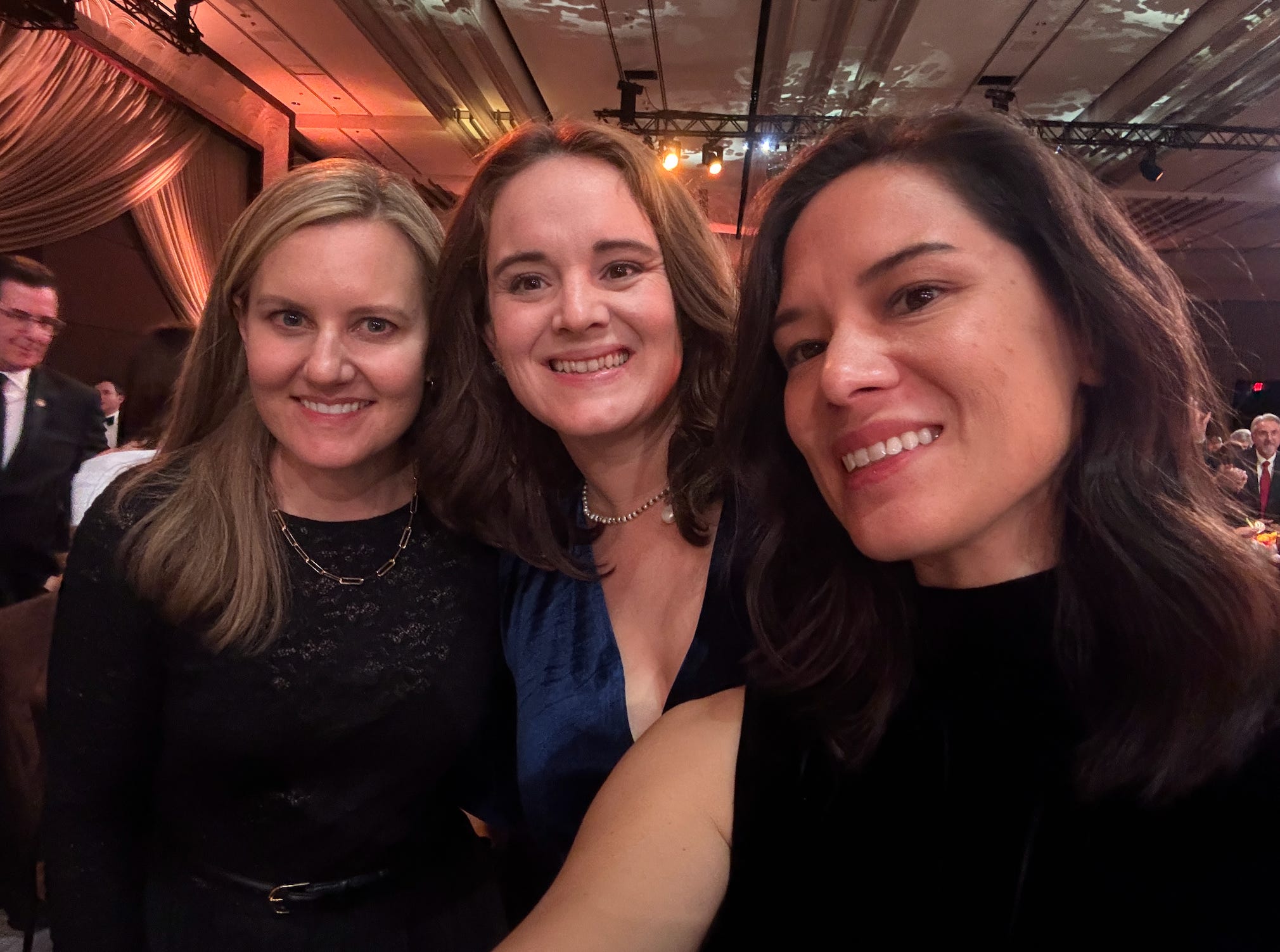
It’s hard to focus in a room with that much opportunity to schmooze. Still, the awards themselves — as slickly produced as any Oscars telecast, with even more montages — encouraged everyone to pay attention. The 79-year-old Parton wasn’t there to accept her award in person (she had a pre-existing scheduling conflict that was communicated to the Academy before her recent health issues), but the introductory tribute from her 9 to 5 co-star Lily Tomlin earned the first standing ovation of the evening, and some encouraging applause when she had issues seeing the teleprompter. Andra Day followed Tomlin’s speech with a performance of “Jolene,” and combined with the opening remarks from Will Arnett, it was a major coup for their film, Is This Thing On?, even without director Bradley Cooper, who was among the evening’s few no-shows.
Octavia Spencer’s moving introduction of Wynn Thomas — with the astonishing fact that he was the first Black member of the Art Directors Guild — was followed by Cynthia Erivo’s tribute to Debbie Allen, whose emotional speech was delivered without the use of a teleprompter. When she addressed Cruise, he stood and got the crowd to give Allen another standing ovation (their shared bond, no doubt, enhanced by their dance-off on Saturday night that went viral on social media).

Naturally, the Academy saved Cruise’s tribute for last, with Alejandro González Iñárritu taking on the duty of introducing the star of his still-untitled 2026 film. It had been a fun guessing game in the days leading up to the ceremony as to who might introduce Cruise — his Mission: Impossible collaborator Christopher McQuarrie, whom Cruise feted at CinemaCon earlier this year? A curveball like Cruise’s former Interview with the Vampire co-star Brad Pitt, whom Cruise specifically shouted out during the CinemaCon event? Iñárritu might not be the most obvious choice for a role that usually falls to longtime collaborators, but it seemed like a very successful launch for an awards campaign that will be in full force next year. (A data point to note for the future: In 1986, Paul Newman received an honorary Oscar after failing to win competitively for any number of his iconic movie roles. In 1987, he finally won best actor for his part in The Color of Money, opposite a young Cruise.)
The enormous ovation for Cruise was genuine (it followed a pretty spectacular clip package from his career that included a surprising amount of Rock of Ages but absolutely zero mention of his ex-wife and frequent co-star, Nicole Kidman) — as was the applause for Cruise’s speech that was much more focused on his love of moviegoing than anything personal. “Movies are not just what I do, they are what I am,” Cruise insisted, and who could help but believe him?
Before I share my conversation with No Other Choice director Park Chan-wook, who was in the room last night as well, a few more stray thoughts from an event where it’s entirely impossible to catch every fun detail:
Blue Moon star and dark-horse best actor hopeful Ethan Hawke, making his way through cocktail hour with Sony Pictures Classics co-president Michael Barker, stepped out of his fashion comfort zone with a sparkly black jacket. He told me he just felt it was time for something new, and joked that he asked about bedazzling a billboard for his film — “Blue Moon, a film by Richard Linklater!” — on the back.
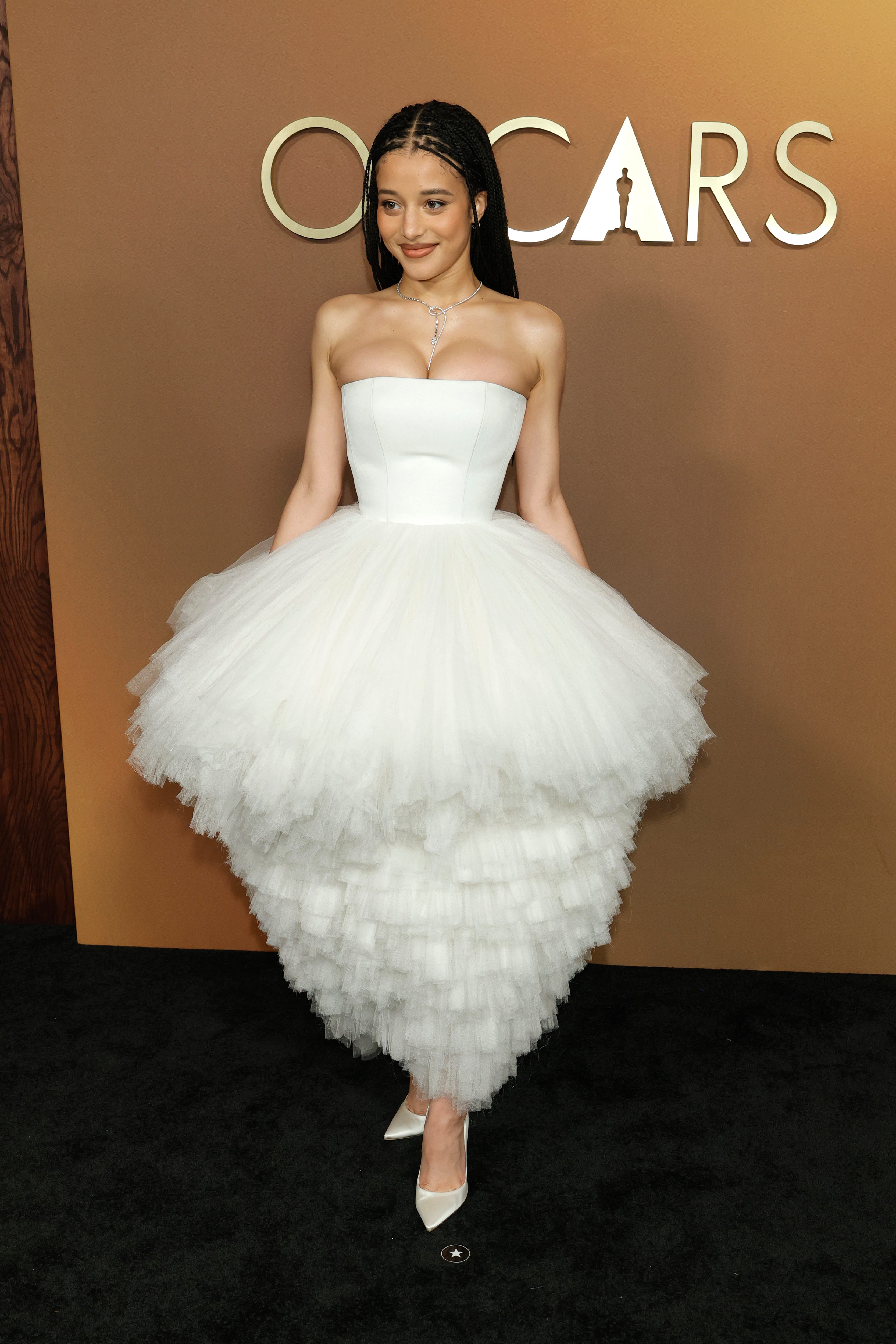
Speaking of fashion statements, I saw a late-arriving Chase Infiniti, alongside her One Battle After Another co-star Teyana Taylor, walking through the room looking like she was floating on a literal cloud. A lot of actresses went for structural, dramatic gowns last night, but only Infiniti — having the kind of breakout year you’d barely even dare to dream about — could pull off that ultimate princess look (check it out below).
In a crowded room, the tallest people stand out like a skyline, which always makes it easy to locate Pillion star Alexander Skarsgård and Frankenstein’s Jacob Elordi. My favorite party trick, though, was pointing people's attention to the tall man with billowing long hair and revealing that he was not some up-and-coming actor, but Sirāt director Oliver Laxe.
You’re never going to get every single major Oscar contender at the Governors Awards, since being in contention for an Oscar ought to mean you’re in demand a lot of places. But I thought it was genuinely strange that for the second year in a row, Timothée Chalamet was a no-show — despite a basically inevitable best actor nomination for Marty Supreme. It was doubly noticeable because Chalamet was everywhere over the weekend, having hosted a conversation and pickup basketball game with Adam Sandler on Saturday evening and attended a handful of Q&As for Marty Supreme. And sure, he still had everyone talking thanks to that 18-minute marketing video and the Marty Supreme blimp, so he didn’t have to be in the room to be in the mix. But after losing best actor last year to Adrien Brody, who attended every event and shook every hand, I really thought Chalamet might relent and do at least a few of these traditional campaign stops in addition to his own unconventional plans. I’ll surely be talking more about the Chalamet campaign strategy on the podcast this week, but if anyone has a theory about how this might work better this time, I’m all ears.
And now, for something completely different: a conversation about all the things the movie industry is thinking about when it’s not celebrating itself: employment anxiety, the threat of AI and how to get your movie made when nobody wants to give you the money for it. Read on for some deep thoughts from South Korean auteur Park Chan-wook.

Only Choice for Park Chan-wook
Park Chan-wook doesn’t hesitate to tell you about the versions of No Other Choice that don’t exist. In what ultimately became a 20-year effort to adapt Donald Westlake’s darkly comic novel, The Ax, into a film, Park had attempted to make the project in America. It seemed logical, especially following the success of his English-language efforts like Stoker and the HBO series The Sympathizer. Best of all, Park would be able to set his version of The Ax in the country where Westlake wrote it.
As so often happens, even for internationally revered auteurs like Park, the money got in the way. “In conversations with American studios, I think we always tend to disagree on shooting days,” Park, 62, told me diplomatically in a recent Zoom call from New York, where he was on the latest leg of global publicity efforts for the Neon film. “I always want more shooting days than the studio does — you get to put more care into everything in terms of the camera movement, the actor’s performance. You also get the opportunity to invest more time in lighting. And when everything comes together, it just becomes a better project.”
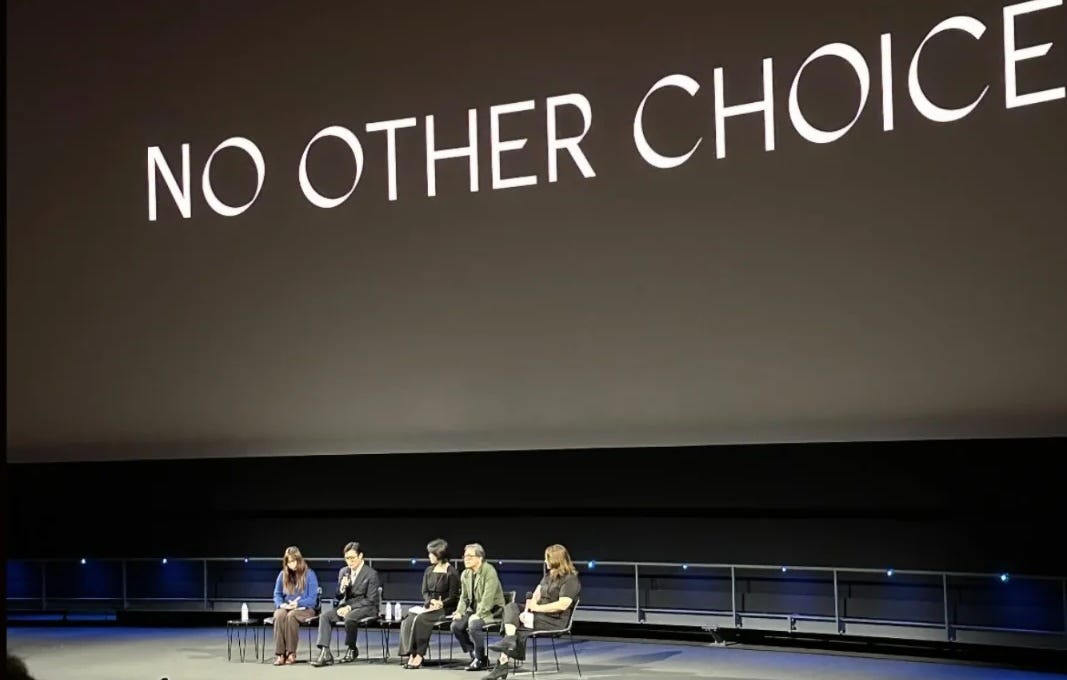
In the end, Park wound up returning to his native South Korea to turn The Ax into No Other Choice, and it was a homecoming in more ways than one. Reuniting with actor Lee Byung-hun (Squid Game, KPop Demon Hunters) for the first time since their breakout hit, Joint Security Area, in 2000, Park crafts a pitch-black, unbelievably modern satire that succeeds as much from Park’s rigorous, endlessly inventive style as it does from Lee’s hilarious and heartbreaking performance. A few days after I spoke to Park on Zoom, I moderated a panel with him and Lee onstage at the Academy Museum for an enthralled, sold-out crowd. Watching them finish each other’s sentences and affectionately needle each other onstage, it was very clear that this reunion was well worth the wait.
Lee plays Man-su, a man who is laid off from his longtime job at a paper company and decides to murder his competition on the job market. It’s a classic story of life under capitalism, with Man-su targeting his fellow struggling workers instead of the real enemies — the factory owners who seem confident AI can replace their human employees. As Man-su tries to carry out his murder plots with varying levels of success, Park walks a high-wire balancing act of sharp satire and Looney Tunes-level physical comedy, pulling off several of the most tense and hilarious scenes of the year.
“When the actor decides whether they want to work on the project, they’re already aware that there’s a lot of that physical comedy,” Park told me in our Zoom call. “I always create detailed storyboards for my films, so each actor should know what’s coming up ahead in terms of that area as well.”
Those storyboards can be so detailed that they include specific facial expressions, though Park says they don’t usually resemble the actual faces of the actors. For Lee, though, the storyboards are less of a prescription for his performance than the opening for a conversation with Park.
“Back when we were shooting Joint Security Area, he took a lot of time studying the storyboard, but he doesn’t do that anymore,” Park tells me. “Back then, he told me that when he was looking at the storyboard, he would find himself imitating the facial expressions, and he complained about it. On No Other Choice, he would only look at it that morning on set, and he actually grumbled a lot to me, saying that, ‘Oh, how could you come up with the exact opposite of what I had imagined in my head?’”
No Other Choice premiered at the Venice Film Festival and won the international People’s Choice Award in Toronto, part of a globe-trotting promotional tour for the film, which Neon will release in the U.S. on Christmas Day (an appropriately darkly funny release date if you ask me). Park tells me that the film has played well around the world, but he’s noticed a trend among audiences in South Korea that reveals a great deal about the film’s staying power.
“When we played in Korea, after the movie ended, people came up to me to tell me that the movie was really funny and that they laughed a lot, but they weren’t actually laughing while the film was playing inside the theater,” Park says. “I was very concerned, and I thought to myself, ‘Was the movie not fun?’ Whereas audiences outside of Korea would laugh throughout the movie, which I find quite confusing, as Korean audiences are usually not quiet in theaters. I guess that perhaps they empathize with the situation that the characters are going through a lot more, so they couldn’t laugh.”
