

Documentary is ‘Meeting the Moment.’ Now Distributors Need to Step Up
TIFF programmer Thom Powers tells me about his slate of top nonfiction films


If your list of must-see fall movies isn’t overflowing by now, you clearly haven’t been paying attention. This week, hot off Toronto and Venice Film Festival lineup announcements late last month, the New York Film Festival shared its full slate (see you on the Upper West Side, Bradley Cooper, Noah Baumbach, Kathryn Bigelow and Joachim Trier!). Meanwhile, on Wednesday, Toronto announced its documentary lineup, which is chockablock with some of the most acclaimed documentarians alive tackling some of the most fascinating subjects of their careers.
I’ll dig more into the New York Film Festival lineup tomorrow on Substack Live with Christopher Rosen — but you can only listen in if you’re a paid subscriber to Prestige Junkie After Party. For just $5 a month, you can hear our detailed, sometimes gossipy, always uncensored conversations about awards season that would otherwise go on in our group chat. Substack Live is also a great place for you to weigh in, and it gives us time to respond, so if you want to share your own hot takes on what’s to come this fall, that’s the place to do it. Come join the party!

But today, I’m focusing on the documentaries at the Toronto International Film Festival, with insight from Thom Powers. In addition to being a friend of The Ankler and the force behind Pure Nonfiction, Thom has been the lead programmer for documentaries at TIFF since 2006. He told me in a phone call yesterday that, despite the very public challenges faced by the documentary world in recent years — including a reticence from distributors to tackle political material — there were more doc submissions to TIFF than he’s ever seen before.
“It’s pretty clear that the documentary-making community is fully engaged in trying to meet these times we’re living in with incisive storytelling,” Thom tells me. Now it’s time for the distributors to step up. And if you want to make your mark by putting out a documentary, the lineup at this year’s TIFF is probably an excellent place to start.

True Stories
As we learned when the West Bank-set documentary No Other Land swept through awards season last year, eventually winning an Oscar without U.S distribution, feature documentaries can be uniquely capable of capturing an urgent moment — even when the movies become caught up in controversy as a result. No Other Land, about Israeli destruction of a Palestinian community in the Israeli-occupied West Bank, was part of last year’s TIFF documentary lineup, as was the French documentary Russians at War, a film about the Russian soldiers who invaded Ukraine that was criticized as Russian propaganda. (Its presence in Toronto inspired a street protest that I had to navigate my way through when exiting one of the festival’s main venues.)
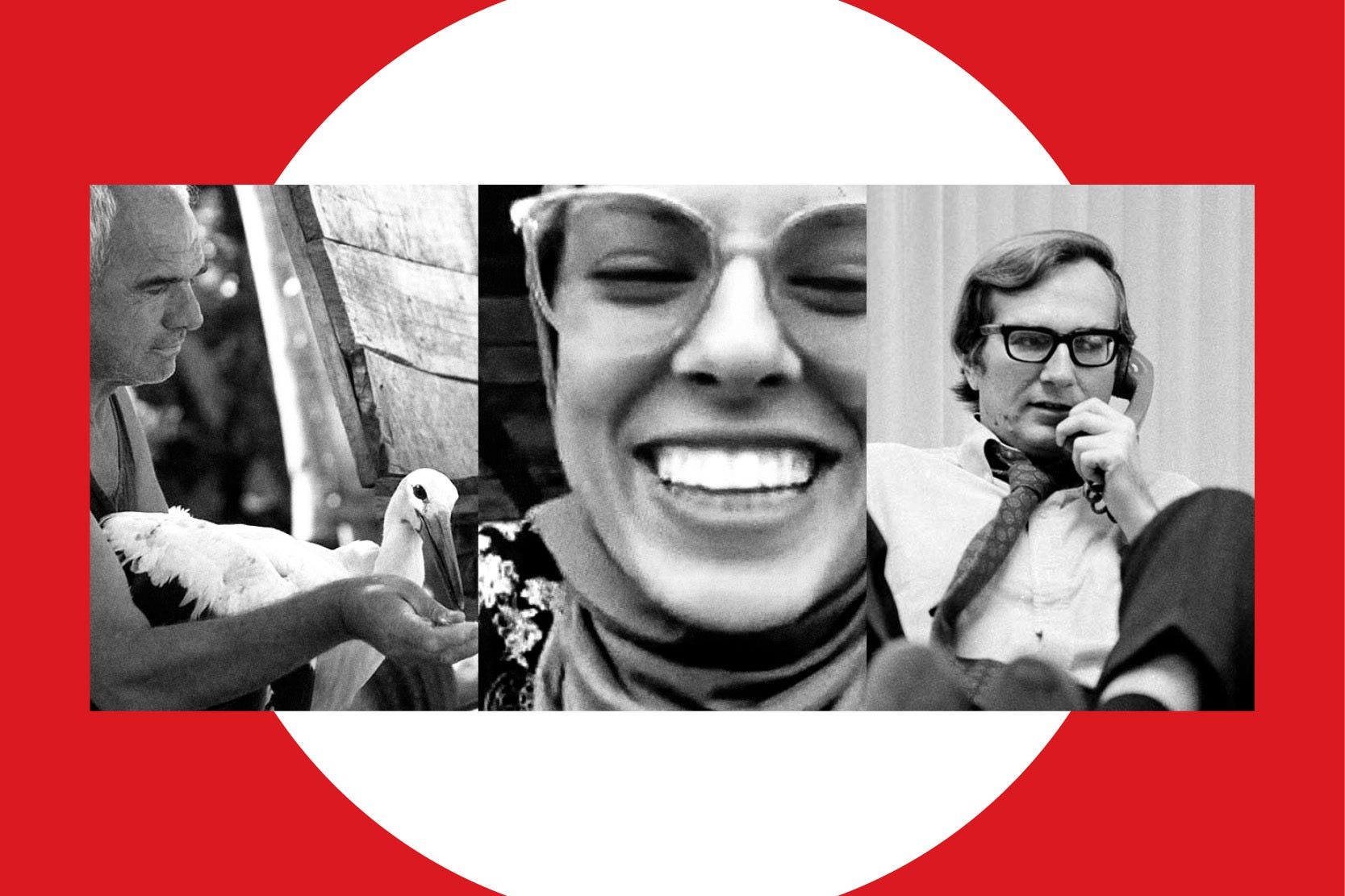
So which documentaries will get people talking, marching or both this year? Documentarian Laura Poitras is used to that kind of attention after directing films like Citizenfour, about Edward Snowden, and Risk, about Julian Assange, and will be back at Toronto this year with a movie co-directed by Mark Obenhaus, Cover-Up. According to Powers, though the film covers nearly six decades of the journalism career of Seymour Hersh — from his reporting on Watergate and the Vietnam War to Abu Ghraib — Cover-Up brings it very up to date, as it follows Hersh’s reporting on Gaza.
Even closer to the story, and already associated with tragedy, is Put Your Soul on Your Hand and Walk, which debuted at Cannes in May just a few weeks after its central subject, Palestinian photojournalist Fatima Hassouna, was killed by an Israeli airstrike. Cannes jury president Juliette Binoche honored Hassouna at the festival’s opening night ceremony. More than 350 people from the filmmaking world — including Javier Bardem, Richard Gere, Susan Sarandon, David Cronenberg, Pedro Almodóvar and Poitras — signed an open letter denouncing her killing as well as the industry’s “passivity” and silence around the deaths in Gaza.
The film’s TIFF premiere is sure to reignite all of those conversations. But as Powers points out, Put Your Soul on Your Hand and Walk is also a marvel of production, mainly filmed via FaceTime conversations between Hassouna and director Sepideh Farsi, who, like many journalists, was unable to get into Gaza at all (Israel has blocked journalists from entering). Farsi, a native of Iran who has not returned to the country since 2009, given her activism against the government, has made a film that, as Powers puts it, fits into “a tradition of Iranian filmmaking, where filmmakers have often used obstacles and worked around them.”

Sometimes a documentary can feel timely even if it’s about something entirely from the past, as Powers expects will happen with George Orwell: 2 + 2 = 5, from I Am Not Your Negro director Raoul Peck. Or a story can feel huge while being about something unbelievably tiny. Tamara Kotevska, who earned both a best documentary and best international feature Oscar nomination with her 2019 film Honeyland, is back with The Tale of Silyan, another project set in her native North Macedonia. It’s about a man who develops a friendship with an injured stork, and Powers predicts it will hit a nerve not only with audience members, but documentary Oscar voters as well.
Awards buzz is, of course, inevitable for any movie that makes a splash at a film festival. Still, the more challenging part these days is actually finding distribution, something No Other Land famously didn’t do, opting instead to self-distribute. Orwell will be getting “a robust release from Neon this fall,” according to Powers, and Nat Geo is backing LOVE+WAR from Chai Vasarhelyi and Jimmy Chin, the Oscar-winning directing team behind Free Solo. Most of the other films, however, are facing a documentary market that remains pretty challenging. (For more on the current state of the doc market, read my colleague Richard Rushfield’s great interview with acclaimed documentarian R.J. Cutler.)
Related:

“There are a lot of reasons to feel discouraged by the way different distributors have pulled back from documentaries in the last couple of years,” admits Powers, who points to the closing of Participant Media and the very recent destruction of the Corporation for Public Broadcasting as particularly dispiriting moments. Unlike a few years ago, when streamers were paying enormous amounts of money for documentaries to fill the platforms, the doc bubble has most definitely popped.
But Netflix is still buying documentaries, Powers notes, and the audience’s appetite for nonfiction work is still there, even if Netflix’s hit Trainwreck: Poop Cruise might not precisely be film festival material — or even, to be honest, a “film” at all, as Sean McNulty has noted in The Wakeup. (Powers didn’t say this part, to be clear, but I’m happy to point it out!) But even if the titles on this year’s TIFF lineup might not have a streaming deal of any size in their future, the movies still have a role to play — even if it’s just for the documentary programmers of tomorrow.
“The films that stoked my passion for documentary filmmaking were films I saw at the Detroit Institute of Arts as a teenager,” says Powers, who hails from Southfield, Mich. “At TIFF, the slate of films that we’re trying to present, I hope, will be an important part of the lives of people who will see them. Whether those films are seen by thousands of people or millions of people, it doesn’t change how meaningful they are for the individuals that see them.”
