

🎧 'Blitz': WWII Bombings, Floods & 'Terrors of the Past'
Director Patricia Riggen speaks with production designer Adam Stockhausen, editor Peter Sciberras, and supervising sound editors James Harrison and Paul Cotterell about Steve McQueen's affecting drama
Welcome to the latest episode of Art & Crafts, The Ankler’s podcast series dedicated to bringing audiences behind the scenes to examine the careers and contributions of the talented artisans who create and craft the movies and TV series we love. Subscribe on Apple Podcasts.
Director Steve McQueen “always wants to be very close to the historical reality of things, to tell stories as truthfully as he can,” Adam Stockhausen said of working alongside the award-winning auteur. And with McQueen’s World War II drama, Blitz (Apple Original Films), the stakes were even higher, because “he was building the narrative around actual events” during the Nazi bombardment of London in 1940 and 1941 — from the deadly destruction of the nightclub Café de Paris to the Balham Tube disaster, where dozens drowned after an explosion flooded a subway station.
To help the British director capture the era authentically, his collaborators — production designer Stockhausen, editor Peter Sciberras and supervising sound editors and re-recording mixers James Harrison and Paul Cotterell — started with extensive research and built from that foundation using every tool of their craft.
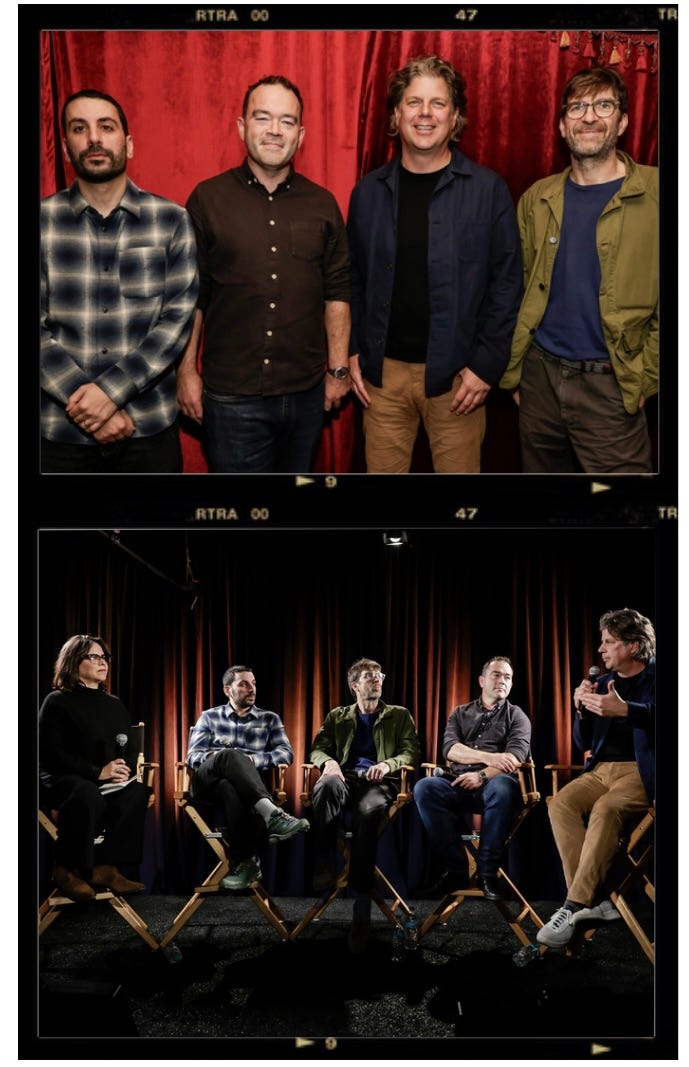
The four artisans shared their process in a conversation moderated by director Patricia Riggen, whose credits include The 33 and Hulu’s Dopesick, on Nov. 12 during The Ankler’s Art & Crafts Live at the American Society of Cinematographers Clubhouse. (Previous podcast episodes recorded at the event featured teams from Wicked, The Wild Robot and Emilia Pérez.)
Recreating the Balham Tube flood, for example, required “a full stage build,” Stockhausen recalled, “because there wasn’t a tank big enough. So we took this very long stage, we made the [train] platform, reinforced the outside of it like crazy so that it could hold the pressure of the water and then flooded the set, rather than putting the set into a tank and flooding the tank.”
Then, he added, “we crossed our fingers.”
For Harrison and Cotterell, even the crowd recordings provided an opportunity for period accuracy. “We tried to cast voices from people who maybe had grandparents who lived in London at that time,” Cotterell said. “They just have a natural ear for the rhythms and language.” Yet by design, the pair’s meticulous sound work didn’t always yield a clean and precise result. “Sometimes [McQueen] wanted to have that chaos and the messiness and almost be overwhelmed,” Harrison said. “That sort of mayhem . . . can really have an emotional impact on an audience.”
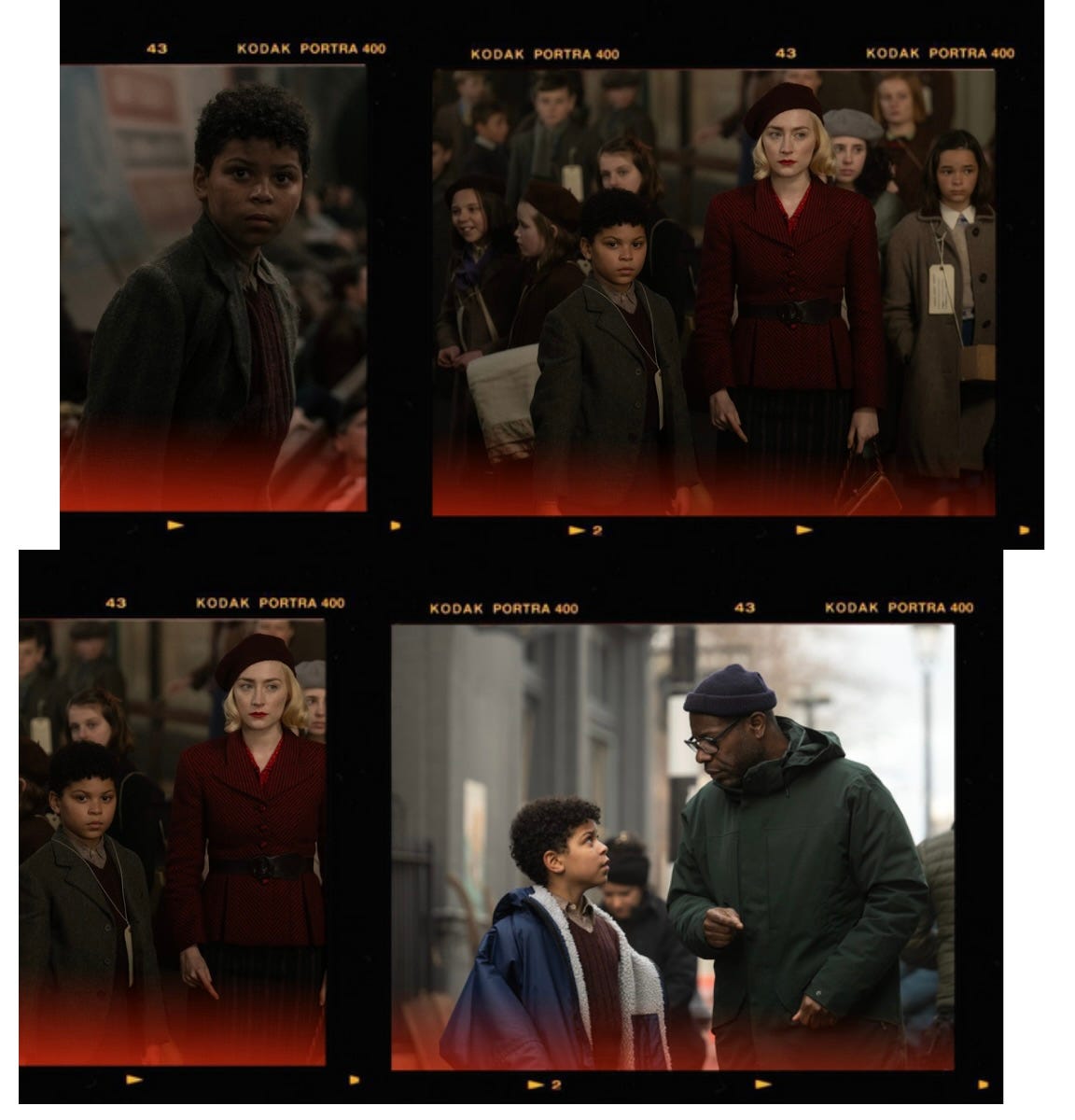
One of Sciberras’ biggest challenges was keeping a balance between the two parallel stories unfolding through that mayhem — a single mother’s search for her missing son and his harrowing journey to get back home to her. (Saoirse Ronan plays Rita, mom to Elliott Heffernan’s George.) “The principle of just finding the connections and finding a way for their stories to talk to each other and be part of the same narrative, even though they’re in different places, in different situations, was really the most important part of it,” Sciberras said. “If you leave someone for too long, you’ve kind of got to rebuild the relationship with that character again. So it was crucial to never be away from someone too long, but also not be cutting too much.”
McQueen’s leadership gave all four men license to do their best work. “He knows exactly what he’s doing, but he’s also incredibly open to ideas and really happy to explore things,” Sciberras said. “And his brain just works in such an interesting way that he can kind of join dots that you haven’t seen.”
Scouting with McQueen can be “magical,” Stockhausen added. “In the process of trying to find the characters and find the film, as we’re looking at their lives and looking at the locations and walking around, he’ll see something that excites him and makes him go in a completely different direction.” On set the director would tell stories about his own childhood, Cotterell recalled, memories that came to life in George’s onscreen adventures.
Harrison’s personal history also was reflected in the film, as he began his research by reading his grandparents’ personal memoirs: His grandfather was a navigator on a British bomber, and his grandmother experienced the Blitz from the ground.
“We have to keep retelling these stories, because as a species we keep making the same mistakes again and again and again,” he said. “So we have to keep reminding ourselves of the terror of the past.”
Transcript here.