

‘Athletes are Winning’ as College Jocks Become Big Creators in NIL Gold Rush
CAA’s Mike Levine, Texas Tech’s Sam Hurley, and more in the game tell me about the millions on the table and deals even in small sports


This is a preview of Like & Subscribe, my standalone Ankler Media newsletter on the creator economy. I interviewed Candace Owens about the rise of right-leaning podcasts, wrote about the Gen Alpha stars shaking up podcasting, the wild world of TikTok Live and Hollywood agencies battling over top creators. Email me at natalie@theankler.com

Anyone else feel like there’s a lot going on at the moment? President Trump is nearing the finish line on his yearslong effort to establish an American-owned TikTok, though it’s looking like China’s ByteDance will hold onto more control than previously expected. Meanwhile, YouTube has agreed to pay $24.5 million to settle a lawsuit from Trump over the suspension of his account following the January 6 insurrection. Ari Emanuel is now a podcaster for X, a platform not exactly famous for its podcasts. An AI “actress” with 32,000 Instagram followers is already drawing criticism from Hollywood. Oh, and the world’s biggest pop star is releasing a new album on Friday.
I talked about that last big event, the launch of Taylor Swift’s The Life of a Showgirl, alongside as seen on’s Ochuko Akpovbovbo earlier today on Substack Live, part of a two-day series of Swift-centric chats happening on Substack. Our conversation — Taylor Swift’s Internet Takeover: Digital Marketing Genius or Generational Divide? — kicked off my own new series of monthly Substack Lives, which will be exclusive for Like & Subscribe readers. You can watch it here on The Ankler and on Like & Subscribe later today, and tomorrow morning at 7 a.m. PT/10 a.m. ET, Prestige Junkie’s Katey Rich and Ankler Media deputy editor Christopher Rosen will join the great Hunter Harris to talk about what Swift’s new album means for her cinematic ambitions.
All the activity this week is a good reminder that fall is in full swing, and we’re barreling toward 2026 already. I know for many, this time of year conjures up the smell of pumpkin spiced lattes. But for me, it’s the smell of sweat and wet grass. That’s because, as a former high school and collegiate cross country runner, fall was when racing season kicked into high gear.
My USC running career happened years before college athletes could make money from the use of their name, image and likeness — but I’ve watched with fascination as the 2021 NCAA rule change has completely transformed amateur sports. NIL transactions were projected to hit $1.7 billion by the end of last year according to Opendorse, which operates a brand deal marketplace for athletes. And more than two-thirds of athletes’ NIL earnings for these first four years weren’t publicly reported (though regulations recently changed to create a clearinghouse for deals over $600 that will encourage more reporting), suggesting the market could be much larger than that estimate.
The majority of NIL dollars flow through university collectives — essentially booster programs that pay players for appearances, social posts and other promotional activities — to star players in popular, predominantly male sports like football, basketball and baseball. NIL deal tracker On3 projects Arch Manning — the quarterback for the Texas Longhorns and nephew of former NFL quarterbacks Peyton and Eli Manning — will lead the NCAA with $5.5 million in earnings this year. (In comparison, the top female earner, LSU hoops guard Flau’jae Johnson, will earn $1.5 million.)
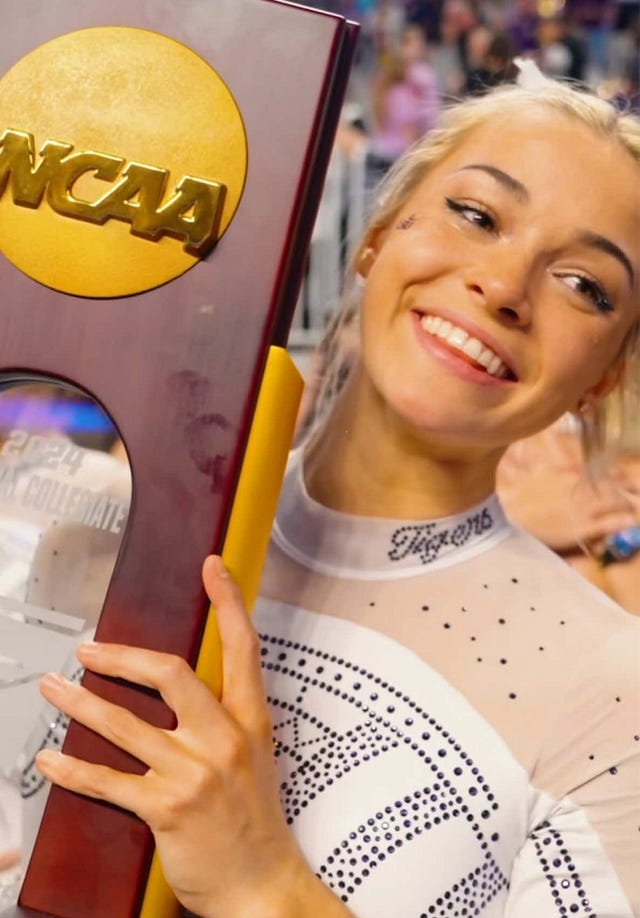
But for today’s column, I’m looking at a larger subset of student athletes, those who don’t have multi-million-dollar pro contracts waiting for them but rather are leveraging opportunities on social media to earn real money while also setting themselves up for post-college careers as influencers. It’s the path former LSU gymnast Livvy Dunne pioneered as she racked up 8 million TikTok followers and millions in endorsement deals before announcing her retirement from her sport last spring.
 Tiktok failed to load.
Enable 3rd party cookies or use another browser
“We have an even playing field, and athletes who have a bit of an audience can leverage that into a platform for themselves as influencers long term,” says Nic Mayne, a sports agent-turned-lawyer who represents creators and collegiate athletes as counsel at Nixon Peabody. Still, he acknowledges that there’s “untapped potential” for many student-athletes competing in sports that don’t drive football-sized ratings and ticket sales, a group that another executive in the space has dubbed “Row Z” athletes.
How big can those opportunities grow? And what will it take to become the next Livvy?
I talked to reps including CAA Sports co-head Mike Levine, legal experts and Texas Tech high jumper and pole vaulter Sam Hurley and more to get the score.
Read my full column over at Like & Subscribe to learn:
Why athletes make natural influencers — and the skills that brands are buying
The D1 football star who had to pick YouTube fame or the NFL dream — and whether he made the right decision
The NCAA rules that once forced athletes to choose between their sport and their side hustle
How Livvy Dunne flipped NIL into $5 million — and inspired copycats across college sports
The hidden money in “small” sports: Track, tennis and the rise of Row Z athletes
Inside the playbook: How managers navigate school rules to unlock NIL potential
Balancing act: Why training and pro dreams still come first, even for athlete-creators
The rest of this column is for paid subscribers to Like & Subscribe, a standalone newsletter dedicated to the creator economy from Ankler Media. Click here or on the button below to access the full story.
Interested in a group sub for your team or company? Click here.